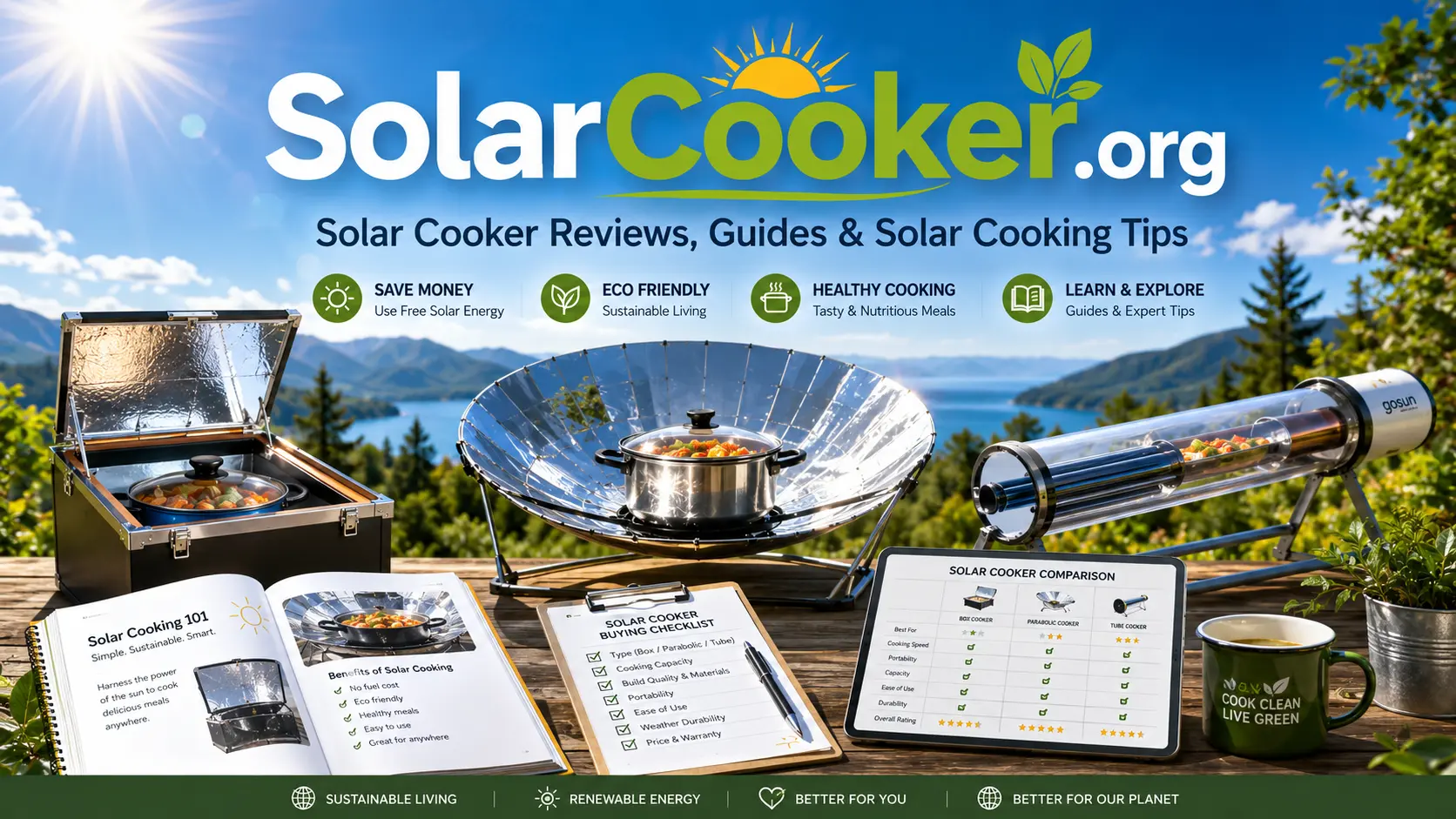
Welcome to SolarCooker.org, your trusted resource for everything related to solar cookers and solar cooking.
Whether you’re looking for your first solar cooker, comparing different models, learning how solar cooking works, or searching for practical cooking tips, you’ll find helpful information here.
Solar cooking uses the sun’s energy to prepare food without electricity, gas, or charcoal. It is an eco-friendly, cost-effective, and sustainable way to cook meals while reducing your environmental impact.
If you’re new to solar cooking, start by exploring our Solar Cookers Design and Types articles. You’ll learn how solar cookers capture sunlight, the science behind solar heat, and why they’re becoming an increasingly popular way to cook sustainably.
My journey into solar cooking began with a simple curiosity: Could we really cook a delicious, hot meal using nothing but the free energy shining down on us every day? Like many people, I was drawn to the idea of reducing my carbon footprint and finding sustainable, cost-effective ways to manage a household. Building my first rudimentary cardboard oven and watching it successfully bake food using pure sunlight was an absolute revelation—and I’ve been hooked ever since.
Through years of experimenting with different designs, tracking temperatures, and learning how to work with the elements, I discovered that solar cooking is so much more than just a novelty or an emergency backup plan. It is a incredibly peaceful, rewarding, and practical way to cook. Whether it’s slowly simmering a stew on a clear afternoon or baking bread using zero fossil fuels, the process connects you to the natural rhythm of the day in a way conventional cooking never can.
I created SolarCooker.org to share that excitement and to cut through the trial and error for you. Here, you’ll find real-world insights, honest comparisons, and practical techniques born out of genuine hands-on experience. I want to help you skip the common mistakes, choose the right setup for your lifestyle, and experience the simple joy of serving a meal cooked entirely by the sun.
What You’ll Find on SolarCooker.org
Solar Cooker Reviews
Looking for the best solar cooker? We review and compare different types of solar cookers to help you make an informed buying decision.
Topics include:
• Box solar cookers
• Parabolic solar cookers
• Tube solar cookers
• Portable solar cookers
• Family-sized solar cooking systems
Solar Cooking Guides
New to solar cooking? Our beginner-friendly guides explain everything you need to know.
Popular topics include:
• How solar cookers work
• How to choose the right solar cooker
• Solar cooking temperatures
• Solar cooking safety tips
• Common solar cooking mistakes to avoid
Comparisons and Buying Advice
Not sure which solar cooker is right for you?
Our comparison articles help you understand the pros and cons of different solar cooker designs so you can choose the best option for your cooking needs, budget, and location.
Solar Cooking Tips and Techniques
Learn how to get better cooking results with practical advice on:
• Maximizing solar cooker efficiency
• Cooking on cloudy days
• Positioning your solar cooker
• Seasonal solar cooking strategies
• Recommended cookware and accessories
Want to cook faster? Understanding how weather, cookware, insulation, and cooker positioning affect performance can significantly improve your cooking results. Explore our practical Troubleshooting and Tips for maximizing solar cooker efficiency.
Why Use a Solar Cooker?
Solar cookers offer many benefits:
✓ No fuel costs
✓ Environmentally friendly
✓ Reduces carbon emissions
✓ Safe and easy to use
✓ Ideal for camping and outdoor activities
✓ Useful in emergency situations
✓ Supports sustainable living
By harnessing free energy from the sun, solar cookers make cooking more sustainable while helping households reduce energy consumption.
Frequently Asked Questions
Does solar cooking take longer than conventional cooking?
Yes, in most cases solar cooking resembles a slow-cooker or “crockpot” method. Because the heat builds up gradually, food typically takes about twice as long to cook as it would in a conventional oven or stove. However, the beauty of solar cooking is that it is highly forgiving—food rarely burns, dries out, or overcooks if left in a little longer.
Can you use a solar cooker on a cloudy day?
Solar cookers rely on direct sunlight rather than air temperature. While standard box and panel cookers will not perform well under heavy overcast skies, they can still cook on days with light, passing clouds (though it will take longer). High-efficiency vacuum tube cookers are much better at retaining heat and can often still cook even when the sky isn’t perfectly clear.
What are the best foods to cook in a solar oven?
Solar ovens are incredibly versatile. They excel at slow-cooked dishes like stews, soups, casseroles, curries, and rice because the gentle heat locks in moisture and flavor. They are also fantastic for baking bread, cakes, and roasting vegetables or meats.
Is solar cooking safe? Does it kill bacteria?
Absolutely. Pasteurization and cooking only require temperatures between 65°C to 82°C (150°F to 180°F) to kill harmful bacteria and pathogens. Most solar cookers easily reach and sustain temperatures well above this range (between 90°C and 150°C, or 200°F to 300°F), making them completely safe for food preparation.
Do I need special pots and pans for solar cooking?
For best results, you should use lightweight, thin, dark-colored, or matte black cookware with tight-fitting lids. Black surfaces absorb the sun’s energy efficiently, whereas shiny, reflective aluminum or stainless steel pots will bounce the sunlight away and drastically slow down your cooking times.