Curious about solar cooking? You’re in the right place. Whether you’re looking to reduce your electricity bills, prepare for emergencies, enjoy off-grid adventures, or simply cook in a more environmentally friendly way, it’s natural to have questions before getting started.
Solar cookers have become increasingly popular among campers, outdoor enthusiasts, off-grid homeowners, emergency preparedness enthusiasts, and eco-conscious families. By using only the sun’s energy, they can cook a wide variety of foods without electricity, gas, charcoal, or firewood.
In this Ultimate Solar Cooker FAQ, we’ve answered 50 of the most frequently asked questions about solar cooking. You’ll learn how solar cookers work, what foods you can cook, how long cooking takes, which type is best for your needs, and practical tips to help you get the best results.
Whether you’re completely new to solar cooking or thinking about buying your first solar cooker, this guide will help you cook with confidence.
Table of Contents
Part 1: Getting Started with Solar Cooker FAQ
1. What exactly is a solar cooker?
A solar cooker is a cooking device that uses the sun’s energy to prepare food. Instead of relying on electricity, gas, or other fuels, it captures and concentrates sunlight to produce heat for cooking.
Depending on the design, a solar cooker can reach temperatures between 120°C and over 250°C (250°F–480°F), making it suitable for cooking everything from rice and vegetables to bread, soups, and even roasted meats.
Related Reading: What Is a Solar Cooker?
2. How does a solar cooker work?
A solar cooker works by combining three simple scientific principles:
Reflection
Mirrors or reflective panels concentrate sunlight onto the cooking pot.
Absorption
Dark-coloured cookware absorbs the concentrated sunlight and converts it into heat.
Heat Retention
A transparent glass lid or cover traps the heat inside, creating a greenhouse effect that keeps the cooking chamber hot.
These three principles work together to cook food using only renewable solar energy.
If you’d like to learn more about how solar energy works, the U.S. Department of Energy’s Solar Energy Technologies Office provides an excellent introduction.
Related Reading: How Does a Solar Cooker Work?
3. Do solar cookers really work?
Yes, they do.
Solar cookers have been used successfully around the world for decades. On a sunny day, they can cook a surprising variety of foods, including:
- Rice
- Vegetables
- Soups
- Stews
- Beans
- Eggs
- Bread
- Cakes
- Chicken
- Fish
Although solar cooking usually takes longer than cooking on a gas or electric stove, it provides gentle, even heating that helps retain moisture and reduces the risk of burning food.
4. What are the main benefits of using a solar cooker?
Solar cookers offer many practical advantages, including:
- No electricity or fuel costs
- Environmentally friendly cooking
- No smoke or harmful emissions
- Helps reduce your carbon footprint
- Ideal for camping and outdoor cooking
- Useful during power outages
- Keeps your kitchen cooler during hot weather
- Requires very little supervision while cooking
For many people, a solar cooker is both an economical and sustainable way to prepare everyday meals.
Related Reading: Advantages and Disadvantages of Solar Cookers
5. Are solar cookers environmentally friendly?
Absolutely.
Because solar cookers rely entirely on renewable solar energy, they produce zero direct emissions while cooking. Unlike gas stoves or charcoal grills, they don’t burn fossil fuels or generate smoke.
Using a solar cooker can help:
- Reduce greenhouse gas emissions
- Lower household energy consumption
- Reduce dependence on firewood
- Improve air quality
- Support a more sustainable lifestyle
Every meal cooked with sunshine instead of conventional fuel is a small step towards protecting the environment.
Solar cooking is one of many ways households can make better use of renewable energy. You can learn more about renewable energy from the International Energy Agency (IEA).
Quick Tip
Think of a solar cooker as a slow cooker powered by the sun rather than a conventional stove. A little patience is rewarded with tender, flavourful meals.
6. Who can benefit from using a solar cooker?
Almost anyone with access to regular sunshine can benefit from a solar cooker.
They are especially popular with:
- Campers and hikers
- RV travellers
- Off-grid homeowners
- Environmentally conscious families
- Schools teaching renewable energy
- Emergency preparedness enthusiasts
- Anyone looking to reduce energy costs
Whether you live in the city or the countryside, solar cooking can be both practical and enjoyable.
7. Is a solar cooker suitable for beginners?
Yes.
Most solar cookers are easy to use and require very little experience. Simply position the cooker towards the sun, place your food inside, and allow nature to do the work.
Beginners often achieve excellent results with simple recipes such as:
- Rice
- Baked potatoes
- Vegetables
- Soups
- Stews
As your confidence grows, you can experiment with more advanced recipes.
Related Reading: Solar Cooker Recipes for Beginners
8. Is solar cooking safe?
Yes.
Solar cooking is generally safer than cooking over an open fire or charcoal because there are no flames, sparks, or fuel leaks.
However, it’s important to remember that the cooking pot, glass lid, and internal cooking chamber can become extremely hot.
For safe cooking:
- Wear oven gloves when handling cookware.
- Keep children supervised.
- Place the cooker on a stable surface.
- Avoid touching reflective surfaces during cooking.
9. Is food cooked in a solar cooker safe to eat?
Yes.
Food cooked in a solar cooker is just as safe as food prepared using conventional cooking methods, provided it reaches the recommended safe internal temperature.
When cooking meat, poultry, or seafood, using a digital food thermometer is the best way to ensure the food is fully cooked before serving.
When cooking meat, poultry, or seafood, always use a food thermometer to ensure the food reaches a safe internal temperature. You can find the recommended cooking temperatures on the U.S. Department of Agriculture (USDA) Food Safety website
10. Does solar-cooked food taste different?
Many people believe solar-cooked food tastes even better.
Because food cooks slowly and evenly, it often retains more moisture and allows flavours to develop naturally. This makes solar cookers particularly well suited for:
- Soups
- Stews
- Beans
- Rice dishes
- Slow-cooked meats
- Casseroles
The result is tender, flavourful food with very little risk of burning.
Part 2: Solar Cooker FAQ -What Can You Cook?
11. What foods can you cook in a solar cooker?
A solar cooker is far more versatile than many people realise.
You can cook a wide variety of everyday meals, including:
- Rice
- Pasta
- Potatoes
- Vegetables
- Chicken
- Beef
- Fish
- Pork
- Beans
- Lentils
- Bread
- Cakes
- Muffins
- Soups
- Stews
- Oatmeal
- Fruit desserts
The types of food you can prepare depend on the type of solar cooker you use and the amount of available sunshine.
Related Reading: Easy Solar Cooker Recipes
12. Can you boil water in a solar cooker?
Yes.
Under good sunlight, most solar cookers can bring water to a boil. This makes them useful for:
- Preparing tea and coffee
- Cooking pasta
- Making soups
- Heating water for cooking
- Emergency preparedness situations
Boiling water with solar energy is both practical and environmentally friendly.
13. Can you cook rice?
Absolutely.
Rice is one of the easiest foods to prepare in a solar cooker because it benefits from gentle, consistent heat.
Simply use your usual rice-to-water ratio, place the covered pot inside the cooker, and allow extra cooking time compared with a conventional stove.
Many users find that solar-cooked rice is evenly cooked and less likely to stick or burn.
14. Can you bake bread or cakes?
Yes.
Box solar cookers and vacuum tube solar cookers perform particularly well when baking.
You can prepare:
- Bread
- Cakes
- Muffins
- Cookies
- Brownies
- Pizza
Although baking may take longer than in a conventional oven, the results are often moist and delicious.
15. Can you fry food?
It depends on the type of solar cooker.
Box and panel solar cookers are designed mainly for baking, steaming, simmering, and slow cooking. They generally do not reach high enough temperatures for traditional frying.
If you want to fry eggs, stir-fry vegetables, or sear meat, a parabolic solar cooker is the best option because it can achieve much higher temperatures.
Some high-performance vacuum tube solar cookers may also be capable of limited frying under ideal sunny conditions.
Related Reading:
16. Can you cook frozen food?
Yes, but thawing it first is recommended.
Starting with thawed ingredients reduces cooking time, promotes more even heating, and helps food reach safe cooking temperatures more quickly.
This is especially important on days with limited sunshine.
17. Can you cook raw meat safely?
Yes.
Chicken, beef, pork, lamb, and fish can all be cooked successfully in a solar cooker, provided they reach the recommended safe internal temperature.
Slow cooking often produces tender, juicy meat with excellent flavour. For best results, always use a food thermometer to confirm that the meat is fully cooked before serving.
Part 2: Solar Cooker FAQ – Performance, Weather, and Choosing the Right Solar Cooker
18. How hot can a solar cooker get?
The temperature of a solar cooker depends on its design, the intensity of the sunlight, and weather conditions.
As a general guide:
- Panel solar cookers: 90–150°C (195–300°F)
- Box solar cookers: 120–180°C (250–350°F)
- Vacuum tube solar cookers: 180–250°C (355–480°F)
- Parabolic solar cookers: 200–350°C (390–660°F) or even higher
These temperatures are suitable for boiling, baking, roasting, steaming, and, in some cases, frying food.
19. How long does it take to cook food in a solar cooker?
Cooking time depends on several factors, including the type of solar cooker, the strength of the sunlight, the outside temperature, and the food being prepared.
Typical cooking times include:
- White rice: 1–2 hours
- Potatoes: 1½–3 hours
- Chicken pieces: 2–3 hours
- Bread: 1–2 hours
- Soups and stews: 2–4 hours
Rather than standing over the cooker, you can simply let the sun do the work while you enjoy other activities.
20. Does outside temperature affect solar cooking?
Not as much as many people expect.
A bright, sunny winter day often produces better cooking results than a hot but cloudy summer day.
The key factor is direct sunlight, not the outside air temperature. Even when the weather feels cool, a well-designed solar cooker can still reach cooking temperatures if it receives plenty of sunshine.
21. Does a solar cooker work on cloudy days?
Solar cookers perform best on clear, sunny days.
On lightly cloudy days, they can still cook food, although cooking will usually take longer.
On heavily overcast days, there may not be enough sunlight to generate sufficient heat for effective cooking. In these conditions, it’s often better to use a conventional cooking method.
22. Can a solar cooker be used in winter?
Yes.
As long as there is direct sunlight, a solar cooker can be used during winter.
Although the sun is lower in the sky and daylight hours are shorter, many people successfully cook throughout the winter months by adjusting the cooker to follow the sun’s position.
23. Does wind affect a solar cooker?
Yes.
Strong winds can reduce cooking efficiency by carrying heat away from the cooking chamber. Wind may also move lightweight reflective panels or affect the alignment of the cooker.
For the best performance, place your solar cooker in a sunny but sheltered location.
24. Does a solar cooker need direct sunlight?
Yes.
Solar cookers rely on direct sunlight to generate cooking temperatures.
Shade from buildings, trees, or thick clouds significantly reduces their performance. Choosing a location with uninterrupted sunlight throughout the cooking period will give you the best results.
25. Do I need to keep adjusting the solar cooker?
It depends on the type of solar cooker.
- Parabolic solar cookers usually require regular adjustment to follow the sun.
- Box solar cookers often need only one or two adjustments during long cooking sessions.
- Panel solar cookers may need occasional repositioning.
- Vacuum tube solar cookers generally require minimal adjustment because of their efficient design.
Keeping the cooker aligned with the sun helps maintain maximum cooking temperatures.
26. Can I use a solar cooker indoors through a window?
Generally, no.
Although sunlight passes through glass, household windows reduce the amount of solar energy reaching the cooker. Modern windows with tinted or insulated glass reduce it even further.
For the best cooking performance, always use your solar cooker outdoors in direct sunlight.
Choosing the Right Solar Cooker
27. What are the main types of solar cookers?
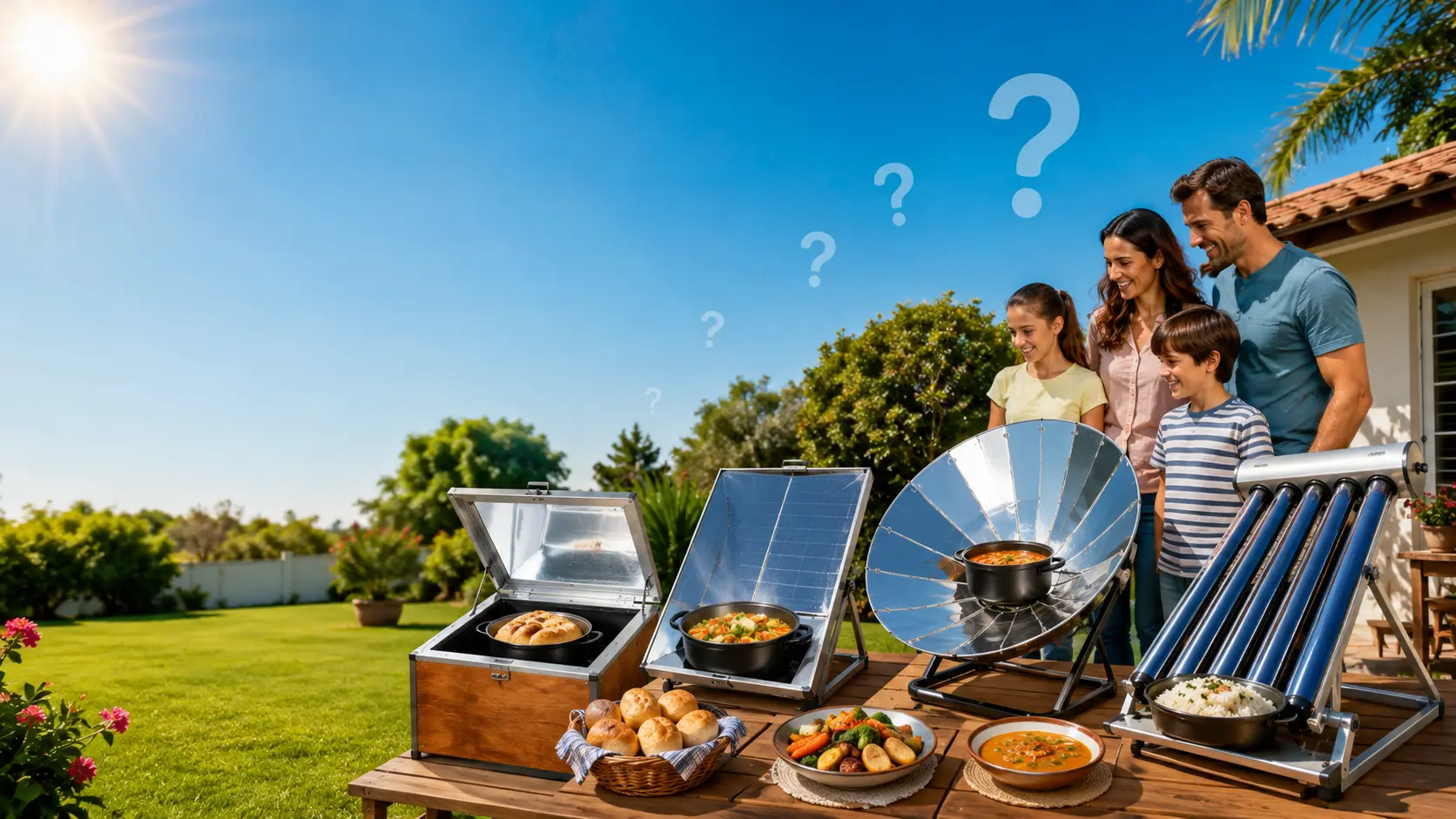
There are four main types of solar cookers, each designed for different cooking needs.
Box Solar Cooker
A well-insulated box with a transparent lid that traps heat. It is excellent for baking, roasting, and slow cooking.
Panel Solar Cooker
Reflective panels direct sunlight onto a cooking pot inside a heat-resistant bag or transparent enclosure. It is lightweight, portable, and affordable.
Parabolic Solar Cooker
A curved reflector concentrates sunlight into a single focal point, producing extremely high temperatures suitable for frying, grilling, and fast cooking.
Vacuum Tube Solar Cooker
Uses insulated glass tubes to trap heat efficiently. It performs well even in cooler weather and often requires less frequent repositioning.
Related Reading: Types of Solar Cookers Explained
28. Which type of solar cooker is best?
There is no single best solar cooker for everyone.
Your ideal choice depends on your cooking style and needs.
- Beginners: Box or panel solar cookers
- Campers: Lightweight panel cookers
- Families: Box solar cookers
- High-temperature cooking: Parabolic solar cookers
- Fast everyday cooking: Vacuum tube solar cookers
Consider your local climate, budget, and the types of meals you plan to cook before making a decision.
29. Are expensive solar cookers worth the money?
In many cases, yes.
Higher-quality solar cookers often offer:
- Better insulation
- Faster cooking
- Higher temperatures
- More durable construction
- Better reflectors
- Longer service life
If you plan to use your solar cooker regularly, investing in a well-made model can provide better performance and long-term value.
Related Reading: Vacuum Tube Solar Cookers: Are They Worth the Extra Cost?
30. Can I make my own solar cooker?
Yes.
Many people successfully build simple solar cookers using inexpensive materials such as:
- Cardboard boxes
- Aluminium foil
- Black paper or paint
- Newspaper insulation
- Clear plastic or glass
DIY solar cookers are excellent science projects and a fun way to learn the basics of solar cooking.
Related Reading: How to Build a DIY Solar Cooker
31. Are homemade solar cookers effective?
Yes, although they have limitations.
A well-built homemade solar cooker can cook simple foods such as rice, vegetables, eggs, and soups on sunny days.
Commercial solar cookers usually provide better insulation, stronger reflectors, and higher cooking temperatures, making them more suitable for frequent use.
Buying a Solar Cooker
32. What should I consider before buying a solar cooker?
Before purchasing a solar cooker, consider:
- Your local climate
- Available sunshine
- Your cooking habits
- Family size
- Portability
- Budget
- Storage space
- The types of food you cook most often
Reading reviews and comparing different models will help you choose the one that best suits your needs.
Related Reading: Best Solar Cookers for Beginners
33. How much does a solar cooker cost?
Prices vary depending on the type, size, and build quality.
As a general guide:
- DIY solar cookers: Very low cost
- Basic panel solar cookers: Budget-friendly
- Box solar cookers: Mid-range
- Vacuum tube solar cookers: Mid- to high-range
- Parabolic solar cookers: Usually the most expensive
Although the initial purchase price varies, many users save money over time by reducing their use of electricity, gas, or charcoal.
34. Is buying a solar cooker worth it?
For many households, the answer is yes.
A solar cooker can help reduce energy costs, lower your environmental impact, and provide a reliable cooking method during camping trips or power outages.
If you live in an area with regular sunshine and enjoy sustainable living, a solar cooker can be an excellent long-term investment.
of solar cooking and be ready to make the most of your solar cooker.
Part 3: Solar Cooker FAQ – Safety, Maintenance, Troubleshooting, and Final Tips
35. Can children use a solar cooker?
Yes, but always under adult supervision.
One of the advantages of a solar cooker is that it doesn’t use an open flame, making it generally safer than charcoal grills or gas stoves. However, the cooking pot, glass lid, and internal cooking chamber can become extremely hot.
To keep everyone safe:
- Always supervise children while cooking.
- Use heat-resistant oven gloves when handling cookware.
- Place the solar cooker on a stable, level surface.
- Allow the cooker to cool before moving or storing it.
With proper supervision, solar cooking can also be an enjoyable educational activity that teaches children about renewable energy and sustainable living.
36. Can food burn in a solar cooker?
Yes, although it is less common than with conventional cooking.
Solar cookers usually provide gentle, even heat, which reduces the risk of burning food. However, foods left in high-temperature solar cookers for too long can become overcooked or dry.
Using enough liquid and following recommended cooking times will help produce the best results.
37. Do I need special cookware?
Not necessarily.
Most standard cookware can be used in a solar cooker. However, dark-coloured pots and pans generally perform better because they absorb more solar energy than shiny metal cookware.
Cookware with tight-fitting lids also helps trap heat and moisture, improving cooking efficiency.
Related Reading: Best Cookware for Solar Cookers
38. What colour cookware works best?
Dark-coloured cookware is the best choice because it absorbs sunlight more efficiently.
Black enamel pots are especially popular among experienced solar cooks.
If you only have shiny stainless-steel cookware, you can still use it, but cooking may take a little longer due to reduced heat absorption.
39. How do I clean a solar cooker?
Cleaning a solar cooker is simple and only takes a few minutes.
After the cooker has cooled completely:
- Wipe reflective panels with a soft microfiber cloth.
- Clean glass covers using warm soapy water or a mild glass cleaner.
- Remove food spills promptly.
- Avoid abrasive cleaners that could scratch mirrors or reflective surfaces.
- Keep the cooker dry before storing it.
Regular cleaning helps maintain maximum cooking performance.
40. How should I store my solar cooker?
Store your solar cooker in a clean, dry location when not in use.
If your cooker folds, collapse it according to the manufacturer’s instructions. Protect mirrors and reflective panels from scratches, as damaged surfaces reduce cooking efficiency.
Proper storage can significantly extend the lifespan of your solar cooker.
41. How long does a solar cooker last?
A quality solar cooker can last for many years.
With proper care, many commercial models remain in excellent condition for 10 to 20 years or more.
Factors that affect lifespan include:
- Build quality
- Frequency of use
- Weather exposure
- Regular maintenance
- Proper storage
Replacing worn seals or damaged reflectors can often extend the life of the cooker even further.
42. Can I leave a solar cooker outside?
It’s best not to.
Although solar cookers are designed for outdoor use, leaving them exposed to rain, strong winds, dust, and prolonged UV radiation can shorten their lifespan.
After cooking, allow the cooker to cool before storing it indoors or under suitable cover.
43. Why isn’t my solar cooker getting hot enough?
Several factors may reduce cooking performance.
Check the following:
- Is the cooker receiving direct sunlight?
- Is it correctly aligned with the sun?
- Are the reflectors clean?
- Is the cooking pot dark-coloured?
- Is the lid tightly closed?
- Is strong wind cooling the cooker?
- Is the cooking area shaded?
Correcting one or more of these issues usually restores good cooking performance.
44. Why is my food taking so long to cook?
Longer cooking times are usually caused by one or more of these factors:
- Weak or inconsistent sunlight
- Cloudy weather
- Large food portions
- Cold or frozen ingredients
- Incorrect cooker alignment
- Opening the lid too often
Remember that solar cooking is naturally slower than conventional cooking. Patience is part of the process, and the results are often worth the wait.
45. Can I use a solar cooker during a power outage?
Yes.
A solar cooker is an excellent backup cooking method during power failures because it requires no electricity, gas, or fuel.
As long as the sun is shining, you can prepare hot meals without relying on the electrical grid.
Many emergency preparedness enthusiasts include a solar cooker as part of their emergency supplies.
46. Is a solar cooker good for camping?
Absolutely.
Solar cookers are popular with campers because they reduce the need to carry cooking fuel. While your meal cooks, you can enjoy hiking, fishing, or relaxing around the campsite.
Panel solar cookers are especially popular because they are lightweight and easy to pack, while box and vacuum tube cookers are ideal for longer camping trips.
47. Can I use a solar cooker every day?
Yes, provided you have enough sunshine.
Many people use their solar cooker several times a week, while others use it almost daily during sunny seasons.
On cloudy days, you may still need a conventional cooking method, but regular solar cooking can significantly reduce your household energy use over time.
48. Are solar cookers useful for emergency preparedness?
Definitely.
Solar cookers are an excellent addition to an emergency preparedness plan because they:
- Require no electricity
- Need no gas or charcoal
- Produce no smoke
- Can be used outdoors
- Reduce dependence on fuel supplies
Combined with stored food and clean drinking water, a solar cooker can provide a reliable cooking solution during natural disasters or extended power outages.
49. What are the biggest mistakes beginners make?
New users often make the following mistakes:
- Not pointing the cooker directly at the sun
- Starting too late in the afternoon
- Opening the cooker too frequently
- Expecting cooking times similar to a gas stove
- Using shiny cookware
- Cooking during heavily overcast weather
- Choosing recipes that require constant stirring
Once you understand how solar cooking works, these mistakes are easy to avoid.
Related Reading: Solar Cooking Tips for Beginners
50. What’s the best advice for someone buying their first solar cooker?
Start simple and be patient.
Choose recipes that are easy to prepare, such as:
- Rice
- Potatoes
- Vegetables
- Soups
- Stews
- Beans
As you become more familiar with your solar cooker, you can try baking bread, roasting meat, and preparing more advanced meals.
Most importantly, choose a solar cooker that matches your budget, cooking style, and local climate. With a little practice, you’ll soon discover that cooking with sunshine is both enjoyable and rewarding.
Final Thoughts
Solar cookers prove that delicious meals don’t always require electricity, gas, charcoal, or firewood. By harnessing the sun’s renewable energy, they offer an environmentally friendly, economical, and practical way to prepare food at home, while camping, or during emergencies.
Whether your goal is to reduce energy bills, lower your environmental impact, enjoy off-grid living, or prepare for unexpected power outages, a solar cooker can be a valuable addition to your kitchen.
We hope this Ultimate Solar Cooker FAQ has answered your most important questions and given you the confidence to begin your solar cooking journey.
Like any cooking method, solar cooking becomes easier with experience. Start with simple recipes, learn how your cooker performs in different weather conditions, and don’t be afraid to experiment. You’ll soon discover just how versatile and enjoyable cooking with the sun can be.