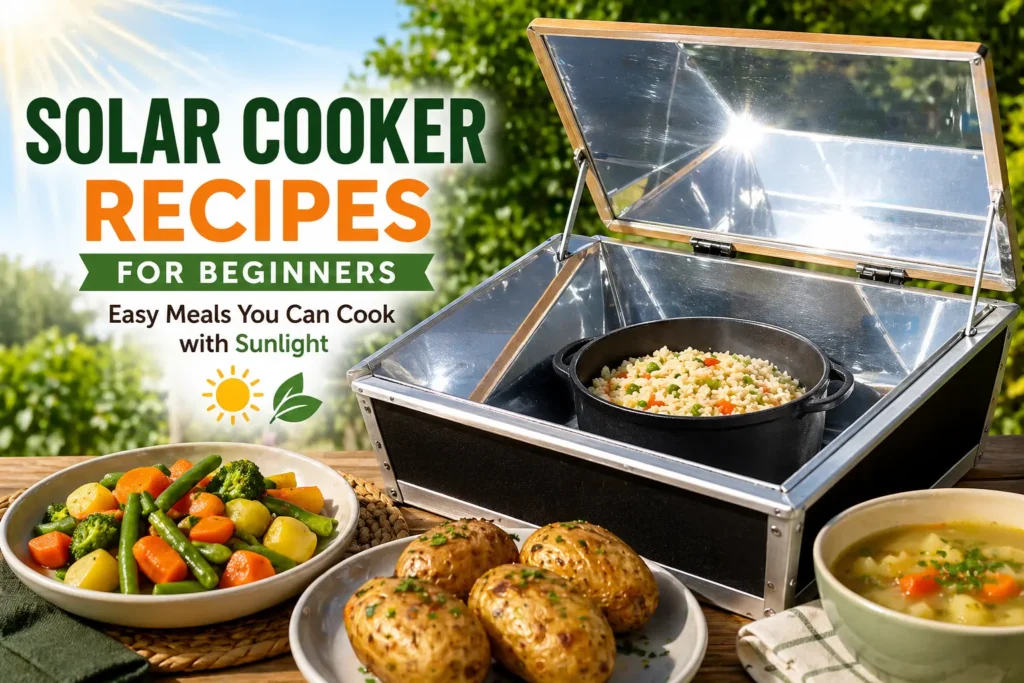
Looking for easy meals you can cook using only sunlight? These solar cooker recipes for beginners are simple, practical, and perfect for your first solar cooking experience.
Solar cooking is a clean and cost-free way to prepare food. Before you begin, it helps to understand solar cooker basics, including how heat is captured and used for cooking. If you’re new, you can also learn how solar cookers work to get better results from your recipes.
The Joy of Sun-Powered Success: A Beginner’s Perspective
The first time you successfully cook a meal using nothing but the sun, it feels less like a chore and more like a small scientific triumph. There is a specific kind of joy in seeing steam rise from a pot of rice that didn’t cost a cent in gas or electricity to prepare. It shifts your perspective on cooking from a rushed task to a patient, rewarding collaboration with nature. For a beginner, starting with these simple recipes is the best way to build that confidence, as they are forgiving and allow you to get a feel for how your type of solar cooker reacts to the moving sun.
🍳 Why Start with Simple Solar Recipes?
Solar cooking is slower than conventional cooking, so beginners should start with simple meals.
Benefits of beginner recipes:
- Easy to prepare
- Require minimal monitoring
- Cook evenly with sunlight
- Lower risk of undercooking
Choosing the right setup from different types of solar cookers will also improve your success rate.
🍚 Best Solar Cooker Recipes for Beginners
🥘 Recipe 1: Solar Cooked Rice
Prep Time: 5 minutes
Cook Time: 1.5 – 2 hours
Servings: 2–3
Ingredients:
- 1 cup rice
- 2 cups water
- Pinch of salt
Instructions:
- Rinse the rice thoroughly.
- Add rice, water, and salt into a dark cooking pot.
- Cover with a lid.
- Place the pot inside your solar cooker.
- Align the cooker to face direct sunlight.
- Cook for 1.5 to 2 hours until rice is soft.
Tips:
- Do not open frequently—heat will escape
- Use a black or dark pot for better heat absorption
- Adjust position every 30–45 minutes for better solar cooker efficiency
🥕 Recipe 2: Solar Cooked Vegetables
Prep Time: 10 minutes
Cook Time: 1 – 1.5 hours
Servings: 2
Ingredients:
- Mixed vegetables (carrots, potatoes, beans)
- 1–2 tablespoons oil
- Salt and pepper
Instructions:
- Chop vegetables into small pieces.
- Mix with oil, salt, and pepper.
- Place in a covered pot.
- Put the pot inside the solar cooker.
- Cook under direct sunlight for 1–1.5 hours.
Tips:
- Cut vegetables evenly for consistent cooking
- Stir once midway if needed
- Works best in strong sunlight
🥔 Recipe 3: Solar Baked Potatoes
Prep Time: 5 minutes
Cook Time: 2–3 hours
Ingredients:
- Whole potatoes
- Optional: butter or seasoning
Instructions:
- Wash potatoes thoroughly.
- Pierce lightly with a fork.
- Place directly in a covered pot or tray.
- Put inside solar cooker facing sunlight.
- Cook for 2–3 hours until soft.
Tips:
- No water needed
- Larger potatoes take longer
- Perfect beginner recipe
🍲 Recipe 4: Solar Cooker Simple Soup
Prep Time: 10 minutes
Cook Time: 2 hours
Ingredients:
- 2 cups water
- Vegetables (carrot, onion, potato)
- Salt and seasoning
Instructions:
- Combine all ingredients in a pot.
- Cover and place in solar cooker.
- Align with sunlight.
- Cook for about 2 hours.
Tips:
- Add spices for better flavor
- Keep lid closed for consistent heat
⚡ Tips for Successful Solar Cooking
To improve your results:
- Always cook in direct sunlight
- Reposition cooker as the sun moves
- Use dark, heat-absorbing cookware
- Avoid opening lid too often
You can further improve performance by learning about solar cooker efficiency and proper positioning.
⚠️ Common Mistakes to Avoid
- Cooking in weak sunlight
- Using reflective or shiny pots
- Opening cooker too often
- Not preheating the cooker
🌍 Learn from Global Solar Cooking
Organizations like Solar Cookers International provide valuable resources, recipes, and global insights into sustainable solar cooking practices.
More Than Just a Meal
Ultimately, solar cooking is about more than just the food on your plate; it is about reclaiming a bit of self-sufficiency. Whether you are experimenting in your backyard or preparing for an outdoor adventure, these initial recipes serve as your foundation. You’ll find that as you become more attuned to the weather and the heat of the day, the process becomes second nature. There is something deeply grounding about eating a meal that was powered entirely by the sky above you—it’s a simple pleasure that never really wears off.
🚀 Get Started Today
If you’re new, begin with simple meals like rice or vegetables. As you gain confidence, you can explore more advanced recipes.
For a complete beginner guide, check out how to start solar cooking and build your skills step by step.
❓ FAQ
What can you cook in a solar cooker?
lmost anything you would put in a slow cooker or oven! Beyond the rice and vegetables mentioned here, you can bake bread, roast meats, and even simmer stews. The only things that are difficult are foods requiring high-heat searing or deep frying, as standard box and panel cookers don’t typically reach those temperatures.
How long does solar cooking take?
As a general rule, you should plan for it to take twice as long as conventional methods. If a dish takes 30 minutes on a gas range, expect it to take 60 to 90 minutes in the sun. This “low and slow” approach is actually a benefit, as it prevents food from burning and helps flavors develop more deeply.
Is solar cooking safe for meat and dairy?
Yes, it is perfectly safe as long as the food reaches and maintains a temperature of at least 74°C (165°F). Because solar cookers act like “greenhouses,” they are excellent at holding heat. For peace of mind, many beginners use a simple oven thermometer to verify the internal temperature during their first few sessions.
Is solar cooking suitable for beginners?
Yes, simple recipes make it easy for beginners to start.
What happens if a cloud covers the sun while I’m cooking?
Don’t panic! Most solar cookers are well-insulated and can retain enough heat to keep cooking through short intermittent cloud cover. However, if the sky stays overcast for more than 20–30 minutes, your cooking temperature will drop, and you may need to finish the meal on a conventional stove.
Do I need to stand outside and watch the cooker the whole time?
Not at all. One of the best “hidden” advantages is that you can’t really burn the food. You only need to check on it every 30 to 60 minutes to “track” the sun (reposition the cooker) so it stays aligned with the strongest rays.