How to Cook with a Solar Cooker
Learning how to cook with a solar cooker is a simple, eco-friendly way to prepare meals using free energy from the sun. Whether you’re a beginner or just curious about solar cooking, this guide will show you exactly how it works, what you can cook, and how to get the best results safely.
Solar cooking is not only cost-effective but also reduces electricity use and helps the environment. With the right setup and sunlight, you can cook delicious meals anywhere.
I still remember the first time I set up a simple cardboard solar cooker in my backyard. To be honest, I was a bit skeptical. The idea that a few reflective panels and standard sunlight could actually boil water—let alone cook a meal—felt like a giant science experiment. But when I checked back a couple of hours later and lifted the lid to a steaming, perfectly fluffy pot of rice, I was completely hooked. There is a unique kind of magic in realizing you just prepared a hot meal without using a single watt of electricity or a puff of gas.
How Does a Solar Cooker Work?
A solar cooker uses sunlight to generate heat for cooking food. It typically includes reflective panels that concentrate sunlight into a cooking area.
The trapped heat builds up inside the cooker, similar to an oven. Temperatures can reach between 90°C and 150°C, which is enough to cook most foods safely.
There are different types of solar cookers, including:
- Box cookers
- Panel cookers
- Parabolic cookers
Each type works slightly differently but follows the same basic principle—using sunlight to cook food.
What Can You Cook in a Solar Cooker?
You can cook a wide variety of foods using a solar cooker. It works especially well for slow-cooked meals.
Common Foods for Solar Cooking
- Rice and grains
- Vegetables
- Chicken and meat
- Fish and eggs
- Soups and stews
Solar cooking is ideal for dishes that do not require constant stirring.
👉 You can also read: Can You Cook Meat in a Solar Cooker? (link your article here)
Solar Cooking Time and Temperature Guide
Cooking time depends on sunlight intensity, food type, and cooker design.
Estimated Cooking Times
- Rice: 1 – 2 hours
- Vegetables: 1 – 1.5 hours
- Chicken: 2 – 3 hours
- Beef stew: 2 – 4 hours
- Fish: 1 – 2 hours
On bright sunny days, cooking is faster. Cloudy conditions may increase cooking time.
To ensure food safety, always cook until food is fully done.
If you are just starting out, my personal recommendation is to begin with something forgiving, like a simple vegetable stew or a batch of rice. Because solar cooking behaves a lot like a slow cooker, it is incredibly forgiving; it’s almost impossible to burn or dry out your food. I’ve found that root vegetables like potatoes and carrots turn out incredibly sweet and tender because they slowly simmer in their own natural juices. It completely changes how you look at a sunny afternoon when you realize your backyard is quietly doing the cooking for you while you tend to other things.
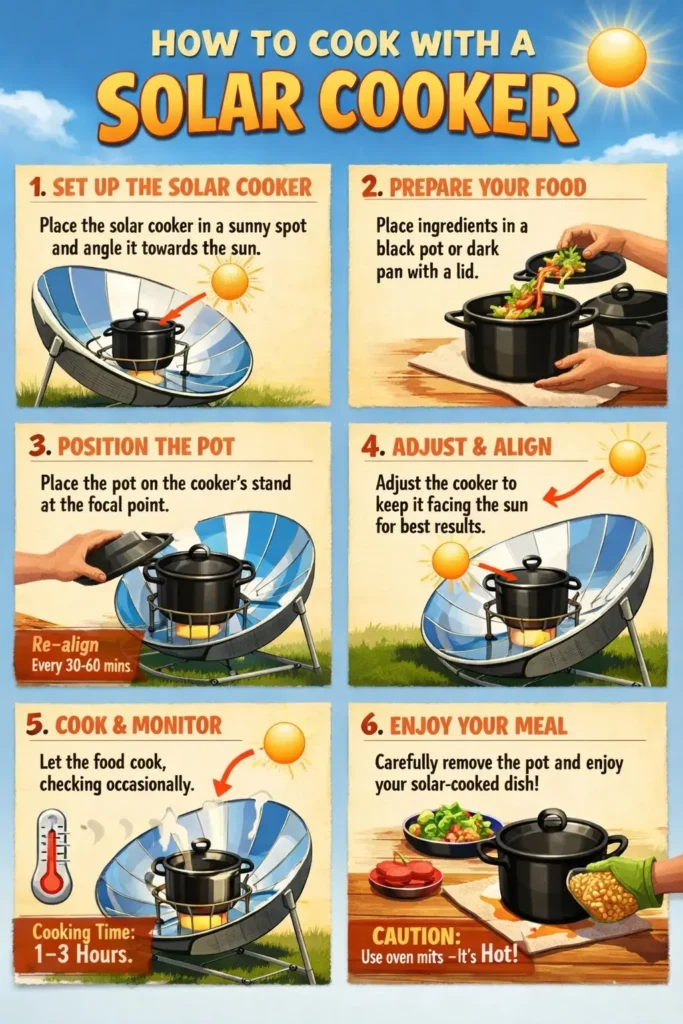
How to Cook with a Solar Cooker Step by Step
Follow these simple steps to cook successfully with a solar cooker:
Step 1: Position the Cooker
Place your solar cooker in direct sunlight, facing the sun.
Step 2: Preheat the Cooker
Allow the cooker to heat up for 15–20 minutes before placing food inside.
Step 3: Prepare Your Food
Cut food into smaller pieces for faster cooking and place it in a dark-colored pot.
Step 4: Cook Without Opening Frequently
Keep the lid closed to maintain heat inside the cooker.
Step 5: Adjust Position
Reposition the cooker every 1–2 hours to follow the sun.
One practical lesson I learned the hard way during my early trials: resist the temptation to constantly peek! Every time you open the lid or the glazing to check on your food, you release a massive amount of trapped heat, adding 15 to 20 minutes to your total cooking time. Solar cooking requires a bit of patience and a shift in mindset. Instead of standing over a hot stove, you learn to trust the process, look at the shadows on the ground to track the sun, and let nature do the heavy lifting at its own steady pace.
Best Tips for Cooking with a Solar Cooker
To get the best results when learning how to cook with a solar cooker:
- Use black or dark cookware to absorb more heat
- Avoid opening the lid too often
- Cook during peak sunlight hours (11 AM – 3 PM)
- Use a thermometer if possible
- Plan meals that require slow cooking
These tips help improve cooking efficiency and food safety.
Advantages of Solar Cooking
Solar cooking offers many benefits:
- No electricity or fuel needed
- Environmentally friendly
- Safe and low risk of burning food
- Ideal for outdoor use
- Cost-saving over time
It is a great solution for sustainable cooking.
Ultimately, embracing solar cooking isn’t just about saving a few cents on your energy bill—though that is a wonderful bonus. For me, it’s about reconnecting with a cleaner, more deliberate way of living. It turns a bright, blazing hot day from an inconvenience into a massive source of free, clean energy. Don’t worry if your first attempt takes a little longer than you thought it would; like any culinary skill, it’s all about getting a feel for your environment and enjoying the journey.
Frequently Asked Questions?
How exactly does a solar cooker cook food without a flame?
It all comes down to capturing and trapping light energy. The reflective panels on a solar cooker act like a funnel, gathering scattered sunlight and concentrating it onto your cooking vessel. When this concentrated light hits a dark-colored pot, the energy is converted into thermal energy (heat). Because the cooker is sealed with a clear glass or plastic lid, it creates a mini greenhouse effect—the heat gets trapped inside, gradually building up to temperatures identical to a standard kitchen slow-cooker.
Is solar cooking actually safe, especially for meat?
Yes, it is entirely safe, provided you follow basic food safety principles. Bacteria are destroyed when food is held at temperatures above 60°C (140°F) for a sustained period. Because a well-built solar cooker easily reaches between 90°C and 150°C, it far exceeds this threshold. The trick with meat is to start early in the day so it spends the peak sunlight hours at maximum heat. As long as your food gets hot and stays hot, it will be perfectly cooked and safe to eat.
What happens if a cloud blocks the sun while I’m cooking?
Passing clouds are normal and won’t ruined your meal, but they do act like turning down the flame on a gas stove. Solar cookers have excellent heat retention (especially box cookers), so they can easily handle a few minutes of shade. However, if the sky becomes heavily overcast for an hour or more, the internal temperature will drop. If this happens while you are cooking meat or dairy, it’s best to bring the pot indoors to finish it on your kitchen stove to ensure food safety.
Do I need to stand outside and constantly turn the cooker to face the sun?
Not at all. You don’t need to chase the sun every few minutes. Because the sun moves across the sky at about 15° per hour, a general rule of thumb is to slightly reposition your cooker every 60 to 90 minutes just to keep the shadows aligned. If you are cooking a quick meal like eggs or fish, you might not need to move it at all. For long, slow afternoon roasts, you can even “aim ahead”—point the cooker slightly west of the sun, walk away, and let the sun track into the perfect position while you do other things.
Can I use my regular stainless steel or ceramic cookware?
While you can, you will get much slower results. Shiny stainless steel, aluminum, and white ceramic pots act like mirrors—they reflect the very sunlight you are trying to trap, meaning your food will take forever to heat up. For efficient solar cooking, thin, lightweight, dark-colored pots (like thin black aluminum or dark enamelware) are ideal because they absorb heat rapidly and transfer it straight to your food.
To see our top recommendations for pots, pans, and thermometers that work perfectly under the sun, check out our comprehensive guide to the Best Solar Cooking Accessories.
What is the absolute best time of day to cook?
The peak window for solar cooking is between 11:00 AM and 3:00 PM. This is when the sun is directly overhead, traveling through the least amount of atmospheric interference, and delivering the highest concentration of solar radiation. While you can certainly prep and preheat your cooker by 9:30 or 10:00 AM, you’ll find that the heavy lifting and actual cooking happen fastest during those four peak midday hours.