
Table of Contents
Introduction
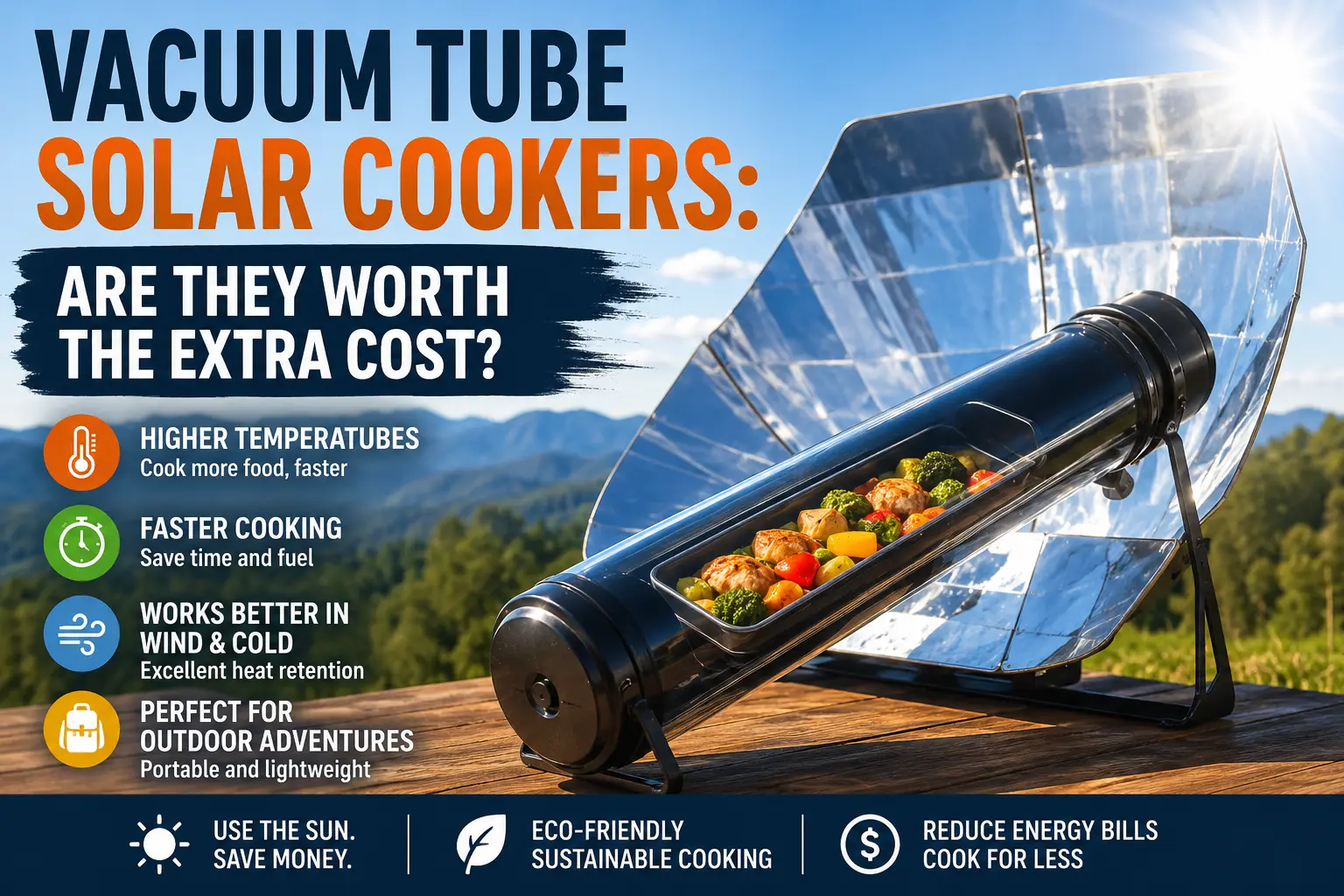
If you’re considering buying a solar cooker, you’ve probably noticed a significant difference in price between the various types available. Simple panel and box solar cookers are relatively affordable, while vacuum tube solar cookers often come with a much higher price tag.
So, are vacuum tube solar cookers worth the extra cost?
Quick Answer: Vacuum tube solar cookers are worth the extra investment if you cook outdoors regularly, enjoy camping, or live in areas with cooler or windy weather. They cook faster, reach higher temperatures, and retain heat better than most box or panel solar cookers. However, if you only plan to use a solar cooker occasionally, a less expensive box or panel cooker may offer better value.
In this guide, we’ll explain how vacuum tube solar cookers work, compare them with other types of solar cookers, and help you decide whether they’re the right choice for your needs.
A Personal Perspective
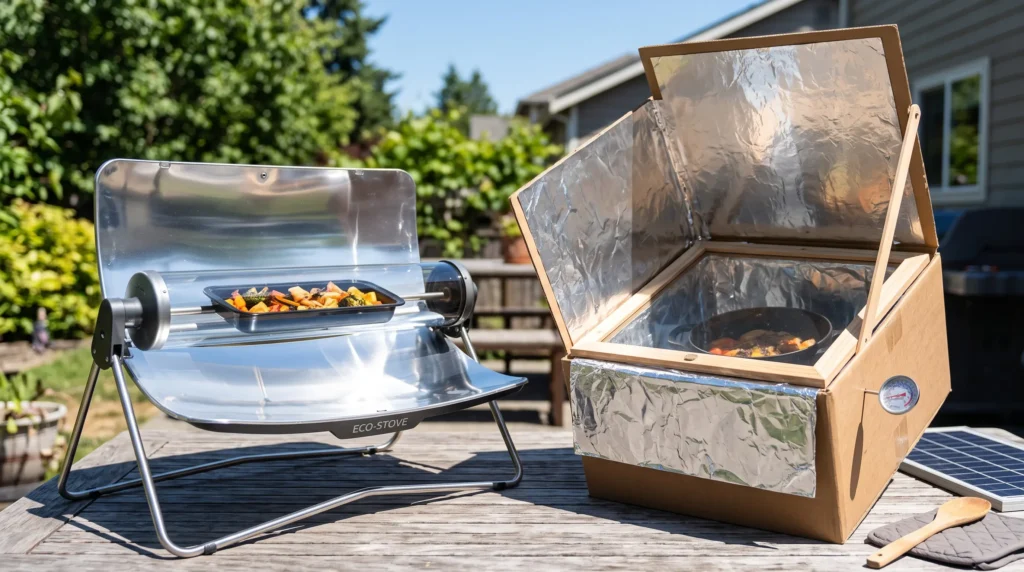
Over the years, I’ve experimented with various solar cooker designs, from simple homemade cardboard ovens to more advanced commercial models.
Building a DIY solar cooker with children or grandchildren is a rewarding weekend project and a great way to introduce renewable energy in a fun, hands-on way. However, when you want to prepare a complete family meal or cook reliably on a cool, breezy day, the type of solar cooker you use becomes much more important.
That’s where vacuum tube solar cookers truly stand out.
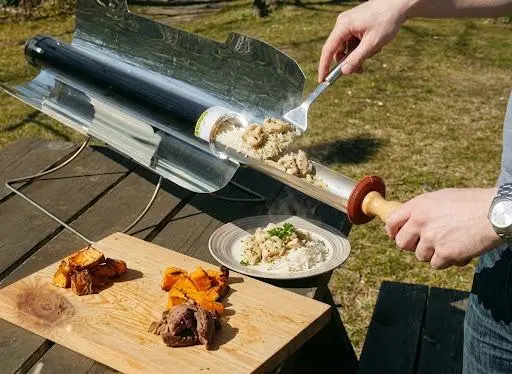
In my own field tests here in Sri Damansara’s tropical climate, the performance difference became clear very quickly. On a clear 32°C afternoon with an UV index of 9, my 1.2-liter vacuum tube cooker climbed to 200°C in just 20 minutes. By contrast, a standard box cooker operating under the exact same ambient conditions required 45 minutes just to reach 120°C.
Field Test Conditions
For this comparison, both cookers were tested under the same general outdoor conditions. The test was conducted on a clear afternoon with an ambient temperature of 32°C and a UV index of 9. The vacuum tube cooker had a 1.2-liter capacity. Temperature readings were taken during the preheating period to compare how quickly each cooker accumulated heat.
What Is a Vacuum Tube Solar Cooker?
A vacuum tube solar cooker uses double-layered borosilicate glass tubes with a vacuum sealed between the two layers. This technology is similar to that used in many high-efficiency solar water heating systems.
The vacuum acts as an excellent insulator, preventing heat from escaping while allowing sunlight to pass through the glass. As a result, the cooker can achieve much higher temperatures than traditional solar cookers.
Unlike a box solar cooker, where heat is trapped inside an insulated chamber, a vacuum tube solar cooker concentrates and retains heat inside the glass tube, allowing food to cook more quickly and efficiently.
How Does a Vacuum Tube Solar Cooker Work?
The cooking process is surprisingly simple.
1. Sunlight Enters the Glass Tube
The transparent outer glass allows sunlight to pass through and reach the heat-absorbing inner tube.
2. Solar Energy Is Absorbed
The inner glass tube has a special dark coating that absorbs sunlight and converts it into heat.
3. The Vacuum Traps Heat
Because there is very little air between the two glass layers, heat transfer by conduction and convection is greatly reduced. The vacuum therefore acts as an effective thermal insulator.
4. Food Cooks Efficiently
The cooking tray or pot inside the tube absorbs the heat, allowing food to cook at surprisingly high temperatures.
This efficient design enables vacuum tube solar cookers to maintain excellent cooking performance, even on cool or windy days with clear sunshine.
Advantages of Vacuum Tube Solar Cookers
1. Higher Cooking Temperatures
One of the biggest advantages of vacuum tube solar cookers is their ability to reach high temperatures under strong sunlight. Depending on the design, weather conditions, and measurement method, some models can reach temperatures well above 180°C.
These higher temperatures make it possible to:
- Boil water quickly
- Bake bread
- Roast vegetables
- Cook rice
- Prepare soups and stews
- Cook chicken, fish, and other meats
Some premium models can even handle light frying.
2. Faster Cooking Times
Because very little heat is lost, food generally cooks much faster than in traditional solar cookers.
| Food | Vacuum Tube Cooker | Box Solar Cooker |
|---|---|---|
| Rice | 45–60 minutes | 1.5–2 hours |
| Soup or Stew | About 1 hour | Around 2 hours |
| Potatoes | 1–1.5 hours | 2–3 hours |
Actual cooking times vary depending on sunlight intensity, ambient temperature, and the amount of food being cooked.
These figures should be treated as general examples rather than guaranteed cooking times. Actual results can vary significantly between cooker models and weather conditions.
3. Excellent Heat Retention
Vacuum tube solar cookers greatly reduce heat loss through conduction and convection because of their vacuum insulation.
This makes them particularly suitable for:
- Cooler climates
- Windy conditions
- Autumn and winter cooking (with clear sunshine)
- High-altitude locations
4. Outstanding Energy Efficiency
Because very little heat escapes, more of the sun’s energy is converted directly into cooking heat.
This efficient design can make vacuum tube solar cookers an attractive option when heat retention and cooking performance are important.
5. Portable and Travel-Friendly
Many vacuum tube solar cookers are designed with outdoor enthusiasts in mind.
Compared with bulky wooden box cookers, they are often:
- Lightweight
- Compact
- Easy to carry
- Suitable for camping
- Ideal for caravans and RV trips
Some models even include carrying bags and folding reflectors for added convenience.
Disadvantages of Vacuum Tube Solar Cookers
1. Higher Purchase Price
There is no denying that vacuum tube solar cookers cost more than other types of solar cookers.
The advanced borosilicate glass tubes, precision manufacturing, and high-performance insulation all contribute to the higher price.
| Solar Cooker Type | Typical Price |
|---|---|
| DIY Cardboard Solar Cooker | Under $10 |
| Panel Solar Cooker | $50–150 |
| Box Solar Cooker | $150–350 |
| Vacuum Tube Solar Cooker | $250–600+ |
Although the initial investment is higher, frequent users may reduce their use of electricity, gas, charcoal, or camping fuel. Whether the cooker actually pays for itself depends on how often it is used and the local cost of alternative fuels.
2. Glass Tubes Require Care
Although borosilicate glass is highly resistant to heat and thermal shock, it is still glass.
Dropping the cooker or transporting it carelessly may crack or break the tube, and replacement tubes can be expensive.
The Danger of Thermal Shock (Glass Shattering Risk):
A sudden temperature change can create thermal stress in the glass tube and may cause it to crack or shatter. Avoid introducing cold liquid or frozen food into a very hot tube. It is safer to load food according to the manufacturer’s instructions and allow the cooker to cool before cleaning it.
3. Smaller Cooking Capacity
The long, narrow design of the vacuum tube limits the size of the cooking container.
Most models are best suited for cooking meals for one to four people.
If you’re preparing food for a larger family, you may need to cook in several batches.
4. Requires Direct Sunshine
Like all solar cookers, vacuum tube models depend on sunlight.
Heavy cloud cover, thick haze, rain, or shade will significantly reduce their performance.
In my experience, vacuum tube cookers perform best when the sun casts clear, sharp shadows. Under hazy skies, a traditional box cooker may continue to cook slowly using diffuse sunlight, while a vacuum tube cooker loses much of its performance advantage.
Cleaning and Maintenance Protocol:
- Cool Down Period: Never submerge or spray a hot tube with cold water; wait at least 30 minutes in full shade.
- Non-Abrasive Cleaning: Use a long cylindrical foam brush or soft bottle washer. Avoid wire scrubbers that scratch the internal non-stick trays or inner glass coating.
- Degreasing the Tray: Clean stainless steel baking trays using warm soapy water mixed with baking soda to dissolve baked-on oils.
- Vacuum Seal Inspection: Periodically check the bottom tip of the glass tube (the getter point). If the silvery barium coating turns milky white, the vacuum seal has compromised and the tube has lost its insulation capabilities.
Vacuum Tube Solar Cooker vs Other Solar Cookers
| Technical Feature | Panel Solar Cooker | Insulated Box Cooker | Vacuum Tube Solar Cooker | Parabolic Solar Cooker |
| Max Working Temp | 100°C – 120°C | 140°C – 165°C | 200°C – 290°C | 250°C – 350°C+ |
| Primary Heat Loss | Convection & Wind | Thermal Conduction | Greatly reduced conduction and convection | Wind / Ambient Air |
| Preheat Time to 150°C | N/A (Cannot reach) | 40–60 Minutes | 10–15 Minutes | 5–10 Minutes |
| Capacity / Volume | 3–5 Liters | 6–10 Liters | 1.0–1.5 Liters (Narrow) | 4–6 Liters (Pot Dependent) |
| Thermal Shock Risk | None | Low | High (Requires Caution) | Moderate |
| Baking / Frying Ability | Poor | Moderate (Baking) | Excellent (Roast/Bake) | Excellent (Searing/Frying) |
What I Found in Practice
The specifications on paper do not tell the whole story. In my own testing, the vacuum tube cooker reached high temperatures considerably faster than my box cooker under strong tropical sunlight. However, performance changed when the sky became hazy or cloud cover increased. This is why I would consider actual cooking conditions, rather than maximum temperature alone, when choosing between different solar cooker designs.
Who Should Buy a Vacuum Tube Solar Cooker?
A vacuum tube solar cooker is an excellent investment if you:
- Cook outdoors regularly.
- Enjoy camping or overlanding.
- Live in a cooler or windy climate.
- Want faster cooking times.
- Frequently use solar energy to reduce fuel costs.
- Value convenience and high performance.
For regular users, the higher purchase price may be justified by faster cooking and better heat retention, depending on how often the cooker is used.
Who Should Choose a Box or Panel Solar Cooker?
A traditional solar cooker may be a better option if you:
- Only cook with solar energy occasionally.
- Enjoy DIY projects.
- Have a limited budget.
- Want to teach children about renewable energy.
- Mainly warm food or boil water.
A well-designed box solar cooker remains one of the best choices for beginners.
Are Vacuum Tube Solar Cookers Worth the Extra Cost?
The answer depends on how you plan to use it.
If your solar cooker spends most of the year stored away in the garage, paying extra for a vacuum tube model probably isn’t worthwhile.
However, if you regularly cook outdoors, enjoy camping, or use solar cooking to reduce your household energy bills, the investment can make excellent financial sense.
Ultimately, the best solar cooker isn’t necessarily the most expensive one—it’s the one that matches your cooking habits, lifestyle, and budget.
Frequently Asked Questions
Can a vacuum tube solar cooker cook meat safely?
Yes. Vacuum tube solar cookers can easily reach temperatures suitable for cooking chicken, beef, fish, and other meats. Always use a food thermometer to ensure your food reaches a safe internal temperature. Cooking time alone is not a reliable way to determine whether meat is safely cooked.
Do vacuum tube solar cookers work during winter?
Yes. They can work in winter when there is sufficient direct sunlight. The vacuum insulation helps reduce heat loss, although actual cooking performance depends on sunlight intensity, ambient temperature, and the cooker design.
Are vacuum tube solar cookers safe?
Yes. Since they don’t use open flames or fuel, they are generally very safe. However, the glass tube and cooking pot become extremely hot, so always use heat-resistant gloves.
How long does a vacuum tube last?
With proper care, a high-quality borosilicate glass tube can last for many years. Avoid dropping it or exposing it to heavy impacts during transport.
Have more questions about solar cooking?
Visit our Solar Cooker FAQ: 50 Frequently Asked Questions for answers to common questions about choosing a solar cooker, cooking times, food safety, recipes, maintenance, and troubleshooting.
Final Verdict
Vacuum tube solar cookers offer excellent performance for solar cooking, particularly when fast heating, high temperatures, and good heat retention are important.
While the higher purchase price may not be worthwhile for occasional users, they can be a good investment for people who cook outdoors regularly, enjoy camping, or want a reliable and efficient way to prepare meals using renewable energy.
Before making your decision, consider how often you’ll use the cooker, the types of meals you plan to prepare, and your local climate. Choosing the right solar cooker will help you make the most of the sun’s energy while enjoying fuel-free cooking.
You May Also Like
If you’re interested in learning more about solar cooking, check out these helpful guides:
- Solar Cooking for Beginners: Complete Starter Guide
- Types of Solar Cookers Explained: Box, Panel, and Parabolic
- Which Solar Cooker Should You Buy? A Complete Comparison Guide
- Solar Cooker vs Traditional Cooking: Cost, Safety, and Efficiency Comparison
- Why Is My DIY Solar Oven Not Getting Hot? (5 Common Mistakes & Fixes)
Whether you’re building your first DIY solar oven or investing in a high-performance vacuum tube model, these articles will help you get the best results from solar cooking.