What Foods Can You Cook in a Solar Cooker?
One of the most common beginner questions is: what foods can you cook in a solar cooker?
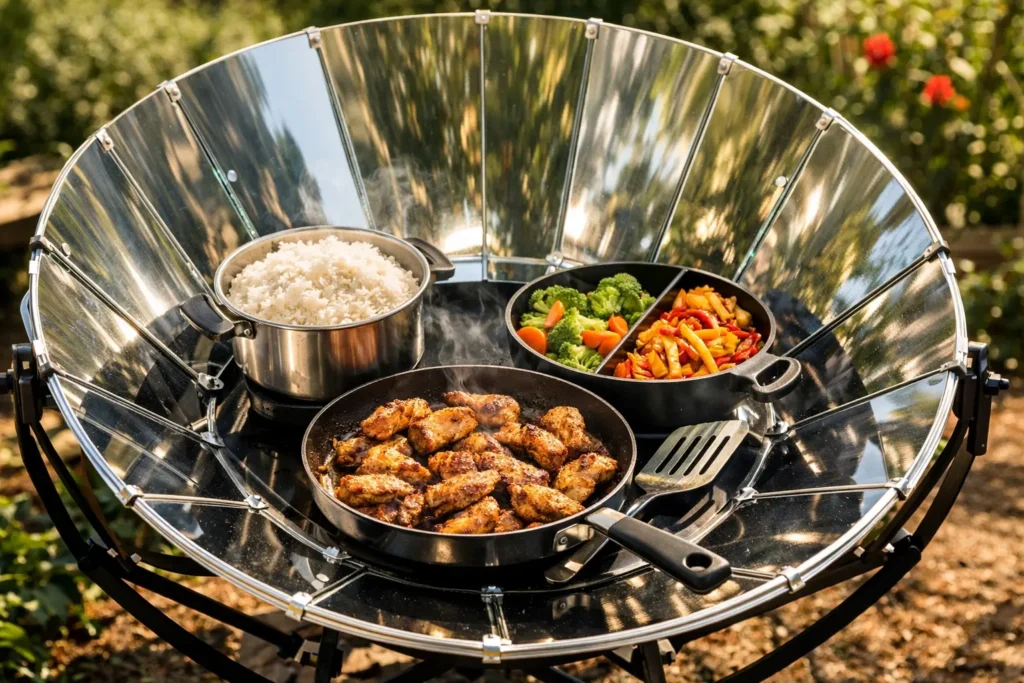
The answer may surprise you. Solar cookers are capable of preparing a wide variety of everyday meals — from grains and vegetables to poultry and baked goods — as long as there is sufficient sunlight and proper alignment.
Many people ask what foods can you cook in a solar cooker, especially when starting out with solar cooking.
This guide explains what foods work best, why they cook well in solar ovens, and what beginners should start with.
How Solar Cooking Affects Food
Solar cookers work like slow ovens. They heat gradually and retain moisture.
That means foods that cook well in solar cookers usually:
- Do not require extremely high heat
- Benefit from slow cooking
- Can cook evenly over time
- Do not require constant stirring
To understand the science behind this, see What Is a Solar Cooker and How Does It Work?
What Foods Can You Cook in a Solar Cooker?
1. Grains and Rice
- White rice
- Brown rice
- Quinoa
2. Vegetables
- Potatoes
- Carrots
- Corn
3. Meat and Poultry
- Chicken
- Fish
- Beef (slow cooking)
4. Baked Foods
- Bread
- Cakes
- Cookies
5. Desserts
- Fruit pies
- Baked apples
- Brownies
🍚 Grains and Starches
Grains are perfect beginner-friendly solar cooker foods.
You can cook:
- Rice
- Quinoa
- Oats
- Pasta
- Lentils
Why they work well:
Grains cook safely at around 100°C (boiling point of water). Most box solar cookers easily reach 120–160°C under strong sunlight.
Cooking time typically ranges from 1.5 to 2 hours depending on sunlight intensity.
🥕 Vegetables
Vegetables are among the easiest foods to cook using solar energy.
Good options include:
- Carrots
- Potatoes
- Sweet potatoes
- Pumpkin
- Broccoli
- Zucchini
Slow heat helps vegetables soften gradually while retaining moisture and nutrients.
Cut vegetables into smaller pieces to improve efficiency.
For efficiency tips, read How to Improve Solar Cooker Efficiency.
🍗 Poultry and Meat
Yes, solar cookers can cook meat safely.
You can prepare:
- Chicken pieces
- Small whole chicken
- Beef stew
- Fish fillets
The most important factor is internal temperature.
Chicken must reach 75°C internally for safe consumption.
Cooking meat takes longer than vegetables, typically 2–3 hours under peak sunlight.
Learn more in Can You Cook Meat in a Solar Cooker.
🍞 Baked Foods
Solar cookers can also bake simple items.
You can make:
- Bread
- Muffins
- Basic cakes
- Cookies
Baking works best in box solar cookers due to even heat retention.
Temperatures suitable for baking are explained in What Temperature Can a Solar Cooker Reach.
🥣 Soups and Stews
Soups and stews perform exceptionally well in solar cookers.
Benefits:
- Moist cooking environment
- Even heat distribution
- Lower risk of burning
Simply combine ingredients, cover with a lid, and allow sufficient time.
🚫 Foods That Are Difficult to Cook
Some foods are harder to prepare in standard box or panel solar cookers:
- Deep-fried foods
- Fast seared meats
- Stir-fry requiring high rapid heat
Parabolic solar cookers can reach higher temperatures but require careful supervision.
See Types of Solar Cookers Explained for differences.
What Foods Are Not Suitable for a Solar Cooker?
Some foods are difficult to cook in a solar cooker, such as deep-fried foods, foods requiring very high heat, and recipes that need precise temperature control.
Beginner Tips for Best Results
To cook food successfully in a solar cooker:
✔ Use dark cookware
✔ Keep lids on tightly
✔ Align cooker every 30–60 minutes
✔ Cook during peak sunlight
✔ Avoid overloading
Avoid beginner errors by reviewing Common Solar Cooker Mistakes to Avoid.
Final Thoughts
So, what foods can you cook in a solar cooker?
You can cook grains, vegetables, poultry, soups, baked goods, and more — provided that the cooker is properly aligned and sunlight is strong.
Solar cooking works best with foods that benefit from steady, gradual heat rather than rapid, high-temperature cooking.
With practice and correct setup, solar cookers can prepare full meals using nothing but sunlight.
👉 Want to start cooking? Check out the best solar cookers for beginners here.
Frequently Asked Questions (FAQ)
1. What foods cook best in a solar cooker?
Foods that cook slowly and retain moisture, such as rice, vegetables, and stews, work best in a solar cooker.
2. Can you cook meat in a solar cooker?
Yes, you can cook chicken, fish, and even beef in a solar cooker, but it may take longer compared to conventional cooking.
3. Can you bake in a solar cooker?
Yes, solar cookers can be used to bake bread, cakes, and cookies under strong sunlight.
4. What is the easiest food to cook in a solar cooker?
Rice, boiled eggs, and vegetables are among the easiest foods for beginners.
5. Can I cook frozen food in a solar cooker?
It is better to thaw frozen food first, as solar cookers rely on gradual heat buildup.