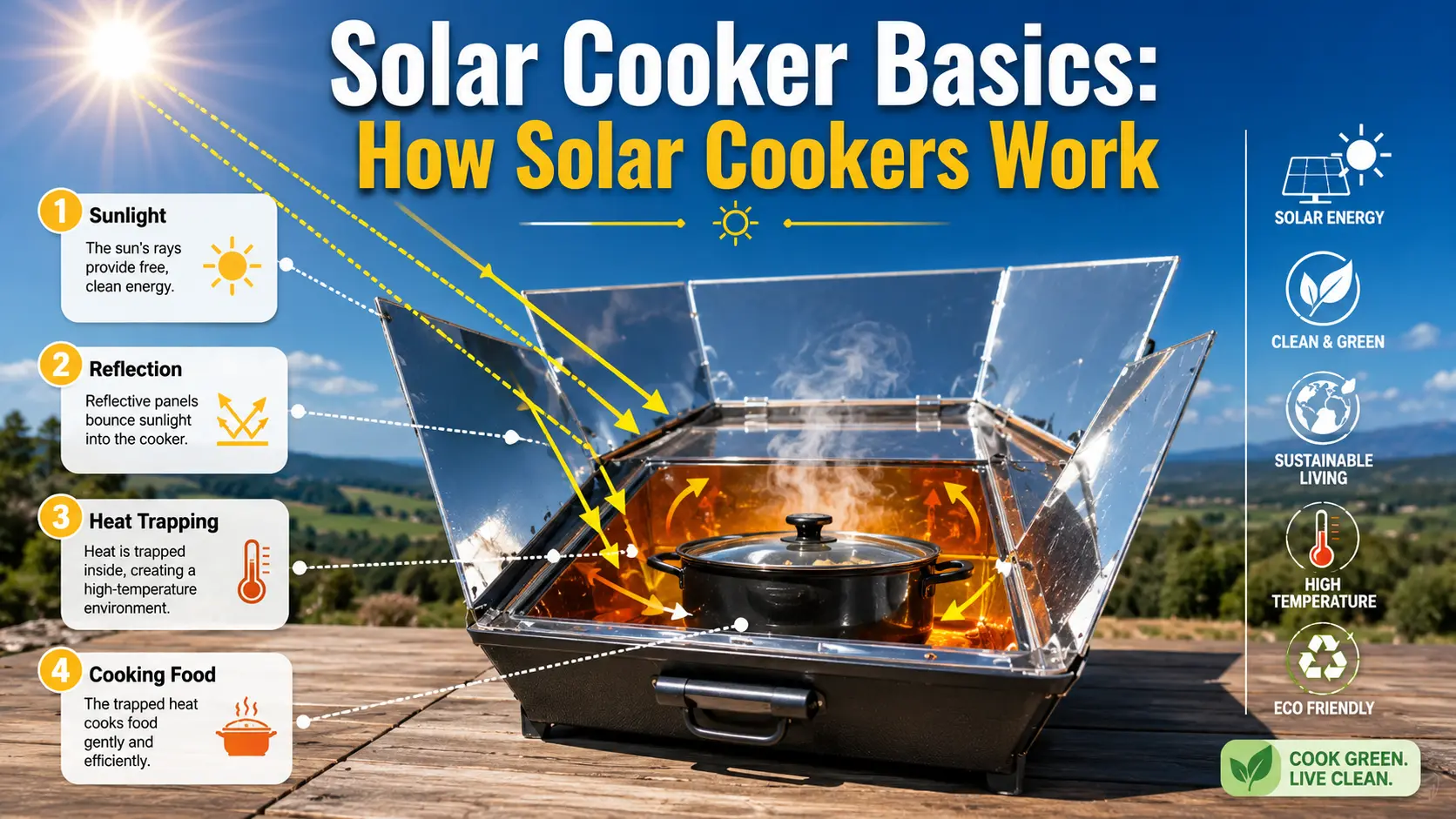
I still remember the first time I set up a simple box cooker in my backyard. I was skeptical that a few reflective panels and a bit of glass could actually produce a meal, but three hours later, I was eating the most perfectly steamed rice I’ve ever had. There’s a unique kind of satisfaction that comes from sitting back and letting the sun do all the hard work for you—no clicking of a gas stove, no hum of an electric oven, just pure, free energy from the sky.
Solar cooking is a simple, eco-friendly method that uses the sun’s energy to prepare food safely and efficiently. Whether you’re completely new or just curious, this guide will walk you through everything you need to get started with confidence.
🔍 What Is a Solar Cooker?
A solar cooker is a device that captures sunlight and converts it into heat for cooking food.
Unlike traditional cooking methods, it does not require:
- Gas
- Electricity
- Fire
☀️ How Solar Cookers Work
To get the best results, it’s important to understand how solar cookers work. They operate using three key principles:
1. Reflection
Mirrors or reflective panels direct sunlight into the cooking area.
2. Absorption
Dark-colored pots absorb sunlight and convert it into heat.
3. Heat Trapping (Greenhouse Effect)
A transparent cover traps heat inside, allowing temperatures to rise.
When combined, these elements can generate temperatures between 80°C and 200°C, enough to cook most meals.
🔧 Types of Solar Cookers
Explore the different types of solar cookers to understand which design is best for your needs.
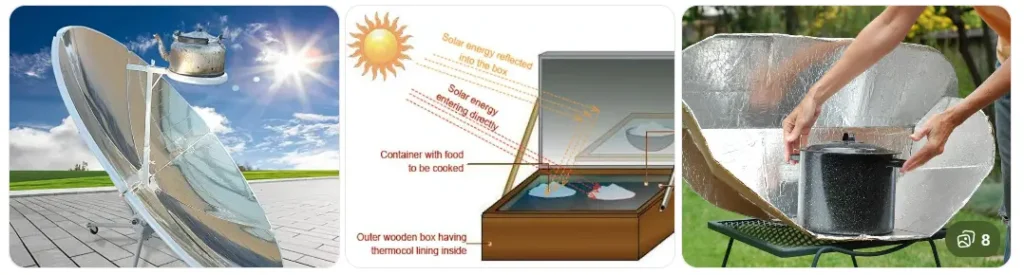
1. Box Cooker
- Simple and beginner-friendly
- Uses an insulated box with a glass cover
- Ideal for rice, vegetables, and stews
2. Panel Cooker
- Lightweight and portable
- Uses reflective panels to focus sunlight
- Great for camping
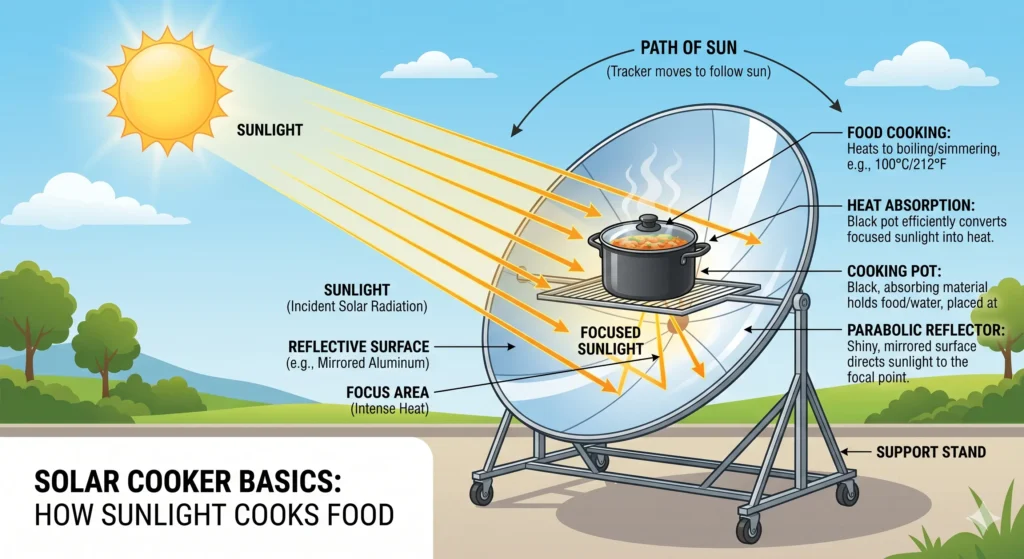
3. Parabolic Cooker
- Produces high heat for fast cooking
- Can fry or boil food
- Requires careful positioning
👉 For detailed comparison, link this section to your Types of Solar Cookers page.
Not sure which solar cooker is right for you? Our detailed Cooker Designs & Types explain the advantages and disadvantages of box, panel, parabolic, and vacuum tube solar cookers, helping you choose the best option for your cooking style and budget.
⚡ Solar Cooker Efficiency
Understanding solar cooker efficiency helps you cook faster and more effectively.
Key factors that affect performance:
- Sunlight intensity
- Cooker design
- Angle and positioning
- Type of cookware (dark pots work best)
👉 For best results:
Keep the lid closed to retain heat adjust it as the sun moves.
Always face the cooker directly toward the sun
Adjust it every 30–60 minutes
🌱 Benefits of Solar Cooking
Solar cooking offers many advantages:
✅ No Fuel Cost
Uses free energy from the sun
✅ Eco-Friendly
Reduces carbon emissions and deforestation
✅ Safe to Use
No open flame or gas leaks
✅ Perfect for Off-Grid Living
Ideal for camping, emergencies, and rural areas
Organizations like solar cooking worldwide initiatives by Solar Cookers International promote sustainable cooking and provide valuable resources.
⚠️ Limitations of Solar Cookers
While effective, solar cookers do have limitations:
❌ Weather Dependent
Requires sunlight to function properly
❌ Slower Cooking
Takes longer than gas or electric stoves
❌ Not Suitable at Night
Cannot be used after sunset (unless hybrid models are used)
👉 With proper planning, these limitations are manageable.manageable.
🧑🍳 Solar Cooking Safety Tips
Always follow basic safety practices:
- Use heat-resistant gloves
- Avoid direct eye exposure to reflected sunlight
- Ensure food reaches safe cooking temperature
- Keep children supervised
Solar cooking is generally very safe due to the absence of open flames.
🍲 What Can You Cook in a Solar Cooker?
You can cook a wide variety of foods:
- Rice
- Vegetables
- Soup and stews
- Eggs
- Bread and cakes
- Meat (when proper temperature is reached)
Solar cooking works similarly to slow cooking, helping retain moisture and nutrients.
⏱️ How Long Does Solar Cooking Take?
Cooking times depend on sunlight and cooker type:
- Rice: 1–2 hours
- Vegetables: 1–2 hours
- Meat: 2–4 hours
👉 Best cooking time is usually between 10 AM and 2 PM
🌡️ What Temperature Can a Solar Cooker Reach?
- Box cookers: 80°C – 150°C
- Panel cookers: 90°C – 160°C
- Parabolic cookers: up to 200°C+
These temperatures are sufficient for most cooking needs.
🚀 How to Start Solar Cooking
If you’re ready to begin:
Beginner Steps:
- Choose a simple solar cooker (box or panel)
- Use a dark pot with a lid
- Place food inside and align with sunlight
- Adjust position as the sun moves
- Be patient — solar cooking takes time
❌ Common Mistakes to Avoid
- Opening the lid too frequently
- Cooking too late in the day
- Using reflective or light-colored pots
- Not adjusting the cooker toward the sun
📚 Expand Your Knowledge
To continue learning, explore:
How to Cook With a Solar Cooker
Solar Cooker vs Traditional Cooking
- Solar cooker: free, eco-friendly, slower
- Gas/electric: faster but costly
My Take: Why I’m Hooked on Solar Cooking
Solar cooking has completely changed how I think about my daily energy use. It’s not just about saving a few dollars on the utility bill; it’s about the peace of mind that comes with knowing I can prepare a hot meal even if the power goes out. While it does take a little bit of practice to learn how to “chase the sun,” once you get into the rhythm of adjusting your cooker every hour or so, it becomes a relaxing, rewarding part of the day that connects you directly to the environment.
FAQ
What is a solar cooker?
A solar cooker is an eco-friendly device that harnesses the natural power of direct sunlight to cook, bake, and pasteurize food. Because it relies entirely on solar energy, it requires absolutely no electricity, gas, wood, or charcoal to operate.
How does a solar cooker work?
While designs vary (such as panel, box, or parabolic cookers), they all rely on three basic principles:
Concentration: Reflective surfaces (like aluminum foil or polished metal) redirect and concentrate sunlight toward a central cooking area.
Absorption: A dark-colored or black cooking pot absorbs the concentrated light and converts it into heat energy.
Retention: A transparent covering (like glass or a heat-resistant plastic bag) traps the heat inside, creating a greenhouse effect that cooks the food thoroughly over time.
Can solar cookers work on cloudy days?
Solar cookers require direct sunlight to function efficiently.
Bright, clear days offer the fastest and most reliable cooking times.
Light, passing clouds will slow down the cooking process but may still allow the cooker to function.
Thick, heavy overcast skies will generally prevent solar cooking, as there isn’t enough solar radiation to reach and maintain cooking temperatures.
Is solar cooking safe?
Yes, it is exceptionally safe. In fact, it offers several safety advantages over traditional cooking methods:
No Fire Hazard: There are no open flames, gas leaks, or electrical elements, drastically reducing the risk of accidental fires.
Nutrient Retention: Because solar cooking typically happens at lower, steadier temperatures, it preserves more nutrients and moisture in the food compared to high-heat frying.
Healthier Air: It produces zero smoke, making it a clean and healthy alternative for both the cook and the environment.
💡 Safety Tip: The reflective panels can get bright, and parabolic cookers can generate intense, localized heat. It is always a good idea to wear sunglasses when adjusting your cooker and to use oven mitts when handling the hot cooking pots.