
Table of Contents
Introduction
Finding the best solar cooker for your outdoor kitchen or emergency prep setup depends on balancing thermal speed, capacity, portability, and safety. Whether you want to bake fresh bread in your backyard, boil water on a camping trip, or save money on utility bills, choosing the right solar thermal collector makes all the difference in your cooking results.
When I first started experimenting with solar cooking, I’ll admit I was a bit skeptical. The idea of relying entirely on the sun to bake bread or roast a meal felt like a novel science experiment rather than a practical way to cook. But after years of tweaking designs, building simple cardboard setups, and testing what actually works in the backyard, I quickly realized how incredibly efficient this technology can be when you have the right gear.
Best Solar Cooker (2026): Top Picks for Fast & Safe Cooking
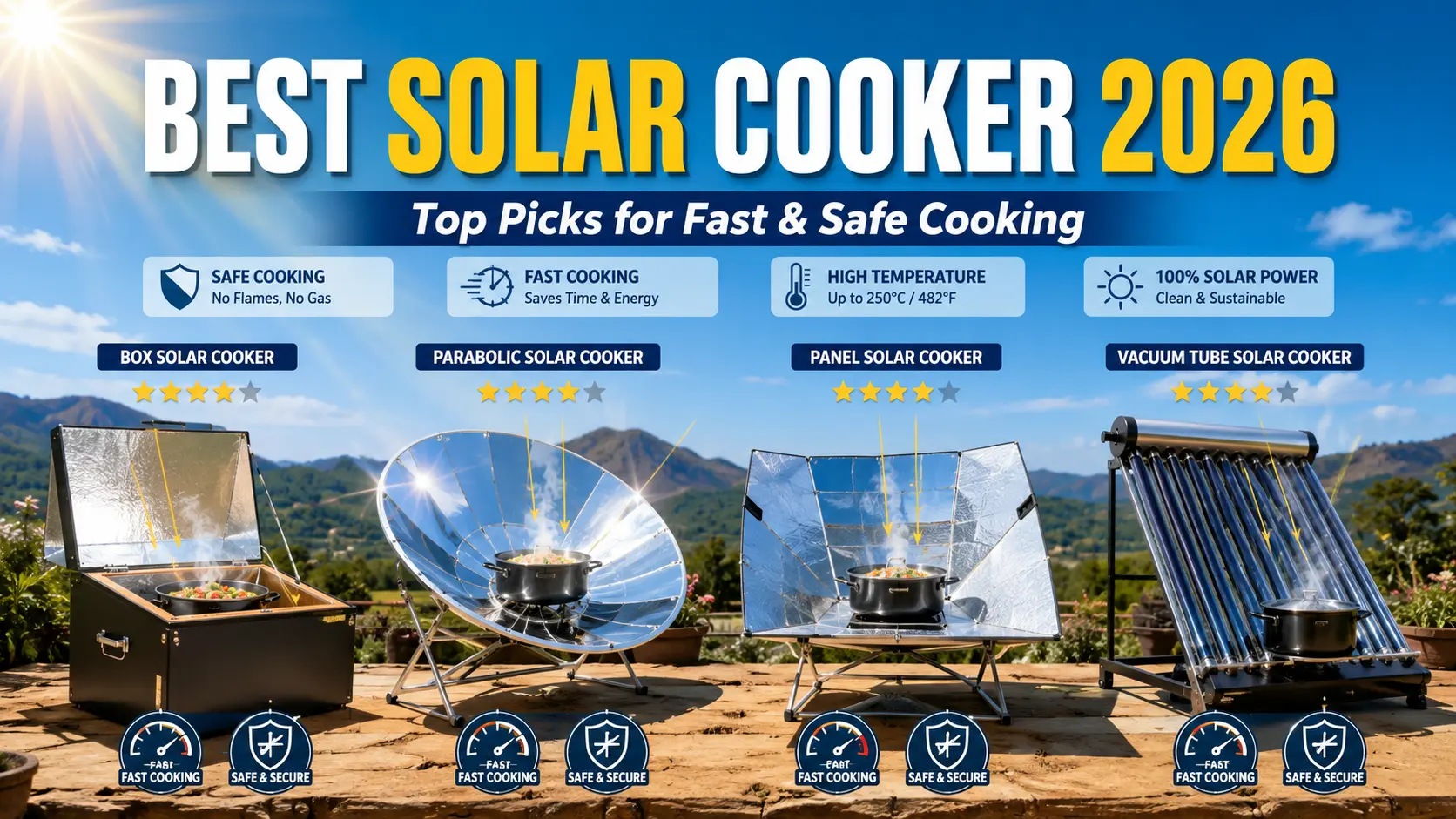
Looking for the best solar cooker? Looking for the best solar cooker? This guide compares several popular solar cooker designs based on cooking speed, capacity, portability, ease of use, and suitability for different cooking needs. The best choice depends on how and where you plan to use it..
🥇 Best Overall: GoSun Sport Solar Oven
Why it stands out: Fast heating, an enclosed design, and good portability make this model an interesting option for beginners and outdoor cooking.
- ✔ Reaches high temperatures quickly
- ✔ Enclosed design (safer than open cookers)
- ✔ Portable and easy to use
I was surprised the first time I used this—even on a slightly hazy afternoon in Petaling Jaya, the tube reached cooking temperature much faster than I expected
🥈 Best Premium Option: GoSun Fusion Solar Oven
- ✔ Works even in low sunlight
- ✔ Hybrid solar + electric
- ✔ More consistent cooking
🥉 Best Budget: Sunflair Solar Oven
- ✔ Affordable and lightweight
- ✔ Great for beginners
- ✔ Easy to carry for camping
Best for Families
While the GoSun Sport is excellent for speed, its tube shape can be limiting for larger meals. Adding a category for high-capacity cooking would broaden the article’s appeal.
- Recommendation: All American Sun Oven. It is a classic box cooker that fits standard baking pans and pots, making it ideal for families or those wanting to bake bread and roasts.
📊 2026 Solar Cooker Performance Matrix
| Solar Cooker Model | Collector Type | Max Temp | Capacity | Pre-Heat Time | Best Application |
| GoSun Sport | Evacuated Vacuum Tube | 290°C (550°F) | 1–2 Servings | 10 Minutes | Fast solo/couples meals & camping |
| GoSun Fusion | Hybrid Tube + Electric | 290°C (550°F) | 2–4 Servings | 10 Minutes | Nighttime & overcast hybrid cooking |
| Sunflair Oven | Insulated Panel / Foil | 140°C (285°F) | 2–3 Servings | 25 Minutes | Ultra-lightweight backpacking & budget |
| All American Sun Oven | Insulated Box + Flaps | 200°C (400°F) | 4–6 Servings | 20 Minutes | Family baking, roasts & meal prep |
Performance figures are approximate and can vary according to sunlight intensity, ambient temperature, cooker orientation, food quantity, and the specific model. Manufacturer specifications may also differ from actual cooking performance in outdoor conditions.
Types of Solar Cookers
There are three main types of solar cookers:
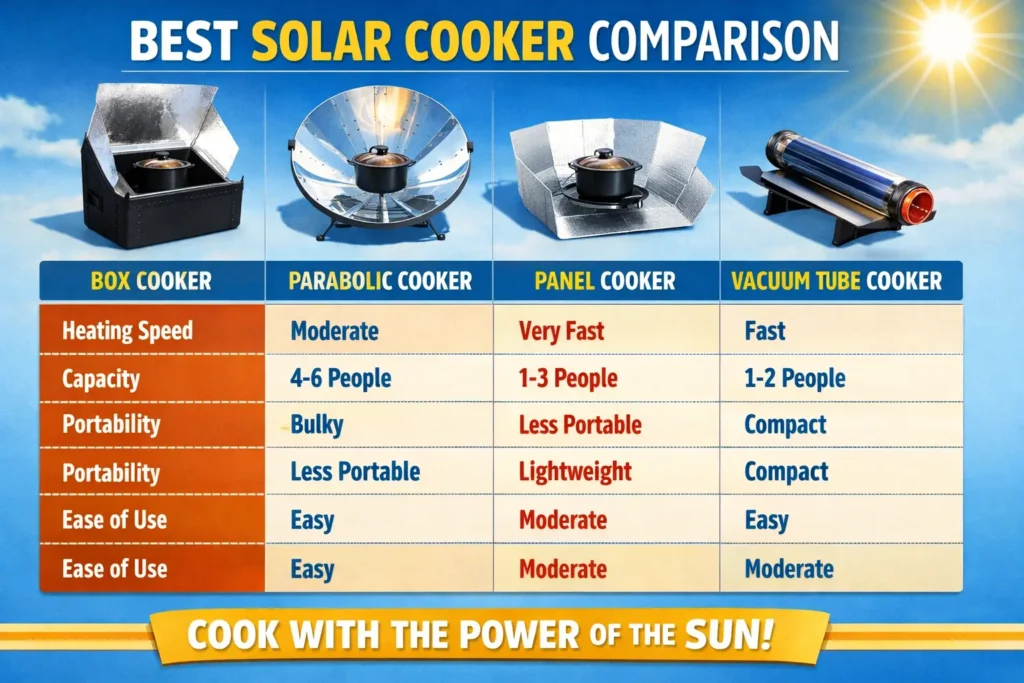
- Box cookers – Best for slow, even cooking
- Panel cookers – Lightweight and affordable
- Parabolic cookers – Fastest cooking option
Pros & Cons of Types of Solar Cookers
- Box Cookers: Great for “set and forget” slow cooking; less prone to burning food.
- Panel Cookers: Extremely portable and inexpensive; best for moderate climates.
- Parabolic Cookers: Intense heat; requires more frequent adjustment to track the sun.
What Is the Best Solar Cooker?
The best solar cooker depends on your needs. For most users, the GoSun Sport Solar Oven is the best overall option due to its fast cooking time, safety, and portability.
How to Choose the Best Solar Cooker
- Speed: Parabolic cookers are fastest
- Safety: Enclosed designs are safer
- Portability: Lightweight models for camping
- Budget: Choose based on your needs
One thing you quickly learn when cooking with the sun is that it commands a lot of respect. I’ve spent countless hours tracking solar paths and measuring temperatures, and it never ceases to amaze me how quickly an enclosed vacuum tube or a well-aligned box cooker can trap intense heat. It feels like magic, but because it reaches temperatures well over 300°F (150°C), managing that heat safely is the most important skill you’ll develop.
Comparing Thermal Collector Technologies: Vacuum Tubes, Box Collectors, and Parabolic Dishes
When selecting the best solar cooker for your lifestyle, understanding the physical technology behind each collector type ensures you invest in the right gear:
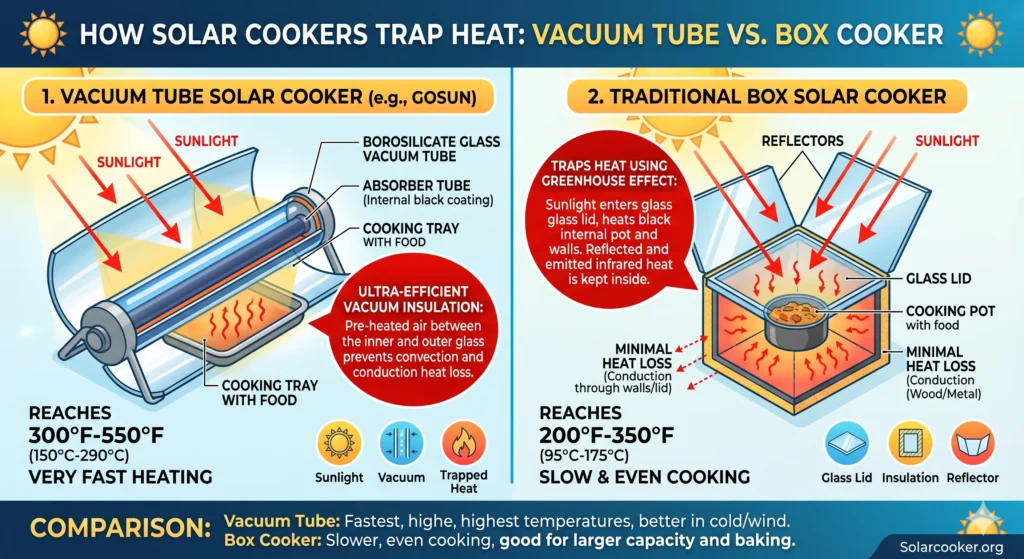
- Evacuated Glass Vacuum Tubes (Best for All-Weather & Speed): Modern cookers like the GoSun Sport utilize double-walled borosilicate glass tubes with a vacuum sealed between the layers. Evacuated Glass Vacuum Tubes: These cookers use a double-walled glass tube with a vacuum between the layers. The vacuum reduces heat transfer by conduction and convection, helping the cooker retain heat efficiently. Depending on the design and sunlight conditions, vacuum tube cookers can reach high temperatures suitable for a range of cooking tasks.
- Insulated Box Cookers (Best for Family Baking & Stews): Large-capacity box cookers (such as the All American Sun Oven) function like slow-cooking ovens. They feature large glass viewing windows, heavy insulation, and wide interior chambers that fit standard 9×13 baking pans or multiple cooking pots, making them ideal for feeding 4 to 6 people.
- Parabolic Reflectors (Best for Frying & High Heat): Parabolic dishes focus sunlight directly onto a single pot base. They generate intense surface heat suitable for pan-frying and rapid boiling, but they require regular adjustment to keep the reflector aligned with the sun, and the frequency of adjustment depends on the cooker design and the movement of the sun.
Safety First
Eye Protection: Parabolic cookers can produce intense glare and concentrated sunlight. Avoid looking directly at the concentrated focal point and follow the manufacturer’s safety instructions.
Heat Management: Mention using oven mitts, as the internal temperatures of vacuum tubes and box cookers can exceed 300°F (150°C).
👉 Learn how to use a solar cooker safely
👉 See how long solar cooking takes
👉 Read our complete solar cooker guide
Over the years, I’ve found that solar cooking changes the way you think about meal preparation entirely. It forces you to slow down, pay attention to the weather, and work with nature instead of just turning a knob on a stove. Whether you are looking for a portable cooker for camping or a larger cooker for backyard use, solar cooking can be a practical way to experiment with renewable energy and reduce reliance on conventional cooking fuels when weather conditions are suitable.
Frequently Asked Questions
What is the best solar cooker for beginners?
For beginners, box and panel cookers can be relatively straightforward because of their simple designs. Enclosed tube cookers can also be beginner-friendly, particularly when portability and faster heating are important. The best choice depends on your cooking needs and budget.
Can a solar cooker cook as fast as a stove?
Solar cookers are generally slower than traditional stoves, but parabolic cookers can cook food much faster under strong sunlight.
What happens if the clouds come out while I’m cooking?
This is the ultimate test of patience for every solar chef! If a passing cloud blocks the sun, your cooking will slow down or temporarily pause. Box cookers and vacuum tube cookers can retain heat for some time, so a short passing cloud may not stop cooking completely. However, prolonged heavy cloud cover can significantly reduce cooking performance.
Can you use regular metal pots and pans in a solar cooker?
Cookware requirements depend on the type and design of the solar cooker. Dark or matte cookware can generally absorb solar radiation effectively, while highly reflective surfaces may absorb less heat. Always check the cooker manufacturer’s recommendations for suitable cookware, size, and materials.
Is food cooked in a solar cooker safe from bacteria?
Solar-cooked food can be safe when it reaches the appropriate internal temperature for the specific food being prepared. Use a food thermometer to check the centre or thickest part of meat and follow recognized food-safety guidance for the required temperature and holding time. Do not rely only on the cooker temperature or cooking time to determine whether food is safe to eat.
Disclosure: As an Amazon Associate, I earn from qualifying purchases.