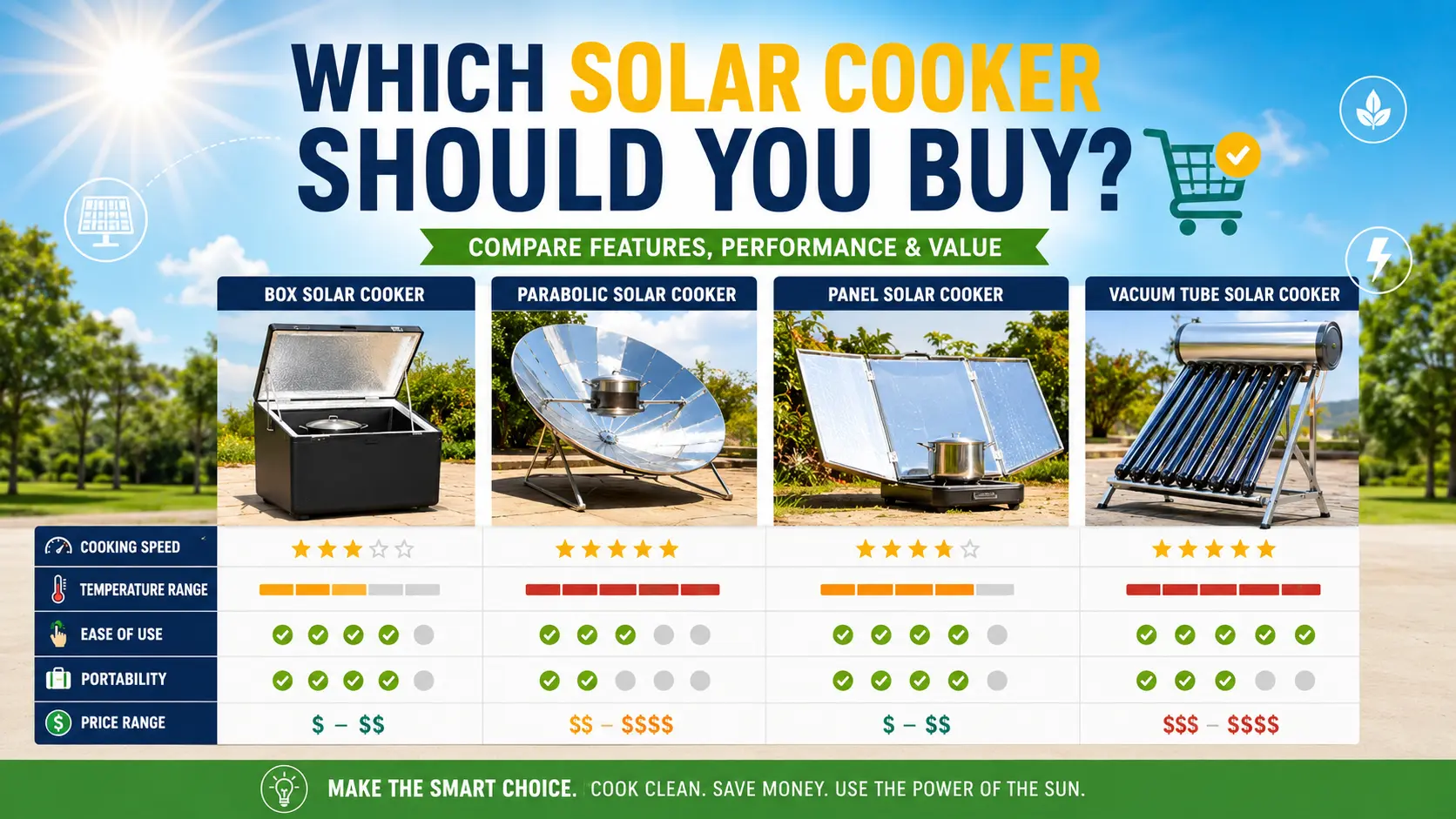
Solar cooking is quickly becoming one of the most practical and eco-friendly ways to prepare meals without relying on electricity or gas. Whether you’re looking to reduce energy costs, cook sustainably, or prepare food during outdoor activities, choosing the best solar cooker can make a big difference in both convenience and performance.
In this guide, we’ve carefully reviewed and compared the best solar cookers in 2026, focusing on ease of use, cooking efficiency, durability, and overall value. From beginner-friendly box cookers to high-performance parabolic models, this article will help you find the perfect solar oven for your needs.
👉 If you’re new to solar cooking, don’t worry — we’ll also explain how solar cookers work, what foods you can prepare, and how to choose the right model based on your lifestyle.
Over the years, I’ve spent countless hours experimenting with solar technology, building everything from simple cardboard panel setups in the backyard to putting heavy-duty manufactured ovens through their paces. There is something uniquely satisfying about preparing a family meal using nothing but pure sunlight—and quite frankly, it changes how you look at cooking forever. But I also know firsthand that a cooker that works brilliantly for a slow-simmered weekend stew might be completely impractical if you’re trying to pack light for a camping trip or need a quick meal on a partially overcast day.
What is the best solar cooker?
The best solar cooker for most users is a box-type solar oven because it is safe, easy to use, and capable of cooking a wide variety of foods using sunlight. It is especially suitable for beginners and everyday cooking.
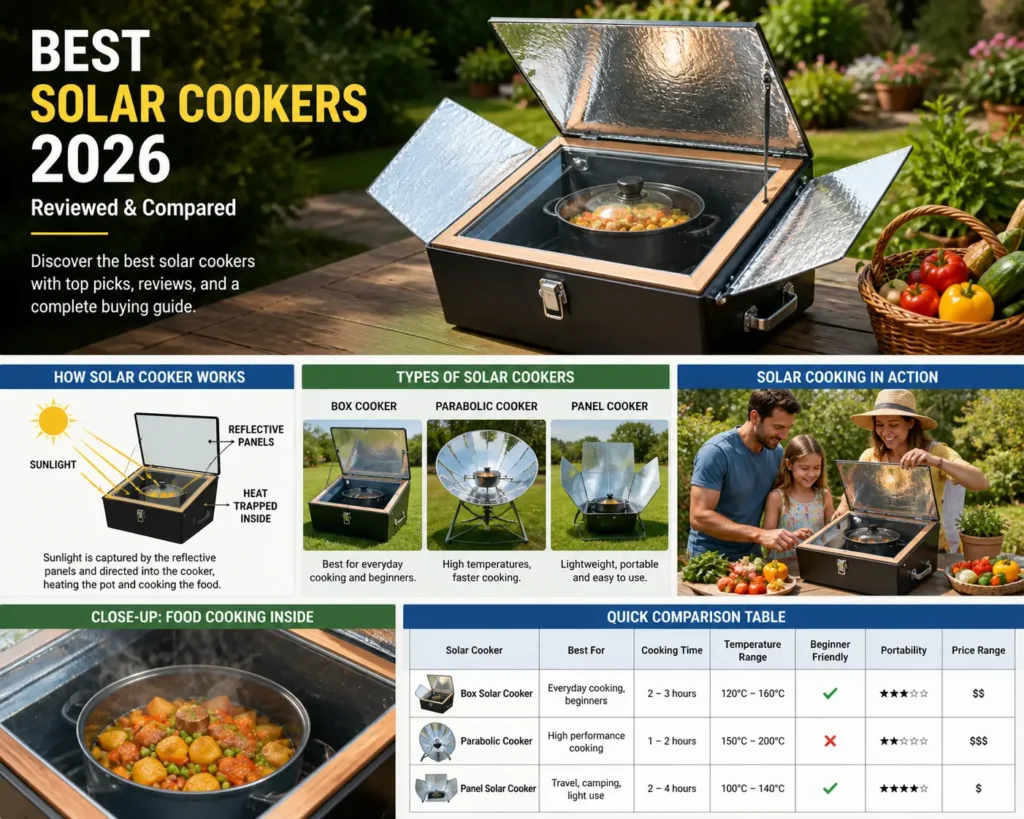
🌞 Best Solar Cookers 2026
👉 Looking for the best solar cooker?
We’ve reviewed the top solar cookers for beginners, camping, and home use. Below are the best options based on performance, ease of use, and value for money.
👉 Not sure where to begin? Read our complete solar cooker beginner guide before choosing a model
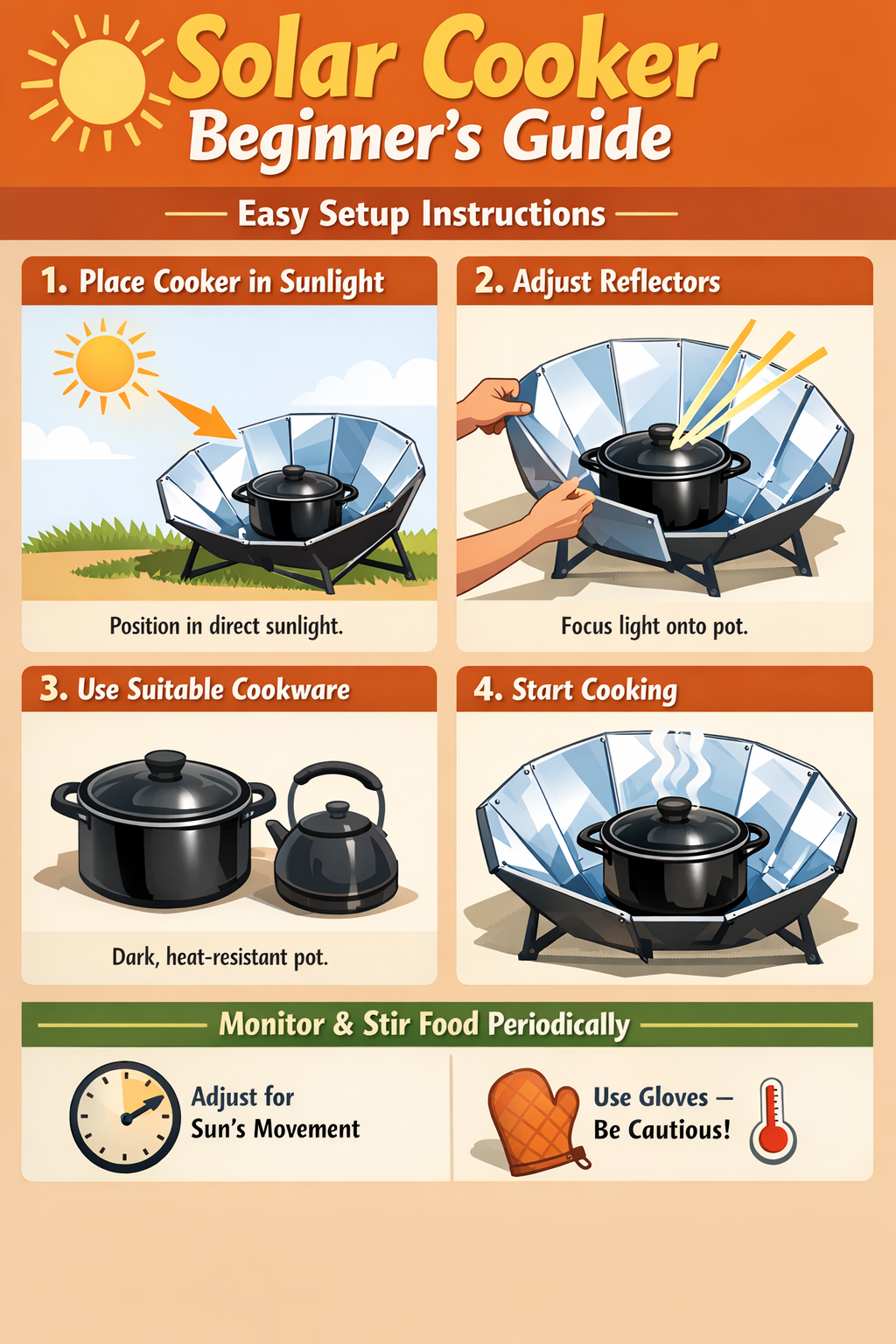
Before jumping into product recommendations, it’s important to understand what beginners should look for.
A good beginner solar cooker should be:
- Easy to set up – No complicated assembly
- Safe to use – No risk of burns or intense glare
- Forgiving – Doesn’t require constant adjustment
- Affordable – So you can try without a big investment
- Versatile – Can cook basic foods like rice, eggs, and vegetables
🏆 Quick Comparison Table
| Solar Cooker | Best For | Rating | Price |
|---|---|---|---|
| All Season Solar Cooker | Beginners | ⭐⭐⭐⭐⭐ | Check |
| GoSun Sport | Camping | ⭐⭐⭐⭐☆ | Check |
| Sunflair Solar Oven | Budget | ⭐⭐⭐⭐☆ | Check |
🥇 1. All Season Solar Cooker – Best for Beginners
✅ Pros:
- Easy to use
- Large capacity
- Works in most conditions
❌ Cons:
- Bulky
⭐ Best for:
Beginners and family cooking
👉 👉 Check latest price on Amazon
🥈 2. GoSun Sport – Best for Camping
✅ Pros:
- Portable
- Fast cooking
❌ Cons:
- Smaller capacity
👉 👉 View on Amazon
🥉 3. Sunflair Solar Oven – Best Budget Option
✅ Pros:
- Affordable
- Lightweight
❌ Cons:
- Slower cooking
I didn’t just pull these recommendations from a spec sheet or online marketing brochures. Every cooker featured in this 2026 guide has been unboxed, set up, and field-tested in real-world conditions to see how it actually performs when the clouds roll in or the wind picks up. Whether you are looking to slash your energy footprint, prepare an emergency backup kit, or simply share a fun, educational project with your kids or grandkids, my goal is to give you the honest, fluff-free truth so you can invest in a cooker that actually gets used rather than sitting in your garage gathering dust.
🧠 How to Choose the Best Solar Cooker
Explain briefly:
- Size
- Type
- Budget
👉 Choosing the right design is important—see our breakdown of types of solar cookers.
🧠 Beginner Tips for Success
Starting solar cooking is easy—but these tips will help you get better results quickly:
⏰ 1. Cook at the right time
- Best between 10 AM – 3 PM
- Peak performance around noon
🍲 2. Use the right cookware
- Dark-colored pots absorb heat better
- Thin metal works faster than thick materials
🔄 3. Adjust occasionally
- For box cookers: adjust every 1–2 hours
- For tube cookers: minimal adjustment needed
🌥️ 4. Be patient
Solar cooking is closer to slow cooking, not frying.
🔒 5. Keep it sealed
- Avoid opening the lid too often
- Heat escapes quickly
👉 To avoid common mistakes, check our solar cooker safety tips and precautions.
👉 Ready to start solar cooking?
👉 Check the best solar cookers on Amazon now
📌 Conclusion
Solar cooking is not just about saving energy—it’s about learning a smarter, more sustainable way to cook. As a beginner, your goal should be simplicity and consistency, not maximum power.
Start small with a box cooker, learn how sunlight affects cooking, and once you’re comfortable, you can explore faster and more advanced designs.
With Malaysia’s strong sunlight, you’ll be surprised how effective solar cooking can be—even for everyday meals.
❓ FAQ
What is the best type of solar cooker for beginners?
Box solar cookers are widely considered the ideal choice for beginners. They consist of an insulated box with a transparent top and reflective panels to capture sunlight.
Box cooker stands out for beginners due to three key advantages:
High Safety: They heat up gradually and hold pots securely inside, eliminating the risk of accidental burns or tipped-over food.
Set-and-Forget Convenience: Unlike high-heat parabolic dishes that require constant tracking of the sun every 10 to 15 minutes, a box cooker is highly forgiving and only needs to be adjusted every hour or two.
Excellent Heat Retention: The insulated outer walls hold heat exceptionally well, making it work much like a standard kitchen slow cooker.
How long does a solar cooker take to cook food?
On a clear day, most meals take between 1 to 3 hours to cook fully. However, the exact time depends on your cooker type, the volume of food, and available sunlight.
Here is a general timeline for common foods in a standard box cooker:
Food Type
Average Cooking Time
Ideal Internal Temp
Grains & Rice
1.5 to 2 hours
180°F to 200°F (82°C to 93°C)
Vegetables
1 to 1.5 hours
160°F to 180°F (71°C to 82°C)
Poultry & Fish
2 to 3 hours
165°F+ (74°C+)
Breads & Cakes
1.5 to 2 hours
190°F to 200°F (88°C to 93°C)
Can solar cookers work on cloudy days?
Yes, but performance will be significantly reduced. If you have partial sunlight or light, passing clouds, a solar cooker can still trap UV rays and slowly heat food. However, you should expect cooking times to double. If the sky is completely overcast or raining, the cooker will not reach safe food-handling temperatures.
Do solar cookers really work?
Yes, absolutely. Solar cookers are efficient thermal collectors. Depending on the model, they easily reach sustained temperatures between 200°F and 350°F (93°C to 176°C). This is more than enough heat to pasteurize water, bake bread, split raw grains, and break down tough proteins safely.
Disclosure: As an Amazon Associate, I earn from qualifying purchases.