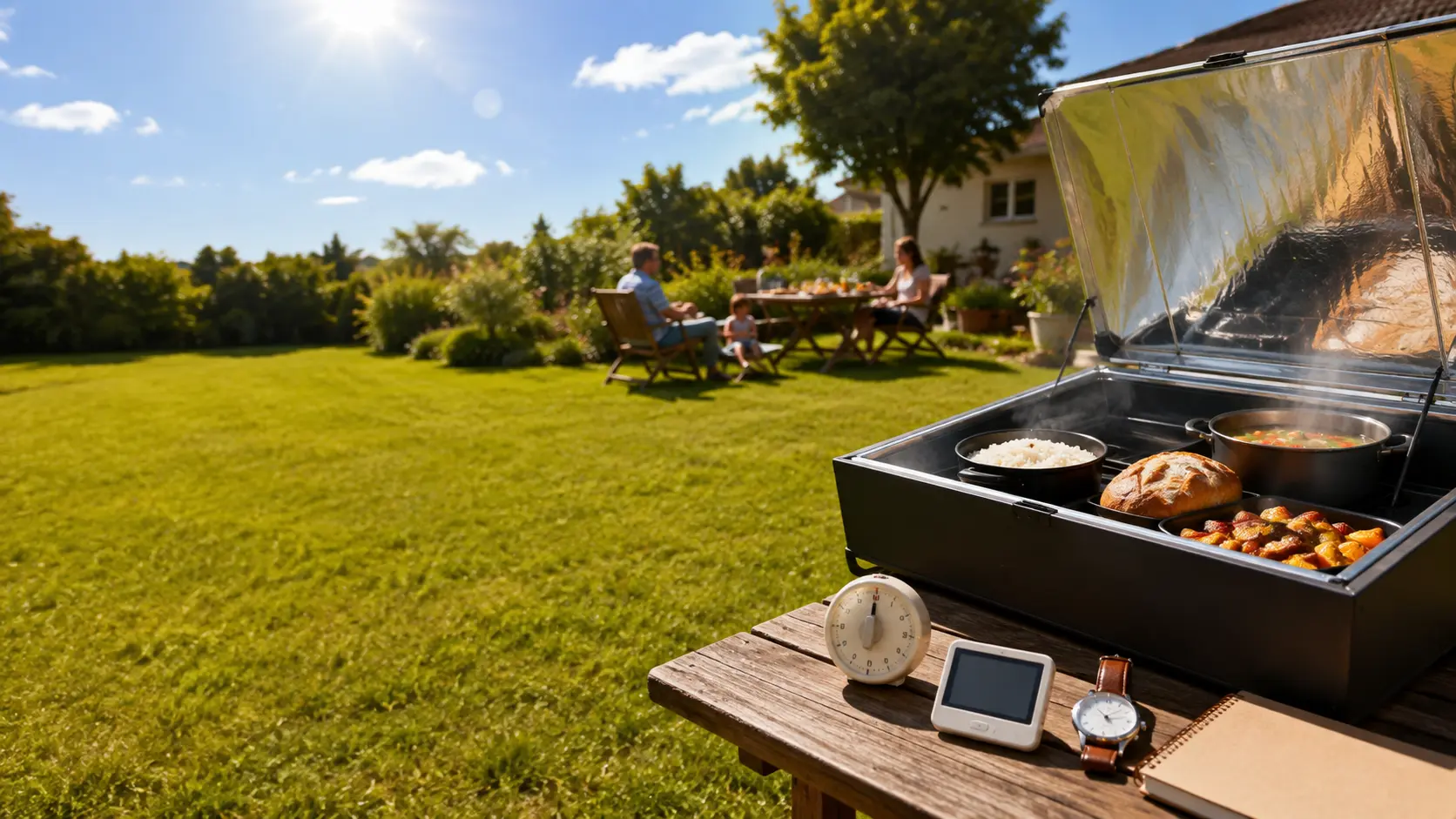
If you are wondering how long does a solar cooker take to cook food, most meals generally take between 1 to 3 hours depending on sunlight intensity, food type, and the type of solar cooker used.
A solar cooker typically takes between 1 to 3 hours to cook food, depending on sunlight intensity, food type, and the type of solar cooker used. Box cookers take longer, while parabolic cookers can cook much faster.
Learn how long a solar cooker takes to cook food. Discover average cooking times for rice, vegetables, beans, and more under different sunlight conditions.
Table of Contents
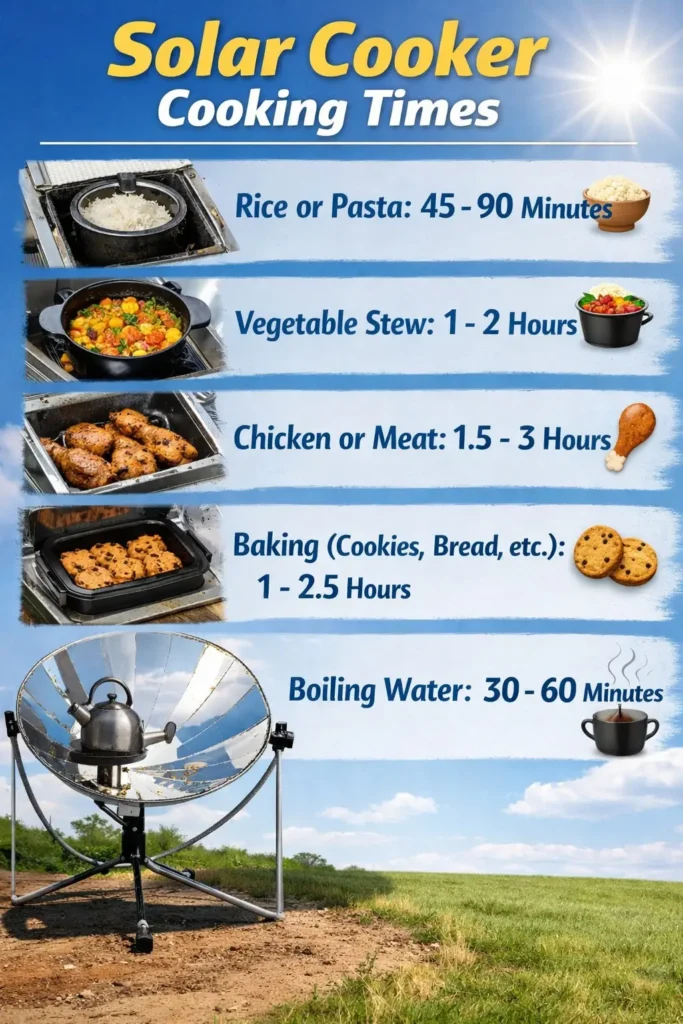
Because solar cookers use sunlight instead of gas or electricity, cooking times are different from conventional kitchen appliances. While solar cooking is generally slower, it offers consistent heat and can produce excellent results when properly planned.
This article is part of our comprehensive Solar Cooker Guide, where we cover everything from basics to advanced solar cooking techniques.
This guide explains typical cooking times, what affects speed, and how to get the best performance from your solar cooker.
How Long Does a Solar Cooker Take to Cook Food on Average?
The cooking time depends on the type of food and the strength of sunlight. Below are general estimates for a box solar cooker under strong midday sun:
| Food Item | Approximate Cooking Time |
|---|---|
| Rice | 1–2 hours |
| Vegetables (chopped) | 1–2 hours |
| Potatoes (whole) | 2–3 hours |
| Beans (soaked) | 2–3 hours |
| Soup or stew | 2–4 hours |
| Bread | 2–3 hours |
These times assume:
- Clear skies
- Cooking between 10:00 am and 3:00 pm
- Proper alignment with sunlight
If you’re unsure what dishes work best, explore our guide on What Foods Can You Cook in a Solar Cooker for beginner-friendly meal ideas.
Why Solar Cooking Takes Longer
Solar cookers heat gradually. Unlike a gas stove that provides instant high heat, solar cookers build temperature slowly as sunlight concentrates inside the cooking chamber.
However, slower cooking has benefits:
- Food is less likely to burn
- Nutrients are preserved
- Flavors develop naturally
Solar cooking works more like a slow cooker or crockpot than a stovetop burner.
The Physics of Solar Heat Accumulation
The fundamental reason solar cooking requires more time than conventional gas or electrical appliances comes down to heat transfer rates. A standard kitchen gas burner supplies direct BTU energy through a continuous flame, bringing water to a rapid boil in minutes. A solar cooker, by contrast, relies on incoming radiant flux (watts per square meter) to gradually raise the internal temperature of your cookware.
As sunlight enters the cooking chamber, the dark metal pot converts visible and ultraviolet light into infrared thermal energy. The internal chamber must first reach a thermal balance point—where the rate of absorbed solar radiation exceeds the rate of conductive and convective heat loss through the lid and walls. Because this heat accumulates incrementally over 30 to 45 minutes, the total cooking duration includes this initial warm-up period alongside the actual boiling or simmering time.
Factors That Affect Cooking Time
Cooking speed can vary depending on the model you use, which we explain in detail in our article on Types of Solar Cookers.
Several variables influence how quickly your food cooks.
1. Sunlight Intensity
Bright, direct sunlight produces higher temperatures. Cloudy weather will significantly increase cooking time.
2. Type of Solar Cooker
- Box cookers: Moderate heat, slower cooking
- Panel cookers: Lower heat, longest cooking time
- Parabolic cookers: Very high heat, faster cooking
Parabolic models can cook almost as fast as traditional stovetops.
Comparing Thermal Benchmarks Across Designs
Box Cookers (200°F – 300°F / 93°C – 149°C): Box models act as steady thermal reservoirs. Because of their thick wall insulation and double-pane or glass covers, heat loss is minimized. While they take 30 to 60 minutes just to reach peak operating temperature, they maintain stable, uniform heat that allows dense stews and dry beans to simmer safely without drying out or scorching.
Panel Cookers(180°F – 250°F / 82°C – 121°C): Panel cookers reflect sunlight onto a pot enclosed inside a high-temperature plastic cooking bag. Because they lack rigid thermal insulation walls, wind currents across the plastic bag can cause slight temperature fluctuations, requiring slightly longer cooking windows for raw grains and root vegetables.
Parabolic Dishes (350°F – 500°F+ / 176°C – 260°C+): Parabolic reflectors focus hundreds of individual light beams into a narrow focal point directly on the bottom of a pan. This intense, concentrated solar energy generates immediate surface heat similar to a medium-high stovetop burner, allowing you to boil a pot of water in 15 to 20 minutes or fry eggs in under 10 minutes.
3. Time of Day
Cooking between late morning and mid-afternoon yields the best results, as the sun is strongest.
4. Type of Food
Dense foods like beans or whole potatoes require more time than chopped vegetables or grains.
5. Cookware Used
Dark-colored pots with lids absorb and retain heat better. Reflective or thin cookware may slow the process.
👉 Learn more in our complete Solar Cooker Guide
👉 See the best solar cookers for faster cooking
👉 Understand different types of solar cookers
🌡️ Ambient Temperature vs. Solar Irradiance
A common misconception among beginners is that ambient air temperature determines cooking speed. In reality, solar cookers operate on solar irradiance (the direct intensity of UV and light rays), not outdoor air warmth. A solar cooker can successfully cook a hot meal on a freezing30°F (-1°C) winter day, provided the sky is completely clear and the reflective panels are angled directly toward the low winter sun.
However, environmental factors like wind velocity and atmospheric humidity do impact performance. Heavy winds carry away heat through convective cooling against the outer glass or plastic enclosure. Utilizing windbreaks or placing box cookers in sheltered patio corners significantly preserves internal temperatures and shortens overall cooking times.
How to Reduce Solar Cooking Time
Although solar cooking requires patience, you can improve efficiency by:
- Pre-soaking beans before cooking
- Cutting vegetables into smaller pieces
- Using black or dark cookware
- Keeping the lid closed as much as possible
- Re-aligning the cooker every 30–60 minutes
These simple steps can significantly improve results.
Is Solar Cooking Practical for Everyday Use?
Yes, but it requires planning.
Solar cooking works best when:
- You start early in the day
- You are not in a rush
- You treat it like a slow cooking method
Many people use solar cooking alongside conventional cooking to reduce energy use while still maintaining convenience.
Solar Cooker vs Traditional Stove
Here’s a quick comparison:
| Feature | Solar Cooker | Gas/Electric Stove |
|---|---|---|
| Energy Source | Sunlight | Gas / Electricity |
| Cooking Speed | Slower | Fast |
| Risk of Burning | Low | Higher |
| Fuel Cost | Free | Ongoing cost |
| Environmental Impact | Very low | Higher |
Solar cookers trade speed for sustainability.
Solar cooking is part of sustainable living practices supported by renewable energy initiatives worldwide.
Average Solar Cooking Times
- Rice: 1.5 – 2 hours
- Vegetables: 1 – 2 hours
- Beans: 2 – 3 hours
- Meat: 2 – 4 hours
Factors That Affect Cooking Time
- Sunlight intensity
- Type of cooker
- Food quantity
- Pot material
Which Solar Cooker Is Fastest?
👉 Parabolic = fastest
👉 Box = slowest
👉 Panel = medium
Best Solar Cookers for Faster Cooking
- All Season Solar Cooker Camper 👉 Check price on Amazon
👉 View more solar cookers on Amazon
Frequently Asked Questions
Can a solar cooker cook faster than a stove?
No, solar cookers are generally slower, but parabolic cookers can cook relatively quickly.
Does weather affect solar cooking time?
Yes, cloudy or weak sunlight increases cooking time.
Can you cook all types of food in a solar cooker?
Yes, you can cook a wide variety of foods in a solar cooker, including rice, vegetables, beans, and even meat. However, cooking times may vary depending on the type of solar cooker and sunlight conditions.
What is the best time of day to use a solar cooker?
The best time to use a solar cooker is between 10 AM and 2 PM when sunlight is strongest. During this period, solar cookers can reach higher temperatures and cook food more efficiently.
Does the type of solar cooker affect cooking time?
Yes, the type of solar cooker greatly affects cooking time. Parabolic solar cookers heat up quickly and cook faster, while box and panel cookers take longer but provide more even cooking.
Final Thoughts
So, how long does a solar cooker take to cook food?
Most dishes take between 1 to 4 hours, depending on sunlight conditions and food type. While slower than traditional cooking methods, solar cooking offers energy savings, gentle heat, and sustainable benefits.
With proper timing and preparation, solar cookers can be a reliable and effective way to prepare meals using renewable energy.
Disclosure: Some of the links on this page are affiliate links. As an Amazon Associate, I earn from qualifying purchases at no extra cost to you. This helps support the website and allows me to continue providing helpful content.