
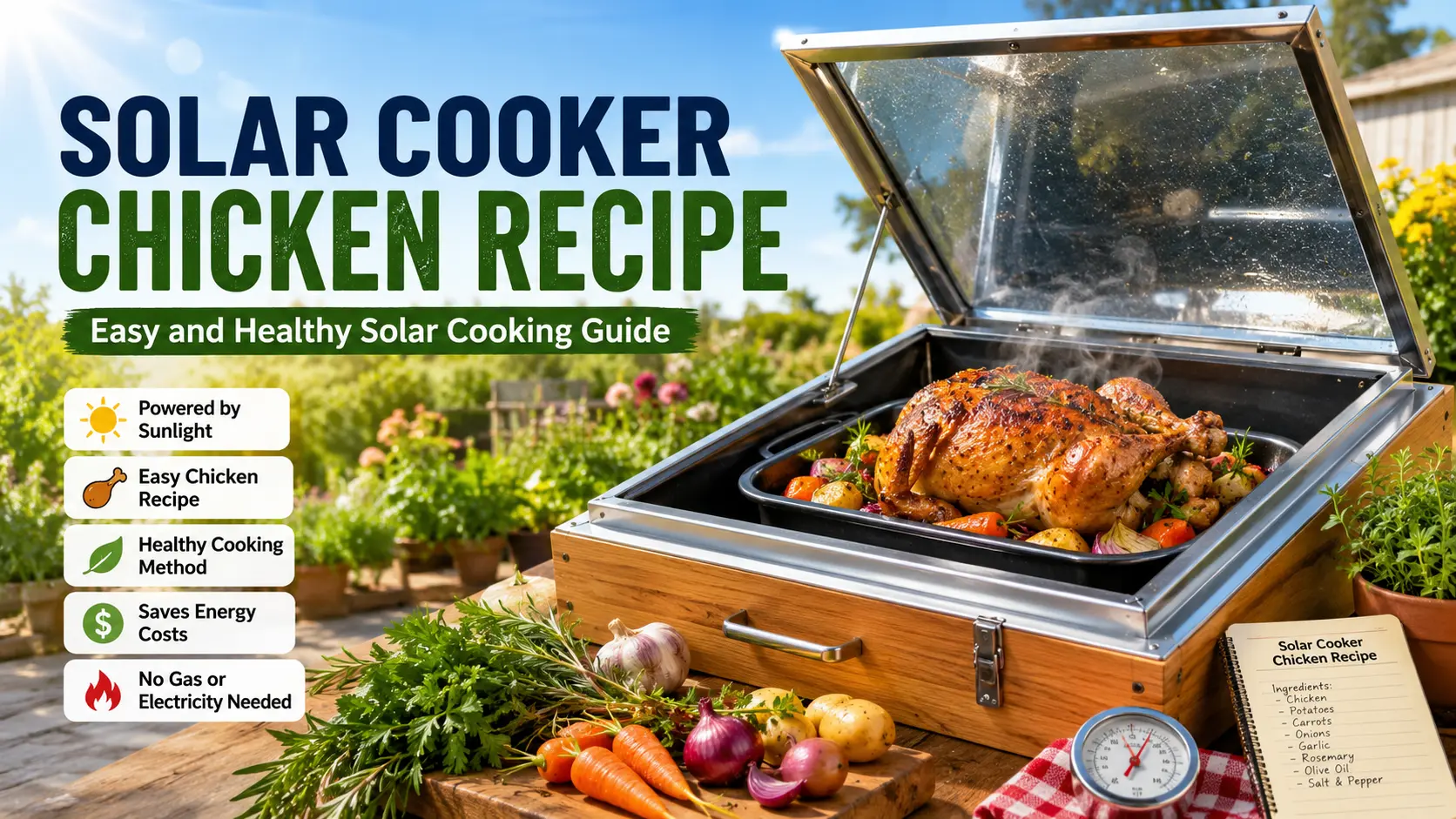
Mastering a solar cooker chicken recipe is one of the most rewarding ways to prepare a healthy, energy-saving meal outdoors. By utilizing direct solar radiation rather than utility gas or electricity, a solar collector provides a slow, steady thermal profile that keeps poultry incredibly juicy while protecting your monthly utility budget.
If you are new to solar cooking, check out our guide on Solar Cooker Recipes for Beginners: Easy Meals with Sunlight for more simple and beginner-friendly meal ideas.
In this guide, you will learn a simple and delicious solar cooker chicken recipe, including ingredients, preparation steps, cooking tips, and safety advice.
If you are new to solar cooking, read our guide on solar cooker basics
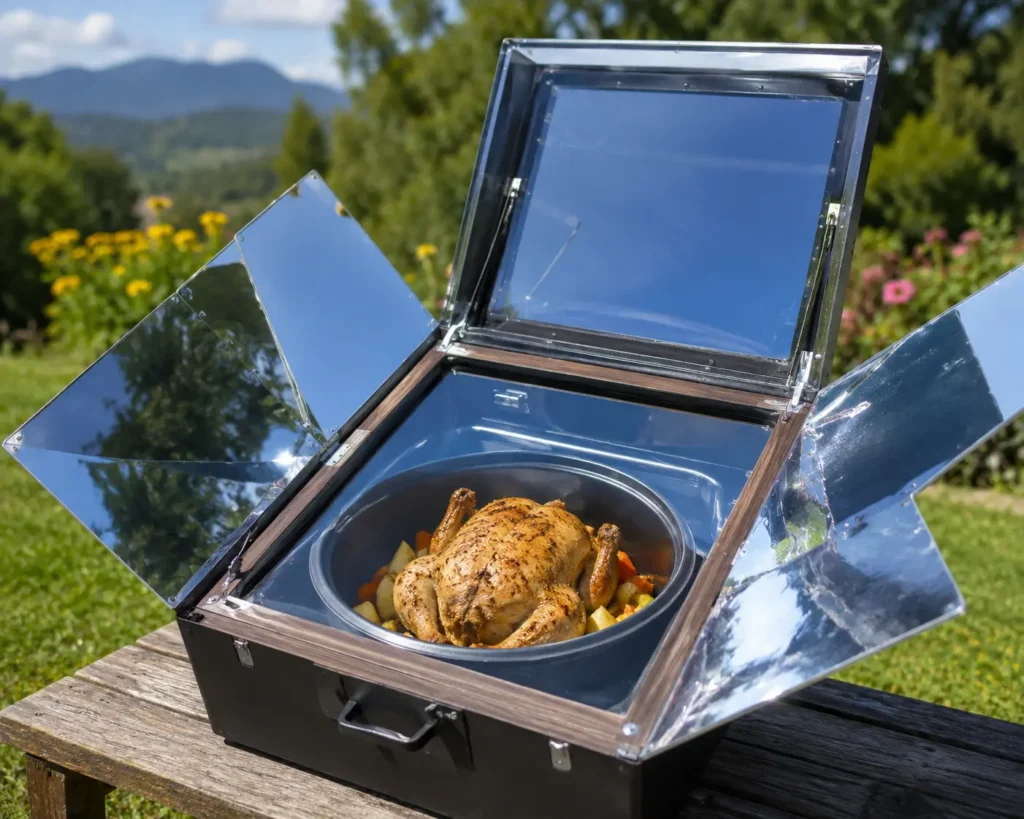
Table of Contents
Why Cook Chicken in a Solar Cooker?
Solar cooking has become increasingly popular among people who want to reduce fuel costs and live more sustainably. Chicken is an excellent food for solar cooking because it absorbs flavors well and cooks nicely over a longer period.
Some benefits of solar cooking include:
- No electricity or gas required
- Environmentally friendly cooking method
- Healthier slow-cooking process
- Great for outdoor activities
- Reduces kitchen heat during hot weather
- Saves money on energy bills
A solar cooker can reach temperatures between 120°C and 180°C on sunny days, which is enough to safely cook chicken.
Thermodynamics of Enclosed Moisture Retention and Tenderization
The culinary advantage of preparing poultry in a sealed solar thermal collector comes down to vapor pressure equilibrium and gentle protein denaturation. On a conventional gas burner or inside a dry electric oven, high surface temperatures (180 degree C to 200 degree C) cause rapid surface evaporation. Moisture from the chicken meat escapes into the ambient air, which often leaves lean chicken breasts or whole birds dry and tough unless constantly basted.
In a sealed dark vessel within a solar oven, relative humidity rapidly reaches 100%. Water molecules evaporating from the meat and vegetable base condense on the underside of the dark lid, continuously basting the poultry in its own juices. Furthermore, maintaining gentle internal cooking temperatures between 120 degree C and 150 degree C allows muscle fibers to relax while connective tissues (collagen) slowly hydrolyze into rich gelatin. This slow, moisture-rich process tenderizes the meat thoroughly without scorching or drying out the surface skin.
Ingredients for Solar Cooker Chicken Recipe
Here is a simple recipe that serves 4 people.
Ingredients
- 1 whole chicken (about 1.5 kg) or 4 chicken thighs
- 2 tablespoons olive oil
- 1 teaspoon salt
- 1 teaspoon black pepper
- 1 teaspoon paprika
- 1 teaspoon garlic powder
- 1 teaspoon mixed herbs
- 1 onion, sliced
- 2 potatoes, chopped
- 2 carrots, sliced
- 1 lemon, cut into wedges
- Optional: fresh rosemary or thyme
You can easily adjust the ingredients according to your taste preferences.
Equipment Needed
Before starting, prepare the following items:
- Solar cooker
- Dark-colored cooking pot with lid
- Oven-safe tray or pot
- Food thermometer
- Heat-resistant gloves
Dark pots work better because they absorb heat more efficiently from sunlight.
Learn about different types of solar cookers for better cooking results
Step-by-Step Solar Cooker Chicken Recipe
Step 1: Prepare the Chicken
Prepare the chicken by patting it dry with paper towels. Dry skin helps the chicken cook better and improves the texture.
Rub olive oil all over the chicken. Then season it evenly with salt, black pepper, paprika, garlic powder, and mixed herbs.
If using a whole chicken, place lemon wedges and herbs inside the cavity for extra flavor.
Step 2: Prepare the Vegetables
Place sliced onions, potatoes, and carrots into the cooking pot. These vegetables will absorb the delicious chicken juices during cooking.
Set the chicken on top of the vegetables.
Step 3: Preheat the Solar Cooker
Place your solar cooker in direct sunlight about 20 to 30 minutes before cooking. Proper preheating helps maintain consistent cooking temperatures.
For best results:
- Choose a sunny day with minimal clouds
- Position the cooker facing the sun
- Avoid windy areas if possible
Solar cooking works best between 10 a.m. and 3 p.m. when sunlight is strongest.
Step 4: Cook the Chicken
Before you begin, refer to this guide for estimated cooking durations based on your cut of meat:
| Chicken Type | Average Sun Time | Target Internal Temp |
| Thighs/Legs/Pieces | 2 – 3 Hours | 75°C (165°F) |
| Whole Chicken | 3 – 5 Hours | 75°C (165°F) |
Place the covered pot inside the solar cooker. Cooking times may vary depending on sunlight intensity, outside temperature, and the type of cooker you are using.
Note: Avoid opening the lid too often because heat will escape and significantly slow down the process.
Cooking times may vary depending on:
- Sunlight intensity
- Outside temperature
- Type of solar cooker
- Size of the chicken
Generally, chicken takes:
- Chicken pieces: 2 to 3 hours
- Whole chicken: 3 to 5 hours
Avoid opening the lid too often because heat will escape and slow down the cooking process.
Step 5: Check the Temperature
Use a food thermometer to ensure the chicken reaches a safe internal temperature of 75°C (165°F).
The juices should run clear, and the meat should no longer appear pink.
Once fully cooked, carefully remove the pot using heat-resistant gloves.
Tips for Successful Solar Cooker Chicken
Solar cooking is simple, but a few tips can improve your results.
Use a Dark Pot
Dark-colored cookware absorbs more solar energy and cooks food faster.
Keep the Lid Closed
Every time you open the lid, heat escapes. Try to check the food only when necessary.
Adjust the Cooker Position
Move the solar cooker occasionally to follow the sun for maximum heating efficiency.
Choose Sunny Weather
Clear skies produce the best cooking temperatures. Cloudy weather may increase cooking time significantly.
Cut Vegetables Smaller
Smaller vegetable pieces cook faster and more evenly.
Best Types of Solar Cookers for Chicken Recipes
Different solar cookers produce different cooking results.
Box Solar Cooker
A box cooker is excellent for slow-cooking chicken and roasting vegetables. It provides steady heat and is beginner-friendly.
Parabolic Solar Cooker
This type produces higher temperatures and cooks food faster. However, it requires more attention and regular sun adjustment.
Panel Solar Cooker
Panel cookers are lightweight and affordable. They work well for basic chicken recipes on sunny days.
Flavor Variations for Solar Cooker Chicken
You can customize your recipe with different seasonings and ingredients.
Lemon Herb Chicken
Add extra lemon juice, rosemary, and thyme for a fresh Mediterranean flavor.
Spicy Chicken
Use chili powder, cayenne pepper, and smoked paprika for a spicy version.
BBQ Chicken
Brush the chicken with barbecue sauce during the final cooking stage.
Asian-Style Chicken
Add soy sauce, ginger, garlic, and honey for a sweet and savory flavor.
Is Solar Cooker Chicken Safe?
Yes, solar cooker chicken is safe when cooked properly.
The key is making sure the chicken reaches the recommended safe internal temperature of 75°C (165°F). Using a thermometer is strongly recommended.
Solar cooking is similar to slow cooking, which allows food to cook thoroughly over time.
Common Mistakes to Avoid
Not Enough Sunlight
Weak sunlight can result in undercooked chicken. Always choose a bright sunny day.
Opening the Cooker Too Often
Frequent opening lowers the cooking temperature and extends cooking time.
Using Thin or Shiny Pots
Reflective cookware does not absorb heat efficiently.
Cooking Large Pieces Without Enough Time
Large whole chickens require longer cooking times than smaller pieces.
Final Thoughts
A solar cooker chicken recipe is a wonderful way to prepare delicious meals while saving energy and protecting the environment. The slow-cooking process produces tender, flavorful chicken with minimal effort.
Whether you are interested in sustainable living, outdoor cooking, or simply trying something new, solar cooking is both practical and enjoyable. With the right sunlight and preparation, you can create healthy chicken meals using nothing but the power of the sun.
If you are new to solar cooking, start with this easy chicken recipe and experiment with different herbs, vegetables, and marinades. Over time, you will discover how versatile and rewarding solar cooking can be.
Frequently Asked Questions (FAQ)
Can I cook frozen chicken in a solar cooker?
It is not recommended to cook frozen chicken. Because solar cookers heat up more slowly than traditional ovens, frozen meat may stay in the “danger zone” (where bacteria grow fastest) for too long. Always thaw your chicken completely in the refrigerator before cooking.
What happens if clouds move in while I’m cooking?
If it stays cloudy for more than 20–30 minutes, your cooking temperature will drop. If the chicken is nearly done, you can leave it to finish slowly, but if it’s still raw, you may need to move the pot to a conventional stove or oven to ensure it reaches a safe internal temperature of 75°C.
Do I need to add water to the pot?
Generally, no. Chicken and vegetables have high water content. In a sealed solar cooking pot, the moisture is trapped, creating a self-basting effect that keeps the meat juicy. Adding extra water can actually increase the cooking time.
Can I overcook chicken in a solar cooker?
It is very difficult to “burn” food in a solar cooker (especially in box or panel cookers) because the heat is gentle. However, if left too long, the chicken may become so tender that it falls off the bone—which most people actually prefer!
Does solar-cooked chicken taste different?
Many enthusiasts believe it tastes better. Because there is no high-intensity heating element, the natural flavors and juices stay locked inside. It tastes similar to slow-cooked or “crock-pot” chicken, but with a unique freshness from being cooked outdoors.