Solar cooking is simple in theory, but beginners often make small mistakes that affect performance and food safety. If your solar cooker isn’t heating properly or your food takes longer than expected, the issue is usually not the cooker — it’s the setup.
Understanding common solar cooker mistakes helps you cook more efficiently and safely.
1. Not Positioning the Cooker Directly Toward the Sun
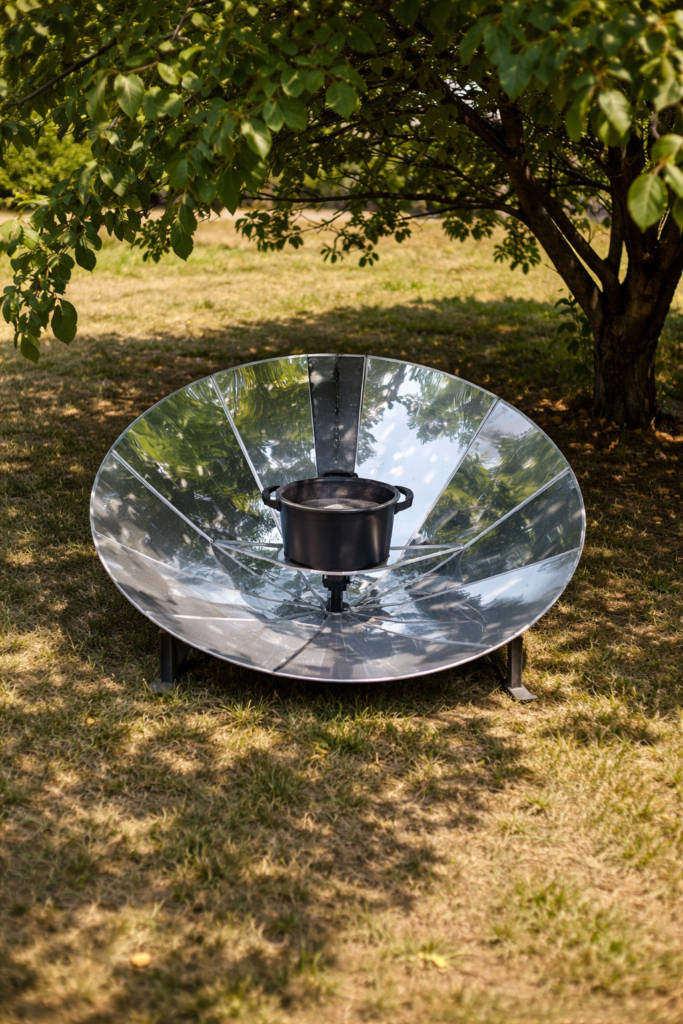
Solar cookers must face direct sunlight to work effectively.
A slight misalignment can significantly reduce internal temperature. Even a small shadow inside the cooking chamber lowers efficiency.
✔ Always adjust the cooker every 30–60 minutes.
✔ Check that no shadows fall across reflective panels.
✔ Align during peak sunlight hours (10:30 AM–2:30 PM).
Proper alignment directly affects the temperature your cooker can reach.
2. Cooking Too Early or Too Late in the Day
Many beginners try solar cooking early morning or late afternoon. Sunlight intensity during these times is weaker.
Solar cookers perform best when:
- The sun is high in the sky
- The weather is clear
- There is minimal cloud cover
If cooking outside peak hours, expect longer cooking times.
For estimated durations, read How Long Does a Solar Cooker Take to Cook Food.
3. Using the Wrong Cookware
Reflective or light-colored pots reduce heat absorption.
For better results:
✔ Use dark-colored cookware
✔ Use thin metal or black enamel pots
✔ Always use tight-fitting lids
Proper cookware can increase efficiency noticeably.
4. Opening the Cooker Too Frequently
Every time you lift the lid:
- Heat escapes
- Internal temperature drops
- Cooking time increases
Solar cooking works like a slow cooker — allow heat to build steadily.
Avoid checking food repeatedly unless necessary.
5. Trying to Cook Too Much Food at Once
Overloading the cooking chamber slows down heating.
Large quantities:
- Take longer to heat
- Block sunlight circulation
- Reduce efficiency
Beginners should start with:
- Small portions
- Thin food cuts
- Simple recipes
6. Expecting Instant Results
Solar cooking is different from gas or electric cooking.
Many beginners expect:
- Fast heating
- Immediate sizzling
- Quick boiling
Solar cooking is gradual. It requires patience.
Box solar cookers typically operate between 120–160°C under strong sunlight. That is sufficient for safe cooking but slower than conventional methods.
If you want to understand temperature limits, see What Temperature Can a Solar Cooker Reach.
7. Ignoring Wind Conditions
Wind can:
- Cool the cooker
- Shift reflector alignment
- Reduce overall temperature
Place your cooker in:
- A stable location
- A sheltered area
- A flat surface
Wind protection significantly improves performance.
8. Cooking Frozen Meat Without Thawing
Frozen food takes much longer to reach safe internal temperature.
Always:
✔ Thaw meat completely
✔ Cut into smaller pieces
✔ Use a thermometer when possible
Solar cookers can cook meat safely when used properly. Learn more in Can You Cook Meat in a Solar Cooker.
9. Not Cleaning Reflective Surfaces
Dust and dirt reduce reflective efficiency.
To maintain performance:
- Wipe reflectors gently
- Avoid scratches
- Store indoors when not in use
Clean surfaces concentrate sunlight more effectively.
10. Choosing the Wrong Type of Solar Cooker
Different solar cookers have different performance levels.
- Box cookers: best for beginners
- Panel cookers: budget-friendly but slower
- Parabolic cookers: higher temperatures but require supervision
Understanding these differences helps avoid frustration. Read Types of Solar Cookers Explained for more details.
Final Thoughts
Most solar cooking problems come from setup mistakes rather than equipment failure.
By avoiding these common solar cooker mistakes:
- You improve cooking efficiency
- You reduce cooking time
- You ensure food safety
- You get more consistent results
Solar cooking works extremely well when used correctly. Patience, proper alignment, and correct cookware make a significant difference.