
Solar cooking depends entirely on sunlight, which means efficiency matters. If your solar cooker is not reaching the expected temperature or food is taking too long to cook, small adjustments can make a significant difference.
Improving solar cooker efficiency is not about buying expensive equipment — it’s about optimizing alignment, heat retention, and proper usage.
This guide explains practical ways to maximize performance.
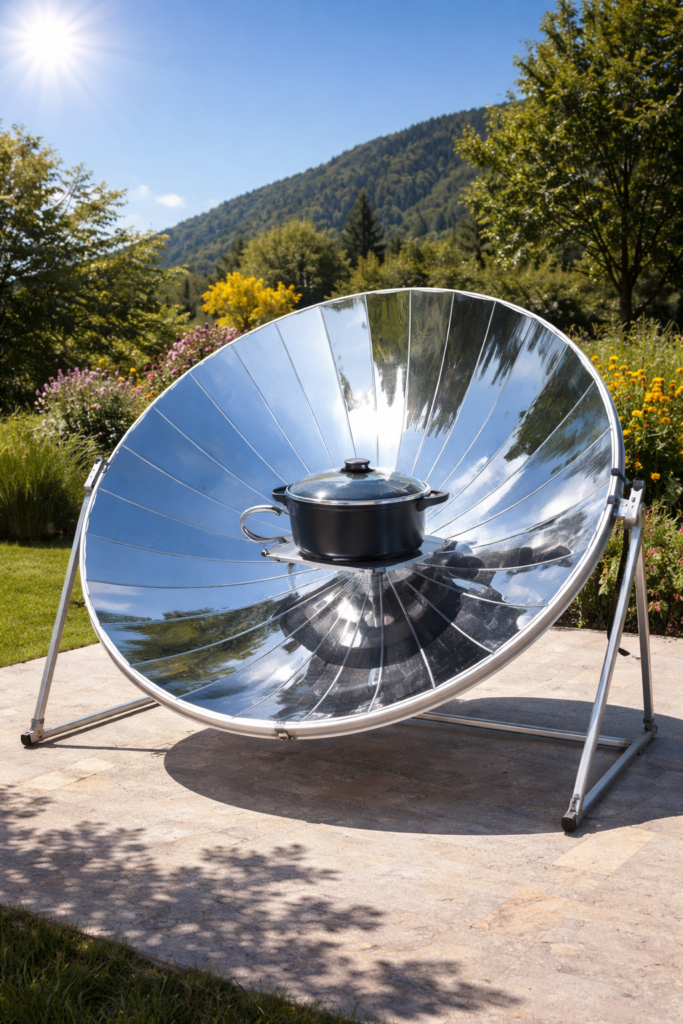
1️⃣ Adjust the Cooker Frequently
Sunlight moves constantly throughout the day.
Even if your solar cooker is properly aligned in the morning, it will gradually lose direct exposure as the sun shifts.
To improve efficiency:
✔ Re-align every 30–60 minutes
✔ Ensure no shadows fall inside the cooker
✔ Cook during peak sunlight (10:30 AM–2:30 PM)
Proper alignment alone can increase internal temperature noticeably.
For more on heating capability, see What Temperature Can a Solar Cooker Reach.
2️⃣ Use Dark, Thin Cookware
Dark surfaces absorb heat more effectively.
To improve efficiency:
- Use black or dark-colored pots
- Avoid shiny or reflective cookware
- Use thin metal pots for faster heat transfer
- Always cover pots with tight-fitting lids
Cookware selection directly impacts how quickly food heats up.
3️⃣ Improve Heat Retention
Solar cookers rely on the greenhouse effect to trap heat.
You can enhance heat retention by:
✔ Ensuring the glass or plastic cover seals properly
✔ Avoiding unnecessary lid opening
✔ Using wind protection
✔ Preheating the cooker before adding food
Opening the cooker too often releases accumulated heat and reduces efficiency.
Avoid common beginner errors by reviewing Common Solar Cooker Mistakes to Avoid.
4️⃣ Reduce Air Gaps and Leakage
Heat escapes through gaps in insulation.
If using a box solar cooker:
- Check seals around the lid
- Ensure insulation is intact
- Avoid warped covers
- Tighten reflector hinges
Better insulation means higher sustained cooking temperatures.
5️⃣ Use Reflective Surfaces Properly
Clean reflectors concentrate sunlight effectively.
To maintain performance:
- Wipe reflectors gently
- Avoid scratches
- Ensure reflector angle directs sunlight precisely into the cooking chamber
Even small alignment errors can reduce heat concentration.
Learn more about cooker designs in Types of Solar Cookers Explained.
6️⃣ Cook Smaller Portions
Large quantities of food slow down heat buildup.
Efficiency improves when:
✔ Using smaller portions
✔ Cutting food into smaller pieces
✔ Avoiding overfilling the cooking chamber
Solar cooking works best when heat can circulate evenly.
7️⃣ Shield from Wind
Wind lowers internal temperature by cooling the outer surfaces.
To reduce heat loss:
- Position the cooker in a sheltered area
- Use a wind barrier
- Place on stable, flat ground
Wind protection can significantly improve temperature stability.
8️⃣ Preheat Before Cooking
Just like a conventional oven, preheating improves results.
Allow 15–25 minutes of empty heating time before placing food inside.
This ensures:
- Faster cooking start
- Better temperature consistency
For cooking time expectations, read How Long Does a Solar Cooker Take to Cook Food.
9️⃣ Choose the Right Solar Cooker Type
Efficiency varies by design:
- Box cookers: good insulation and steady heat
- Panel cookers: budget-friendly but slower
- Parabolic cookers: highest temperatures but require supervision
Selecting the appropriate design impacts performance directly.
10️⃣ Monitor Food Temperature
Using a simple cooking thermometer ensures food reaches safe internal temperature without unnecessary extended cooking time.
Solar cookers can cook meat safely when used correctly. Learn more in Can You Cook Meat in a Solar Cooker.
Final Thoughts
Improving solar cooker efficiency is about optimizing sunlight exposure, insulation, cookware, and proper cooking habits.
Small adjustments — like re-aligning regularly or using dark cookware — can noticeably raise internal temperature and shorten cooking time.
With proper setup and practice, solar cooking becomes more reliable and consistent.