Many beginners are excited to try solar cooking, but an important question comes up first: is a solar cooker safe to use?
This article is part of our complete Solar Cooker Guide for beginners.
The good news is that solar cookers are generally very safe when used correctly. However, because they use concentrated sunlight and can reach high temperatures, proper handling is essential.
This guide explains important solar cooker safety tips to help you cook confidently and responsibly.
1. Never Look Directly at Reflected Sunlight
Solar cookers use reflective panels to concentrate sunlight. These surfaces can be very bright and may harm your eyes.
Safety tips:
- Avoid staring at reflective foil or mirrors.
- Adjust reflectors while standing slightly to the side.
- Supervise children closely around reflective panels.
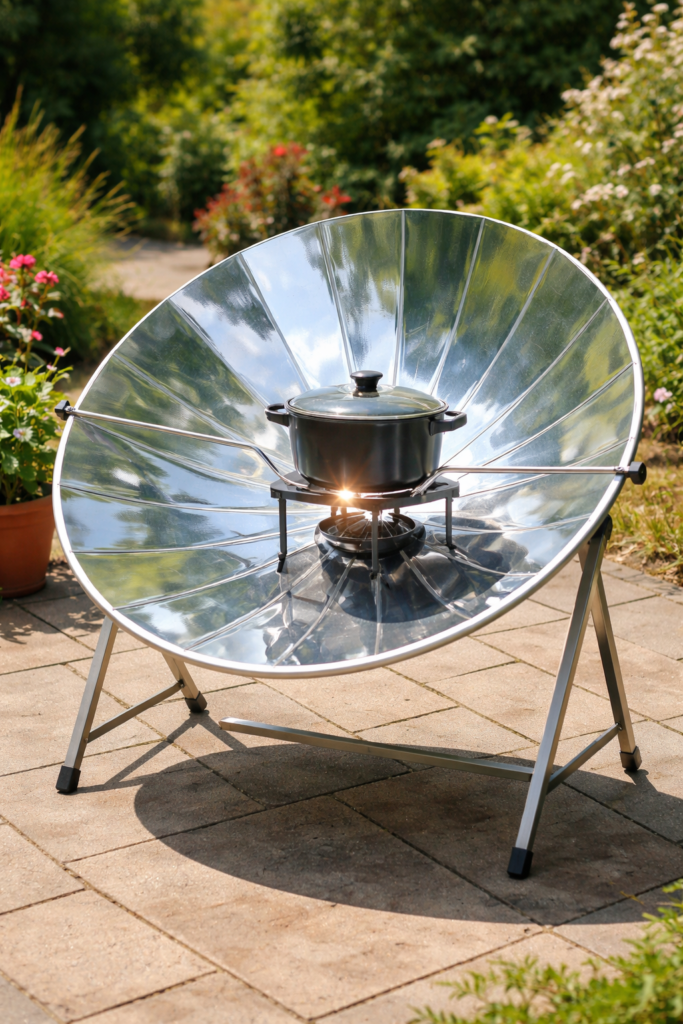
If using a parabolic solar cooker, this is especially important because it concentrates sunlight more intensely.
2. Use Heat-Resistant Cookware
Solar cookers can reach temperatures between 120°C and 200°C (250°F–400°F) depending on the model and sunlight conditions.
Always use:
- Dark-colored pots
- Heat-resistant glass or metal cookware
- Tight-fitting lids
Avoid plastic containers or thin materials that can melt.
3. Handle Cookware Carefully
Even though solar cooking feels gentle, the pot inside can become very hot.
Before removing food:
- Use oven mitts or heat-resistant gloves.
- Open the cooker slowly to release trapped heat.
- Avoid leaning directly over the cooking chamber.
Treat a solar cooker like you would a conventional oven.
4. Place the Cooker on a Stable Surface
Always set up your solar cooker:
- On flat, stable ground
- Away from foot traffic
- In an area free from wind interference
Strong wind can knock over lightweight solar cookers, especially DIY panel models.
You can place small weights around the base for added stability.
5. Monitor Children and Pets
Solar cookers can look harmless, but:
- Reflective panels may attract children.
- Hot cookware can cause burns.
- Pets may bump into the setup.
Never leave solar cooking equipment unattended in areas where children or animals are active.
6. Avoid Cooking After Sunset
Solar cookers rely on direct sunlight. As sunlight weakens:
- Temperatures drop
- Food may not cook thoroughly
- Bacterial growth risk increases
Plan meals so cooking finishes before late afternoon.
For estimated cooking times, see our guide on How Long Does a Solar Cooker Take to Cook Food.
7. Keep the Reflective Surfaces Clean
Dirty reflectors reduce efficiency and may cause uneven heating.
To maintain safety and performance:
- Wipe reflective surfaces gently with a soft cloth
- Avoid scratching mirror finishes
- Store the cooker indoors when not in use
8. Be Cautious with Parabolic Solar Cookers
Parabolic solar cookers can reach very high temperatures very quickly.
Extra safety considerations:
- Never place your hand at the focal point
- Adjust alignment carefully
- Do not leave unattended
If you are new to solar cooking, a box solar cooker is generally safer and easier to manage. Learn more in our article on Types of Solar Cookers.
9. Cook Food Thoroughly
Although solar cooking is reliable, always ensure food is properly cooked.
- Use a food thermometer when possible.
- Reheat if unsure.
- Avoid partially cooked meats.
You can also explore suitable beginner dishes in What Foods Can You Cook in a Solar Cooker.
10. Store Equipment Safely
After cooking:
- Allow the cooker to cool fully.
- Close reflectors carefully.
- Store indoors to protect from rain and wind damage.
Proper storage increases the lifespan of your solar cooker and maintains safe operation.
Are Solar Cookers Dangerous?
When used responsibly, solar cookers are not dangerous. They do not use gas, electricity, or open flames. In fact, many people find them safer than traditional stoves because:
- There is no flame.
- There is no fuel combustion.
- There is minimal risk of fire when properly positioned.
The key is awareness and careful handling.
Final Thoughts
Solar cooking is a safe, sustainable, and enjoyable way to prepare meals using sunlight. By following these solar cooker safety tips, you can reduce risk and maximize your cooking experience.
If you’re new to solar cooking, start with simple recipes and practice proper setup. With the right approach, solar cooking is both safe and effective.