
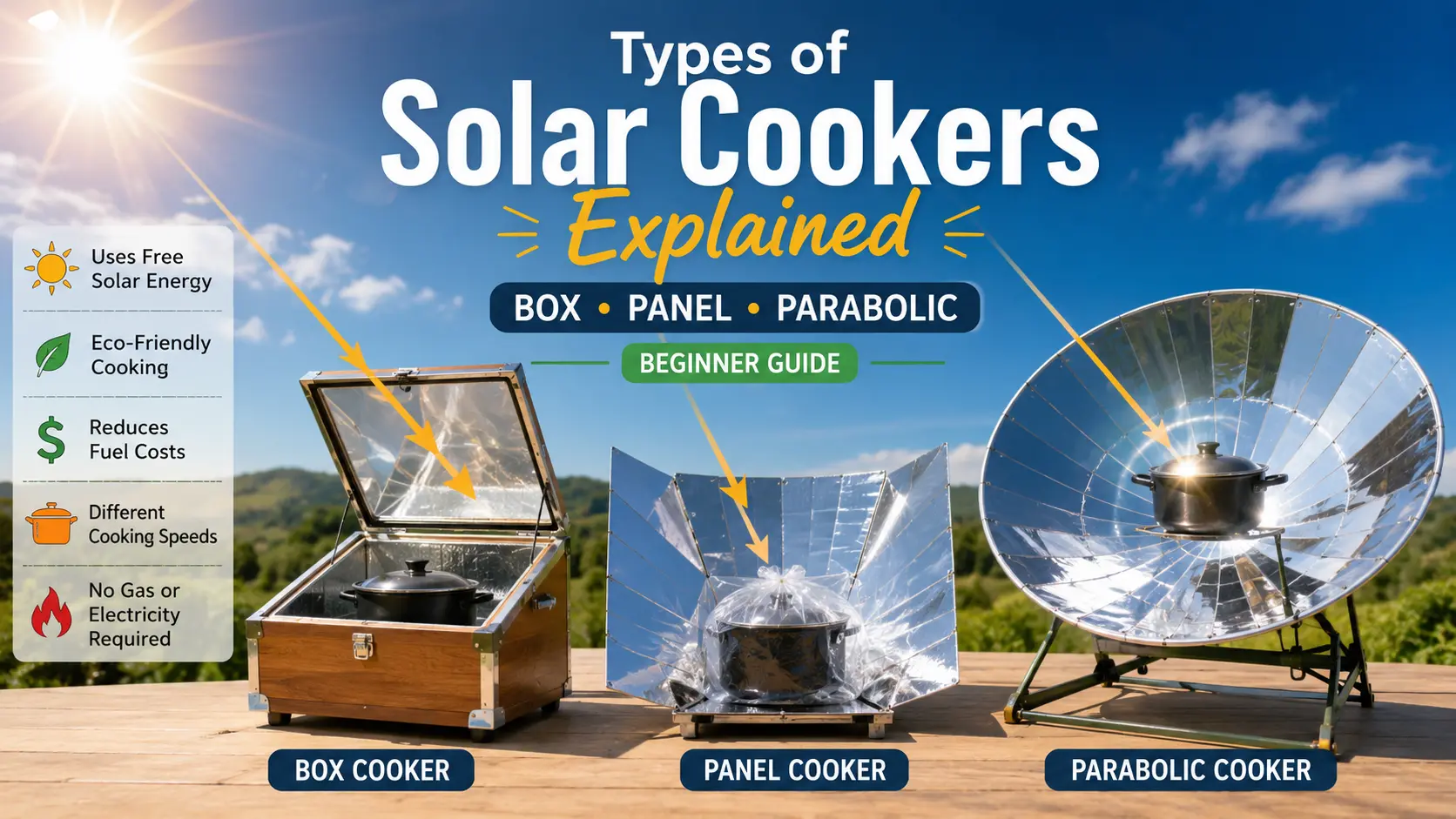
Solar cookers come in different designs, each with its own advantages and limitations. In this guide, we explain the main types of solar cookers and help you choose the right one for your needs.
This article is part of our Solar Cooker Beginner Guide, where we explain solar cooking basics and DIY methods step by step.
Solar cookers come in different designs, each using sunlight in a slightly different way to generate heat. Understanding the types of solar cookers helps users choose the right design for educational projects, outdoor cooking, or practical use.
The three most common types of solar cookers are box solar cookers, panel solar cookers, and parabolic solar cookers.
Table of Contents
The Physics of Focal Geometry and Solar Concentration
To evaluate the structural differences between solar cooker variations, it helps to understand the underlying optical mechanics that dictate their performance: solar concentration ratio and geometric aperture area. The concentration ratio represents the total surface area of reflective material relative to the surface area of the cooking vessel’s target absorber plate.
- Low-Concentration Systems (1:1 to 2:1): Box cookers utilize low concentration ratios, relying on a wide glass aperture and modest single-pane reflector flaps to capture ambient direct sunlight. Heat generation relies primarily on insulation thickness rather than intense focal concentration.
- Moderate-Concentration Systems (2:1 to 5:1): Panel cookers use angled multi-faceted reflective panels to gather light rays from multiple angles, directing them into a centralized cooking zone enclosed within an elevated-temperature plastic sleeve.
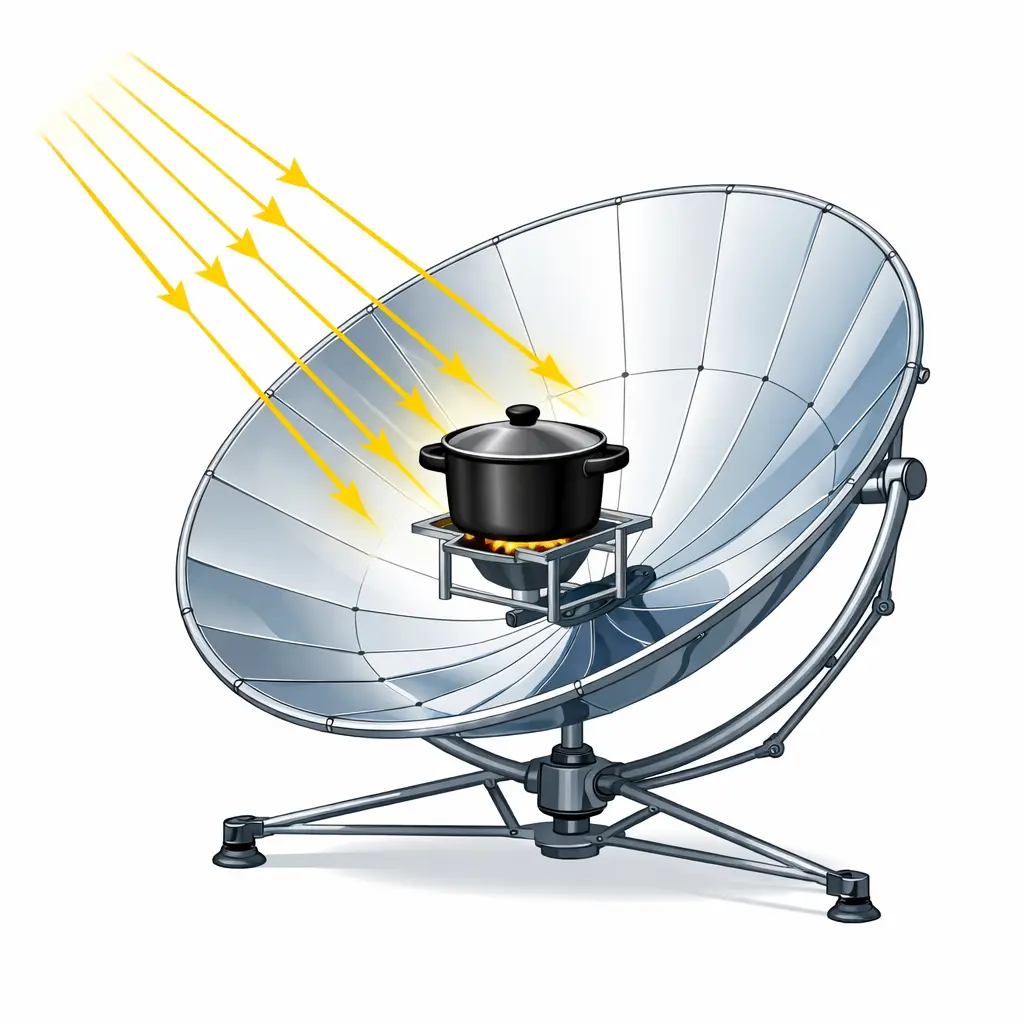
- High-Concentration Systems (10:1 to 50:1): Parabolic dishes utilize precise parabolic geometry, where incoming parallel solar rays reflect off a curved mirror and converge at a single, highly concentrated focal point. This extreme optical concentration delivers rapid thermal transfer, enabling high-temperature frying and rapid boiling.
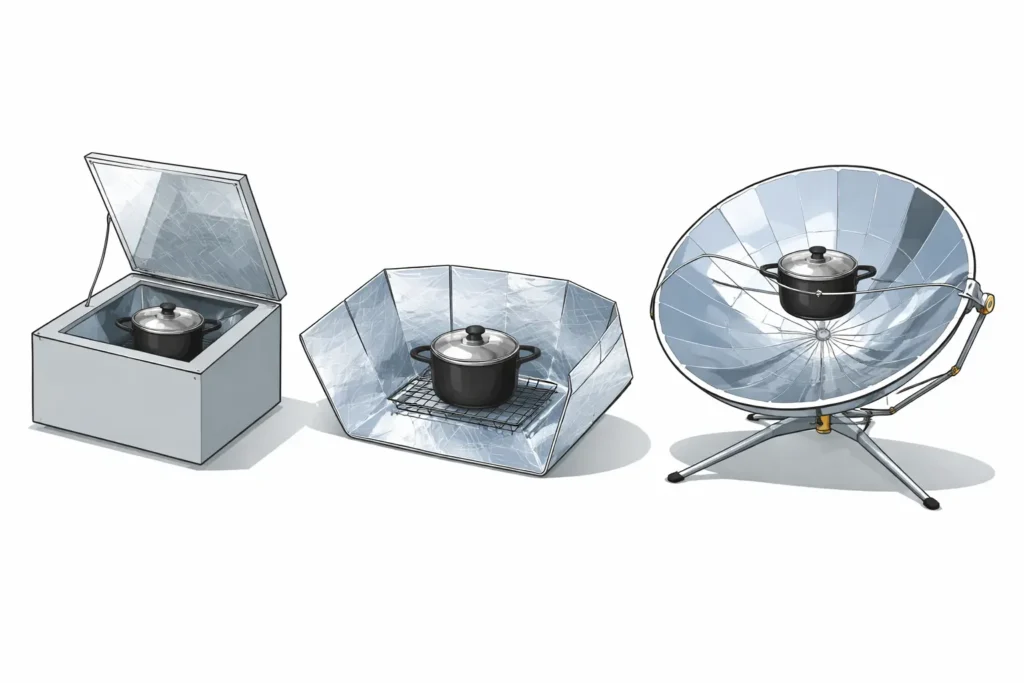
Box Solar Cooker
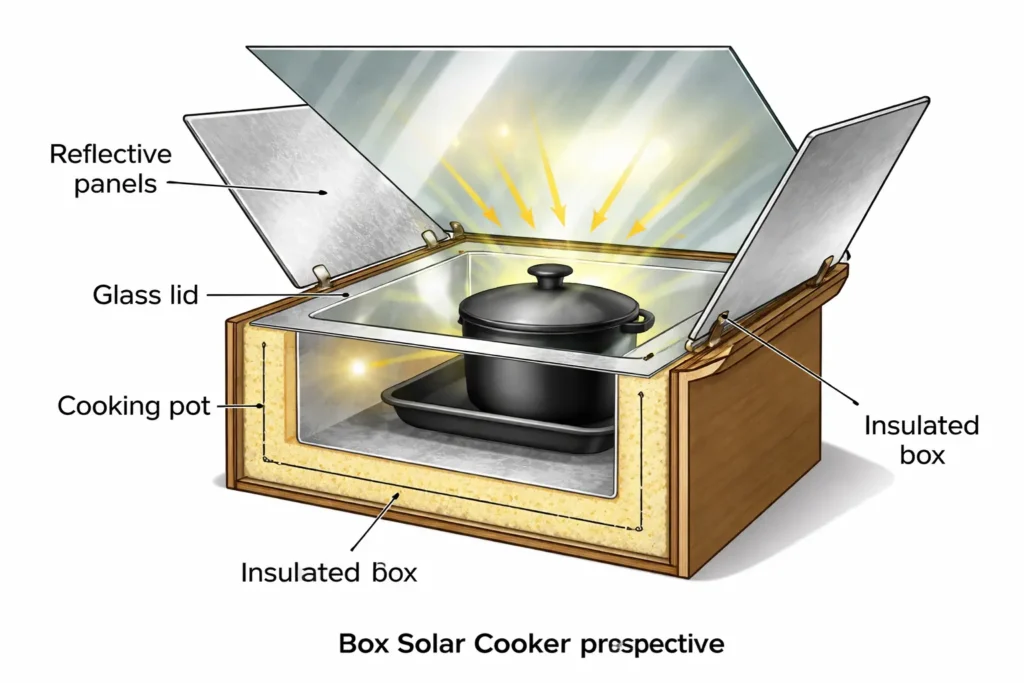
A box solar cooker is one of the simplest and safest designs. It consists of an insulated box with a transparent lid and reflective surfaces that direct sunlight into the cooking chamber.
Sunlight enters through the clear lid, becomes trapped inside, and slowly raises the temperature. A dark-colored pot inside the box absorbs the heat and cooks the food over time.
Advantages of a Box Solar Cooker
- Simple and safe design
- Easy to build using common materials
- Good for slow cooking
- Ideal for school projects and beginners
Limitations of a Box Solar Cooker
- Slower cooking times
- Lower maximum temperature
- Not suitable for frying or quick boiling
Box solar cookers are best used for foods that cook well over long periods, such as rice, vegetables, and stews.
Material Selection, Thermal Bridges, and Glazing Mechanics
From a structural design perspective, a box cooker’s performance depends heavily on preventing conductive thermal bridging and optimizing the greenhouse effect:
- Absorber Plate Materials: The interior base plate should be constructed from high-thermal-conductivity metals—such as matte black painted aluminum or dark stainless steel—to convert visible light into longwave thermal radiation efficiently.
- Insulation Boundary Layer: High-performing box enclosures utilize rigid, high-density insulation materials with low thermal conductivity (k-value), such as rigid polyurethane foam, rockwool, or double-walled corrugated cardboard lined with reflective foil air gaps.
- Glazing Options: Double-glazed glass or high-transmittance tempered glass covers reduce convective heat loss to ambient air while allowing shortwave solar irradiance to enter unimpeded.
Coming from a background in quantity surveying and construction, I always look closely at the insulation and seal quality of box cookers. A well-constructed box isn’t just about heat; it’s about durability and material efficiency.
Panel Solar Cooker
A panel solar cooker uses several flat reflective panels arranged to focus sunlight toward a central cooking pot. The pot is usually placed in a heat-resistant container or covered with a transparent plastic bag to retain heat.
Panel cookers are lightweight and portable, making them popular for outdoor use and educational demonstrations.
Advantages of a Panel Solar Cooker
- Low-cost and lightweight
- Easy to transport and store
- Simple DIY construction
- Faster than box cookers in good sunlight
Limitations of a Panel Solar Cooker
- Requires frequent adjustment to follow the sun
- Less effective in windy conditions
- Heat retention is lower than box designs
Panel solar cookers offer a good balance between simplicity and performance, especially in locations with strong sunlight.
In our local Malaysian climate, I’ve found that panel cookers are great for a quick afternoon snack, but you have to keep an eye on those sudden tropical clouds.
Parabolic Solar Cooker
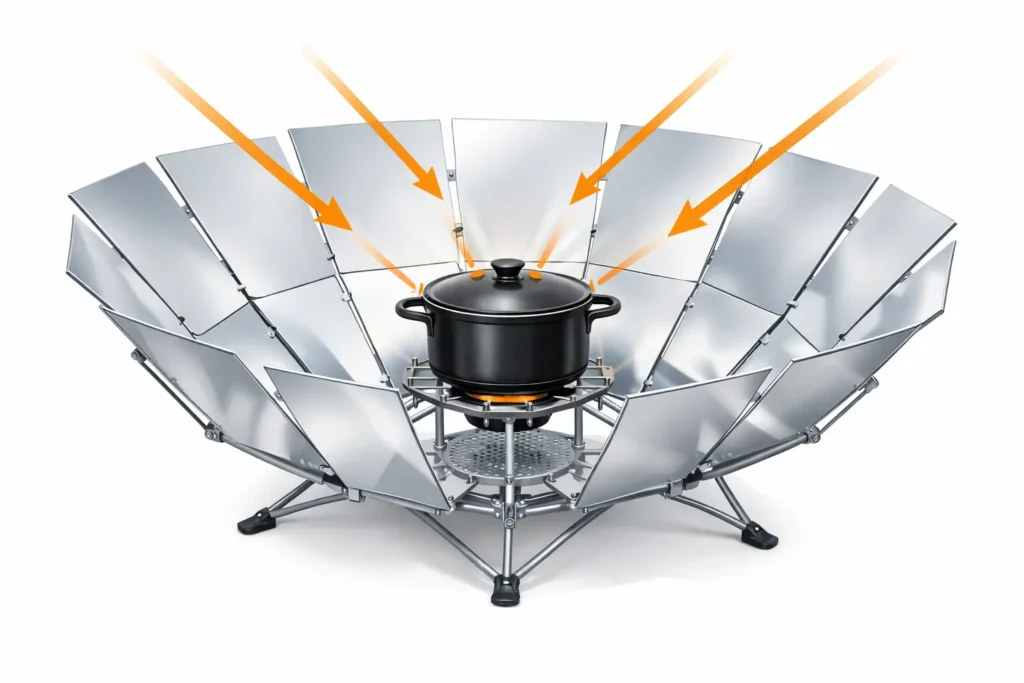
A parabolic solar cooker uses a curved reflective surface shaped like a dish. This shape concentrates sunlight onto a single focal point where the cooking pot is placed.
Because of this concentration, parabolic cookers can reach much higher temperatures compared to other designs.
Advantages of a Parabolic Solar Cooker
- Very high cooking temperatures
- Faster cooking times
- Suitable for boiling and frying
Limitations of a Parabolic Solar Cooker
- More expensive to build or purchase
- Requires careful alignment with the sun
- Higher risk of burns if not handled properly
Parabolic solar cookers are best suited for experienced users who need higher heat levels and faster cooking.
While I love the speed of a parabolic cooker, I’m extra cautious when the grandkids are around. Its focal point is incredibly hot, so I usually save the parabolic demonstrations for when I can give them my full attention, preferring the safer enclosed box designs for family gatherings
👉 New to solar cooking? Start with our Sola Cooker Beginner Guide
🔭 Advanced Solar Collectors: Evacuated Tube Cookers
While box, panel, and parabolic systems are the traditional core designs, modern solar thermal technology includes evacuated glass tube cookers.
Evacuated tube solar cookers utilize double-walled borosilicate glass tubes with a vacuum sealed between the inner and outer layers. Because a vacuum contains no air molecules, conductive and convective heat losses are practically eliminated. Sunlight easily penetrates the outer transparent tube to heat an inner dark absorber layer, reaching temperatures above 400 degree F rapidly—even in sub-zero winter temperatures or windy conditions. They represent an excellent hybrid option for cooks seeking parabolic-level temperatures without the complex focal tracking demands of large parabolic dishes.
| Type | Speed | Cost | Ease |
|---|---|---|---|
| Box | Medium | Low | Easy |
| Panel | Slow | Very Low | Easy |
| Parabolic | Fast | Higher | Moderate |
Which Type of Solar Cooker Is Best?
There is no single “best” solar cooker for all situations. Each type serves a different purpose:
- Box solar cookers are best for learning and slow cooking
- Panel solar cookers are good for portability and low-cost setups
- Parabolic solar cookers are ideal when high heat is required
The right choice depends on the user’s goals, experience level, and local weather conditions.
Related Guides
Final Thoughts
Solar cookers demonstrate how sunlight can be used effectively for cooking without relying on conventional fuels. By understanding the strengths and limitations of each type, users can make informed decisions and set realistic expectations.
In the next articles, we will explore how to build simple solar cookers and test their performance in real-world conditions.
ou may also find this helpful:
How a Solar Cooker Works: Basic Principles Explained
Frequently Asked Questions (FAQ)
What are the main types of solar cookers?
The three main types of solar cookers are box cookers, panel cookers, and parabolic cookers. Each type uses sunlight differently to cook food efficiently.
Which solar cooker is the most efficient?
Parabolic solar cookers are the most efficient because they concentrate sunlight into a single focal point, producing very high temperatures for fast cooking.
Which solar cooker is best for beginners?
Box cookers are the best choice for beginners because they are easy to use, safe, and require minimal adjustment during cooking.
How long does it take to cook with a solar cooker?
Cooking time depends on sunlight and cooker type, but it usually takes longer than traditional cooking.