One of the most common beginner questions is: what temperature can a solar cooker reach?
Many people assume solar cookers only produce mild heat. In reality, depending on the design and sunlight intensity, solar cookers can reach surprisingly high temperatures — enough to boil water, bake bread, and cook meat safely.
Understanding temperature ranges helps you choose the right type of solar cooker and cook food properly.
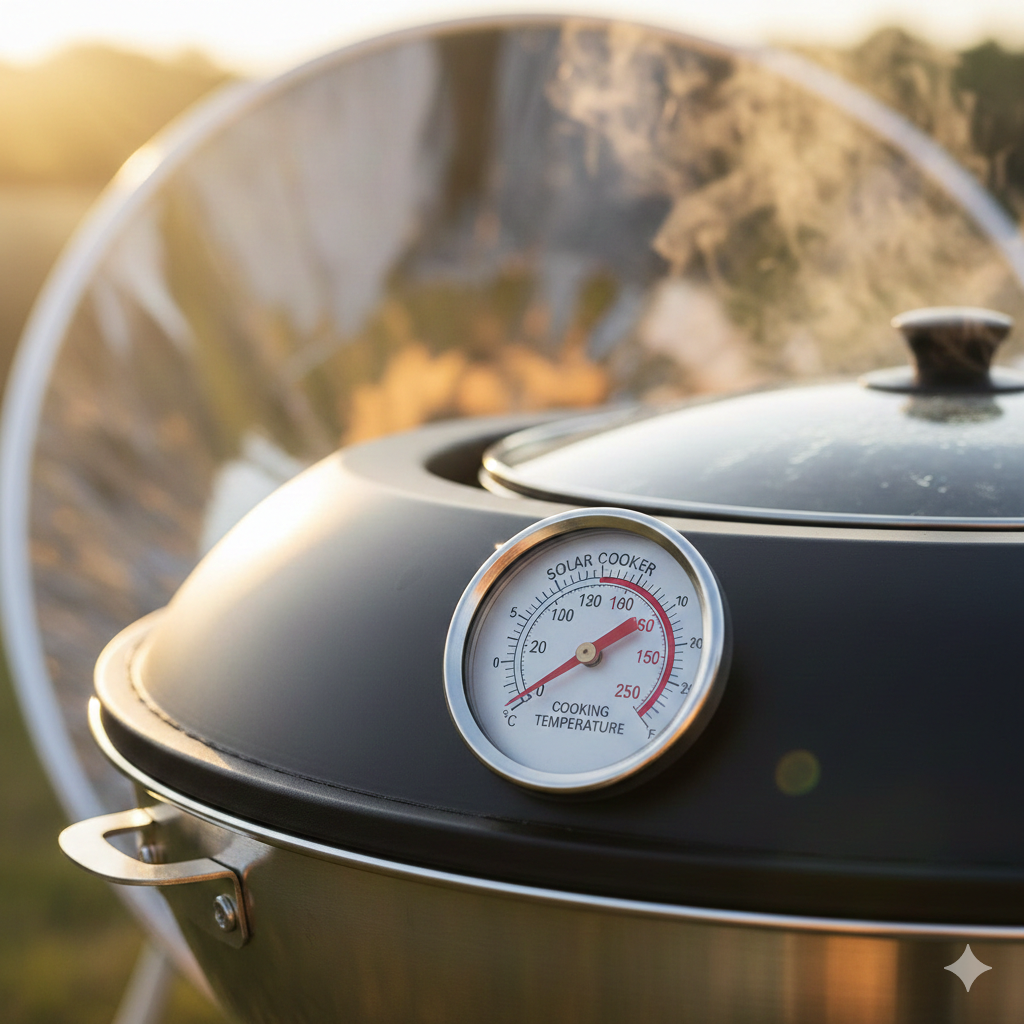
Average Temperature Range of Solar Cookers
Under strong direct sunlight (around midday in clear weather), most solar cookers reach:
- 100°C to 150°C (212°F–300°F) for box and panel cookers
- 150°C to 200°C (300°F–400°F) for well-insulated box cookers
- 200°C to 300°C+ (400°F–570°F+) for parabolic cookers
These temperatures are sufficient for:
- Cooking rice
- Boiling water
- Baking bread
- Slow-cooking vegetables
- Cooking poultry and meat
Why Temperature Varies
Solar cooking temperature depends on several factors:
1️⃣ Type of Solar Cooker
Box Solar Cookers
- Most common and beginner-friendly
- Retain heat using insulation and glass cover
- Typically reach 120–160°C
Panel Solar Cookers
- Lightweight and simple design
- Lower heat concentration
- Usually 100–140°C
Parabolic Solar Cookers
- High-performance reflectors
- Directly focus sunlight to a single point
- Can exceed 250°C
If you’re unsure which design suits you best, see our guide on Types of Solar Cookers.
2️⃣ Sunlight Intensity
Solar cookers perform best under:
- Clear skies
- Low humidity
- Strong midday sun (10:30 AM – 2:30 PM)
Cloud cover can reduce temperature significantly.
3️⃣ Proper Alignment
A solar cooker must face direct sunlight.
Real-world tip:
Even a 10–15° misalignment can noticeably reduce temperature. Re-adjust every 30–60 minutes for optimal heating.
4️⃣ Cookware Used
Using:
- Dark, matte pots
- Tight lids
- Thin glass cover (for box cookers)
Improves heat retention and overall temperature.
Is 150°C Enough to Cook Food Safely?
Yes.
Many foods cook safely well below 200°C.
For example:
- Water boils at 100°C
- Rice cooks fully at 100°C
- Vegetables soften at 85–100°C
- Poultry is safe at internal temp of 75°C
Solar cookers operate like slow cookers. Even at moderate temperatures, food can cook thoroughly with time.
For timing estimates, read How Long Does a Solar Cooker Take to Cook Food.
Can a Solar Cooker Boil Water?
Yes.
Even a standard box solar cooker can bring water to boiling point (100°C) under good sunlight.
Boiling water demonstrates the cooker’s capability for:
- Cooking grains
- Making soup
- Preparing hot beverages
A parabolic solar cooker can boil water much faster than a box cooker.
Solar Cooker Temperature vs Conventional Oven
| Feature | Solar Cooker | Electric Oven |
|---|---|---|
| Typical Max Temperature | 120–200°C | 230–260°C |
| Heat Source | Sunlight | Electricity |
| Cooking Speed | Slower | Faster |
| Fuel Cost | Free | Continuous cost |
Solar cookers may not match conventional ovens in peak temperature, but they are highly effective for slow and sustainable cooking.
Does Weather Affect Temperature?
Yes.
Temperature may drop significantly during:
- Cloudy days
- Rainy conditions
- Early morning or late afternoon
Solar cookers perform best during peak sunlight hours.
If you want to improve performance, read our article on How to Improve Solar Cooker Efficiency
Are Solar Cookers Hot Enough for Baking?
Yes, especially box and parabolic cookers.
You can bake:
- Bread
- Muffins
- Simple cakes
However, baking times will be longer compared to conventional ovens.
Final Thoughts
So, what temperature can a solar cooker reach?
Most solar cookers reach between 100°C and 200°C under strong sunlight, while parabolic models can exceed that range.
These temperatures are sufficient for everyday cooking tasks when properly aligned and used with appropriate cookware.
With the right expectations and sunlight conditions, solar cookers are more powerful than many people realize.