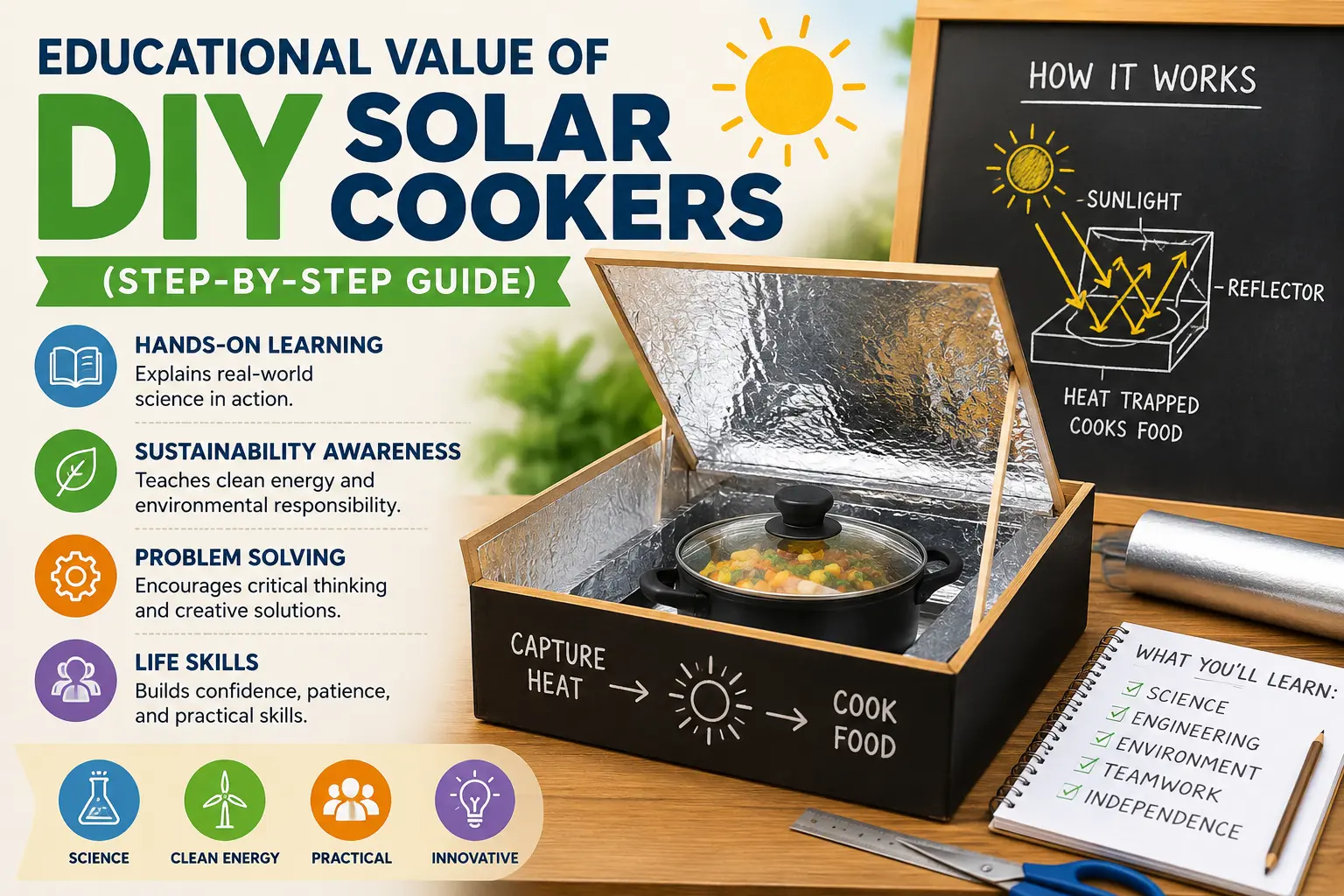
Exploring the educational value of DIY solar cookers is one of the most engaging, hands-on ways to teach students and beginners about renewable energy, thermodynamics, and sustainable living. Building a simple cardboard and foil solar oven transforms abstract scientific concepts—like solar radiation, reflection, and heat retention—into a fun, practical experiment you can see, touch, and taste.
Building a DIY solar cooker is a practical way to understand how solar energy can be used for cooking. This simple project is suitable for school demonstrations, learning activities, or personal experimentation using common household materials.
This DIY solar cooker project shows how a simple box-style design can be built using common household materials. This guide explains how to build a basic box-style solar cooker, one of the safest and easiest designs for beginners.
Table of Contents
What You Will Need
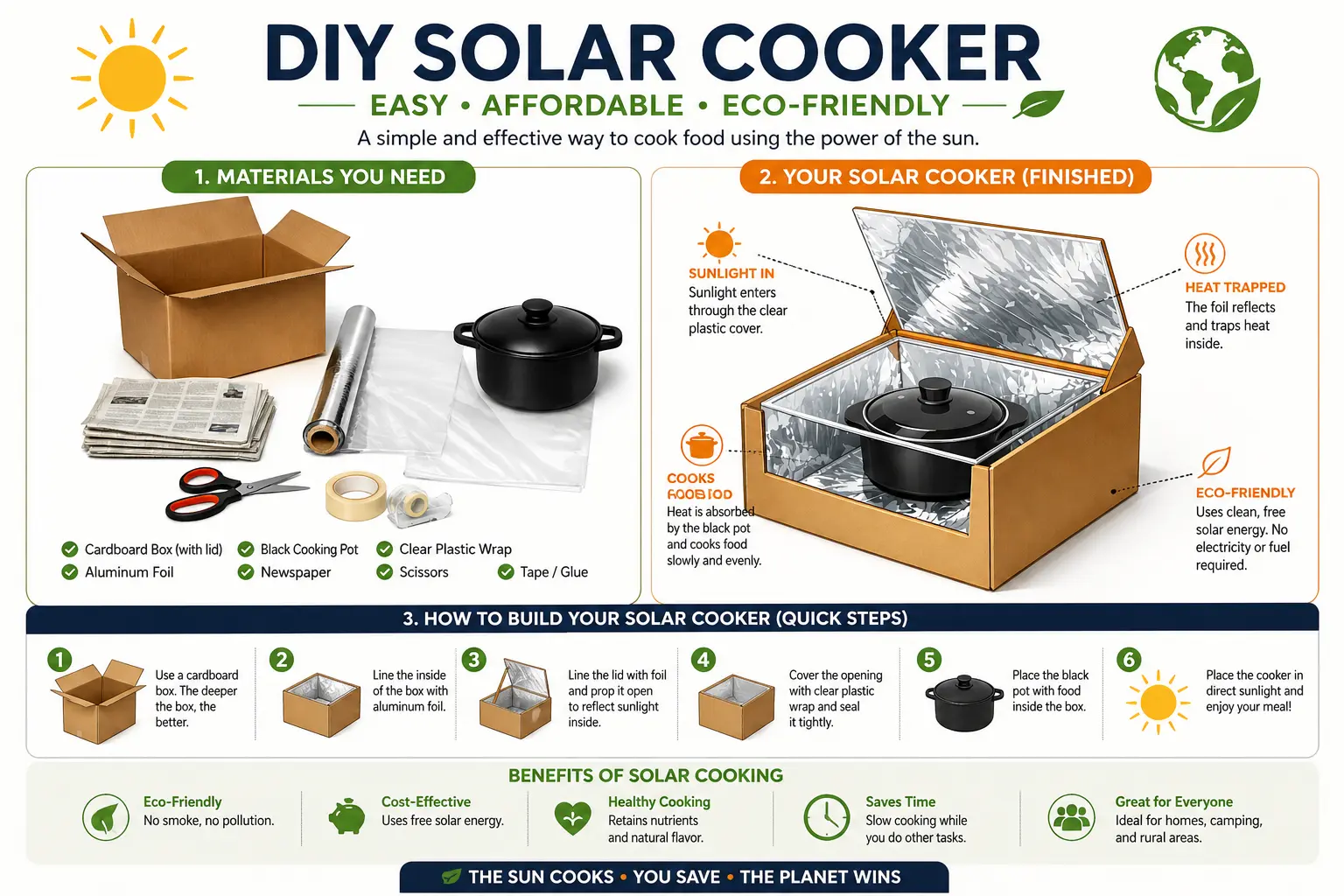
Most of the materials are inexpensive and easy to find.
Materials
- A sturdy cardboard box (medium to large size)
- Aluminum foil
- Clear plastic sheet or transparent plastic wrap
- Black cooking pot with a lid
- Glue or tape
- Scissors or a utility knife
- Newspaper or foam (for insulation)
Step 1: Prepare the Box
Start by selecting a cardboard box that is clean and dry.
If the box is thin, consider using two boxes, one slightly smaller than the other, to improve insulation.
Place crumpled newspaper or foam between the two boxes to reduce heat loss.
Step 2: Create the Reflective Surfaces
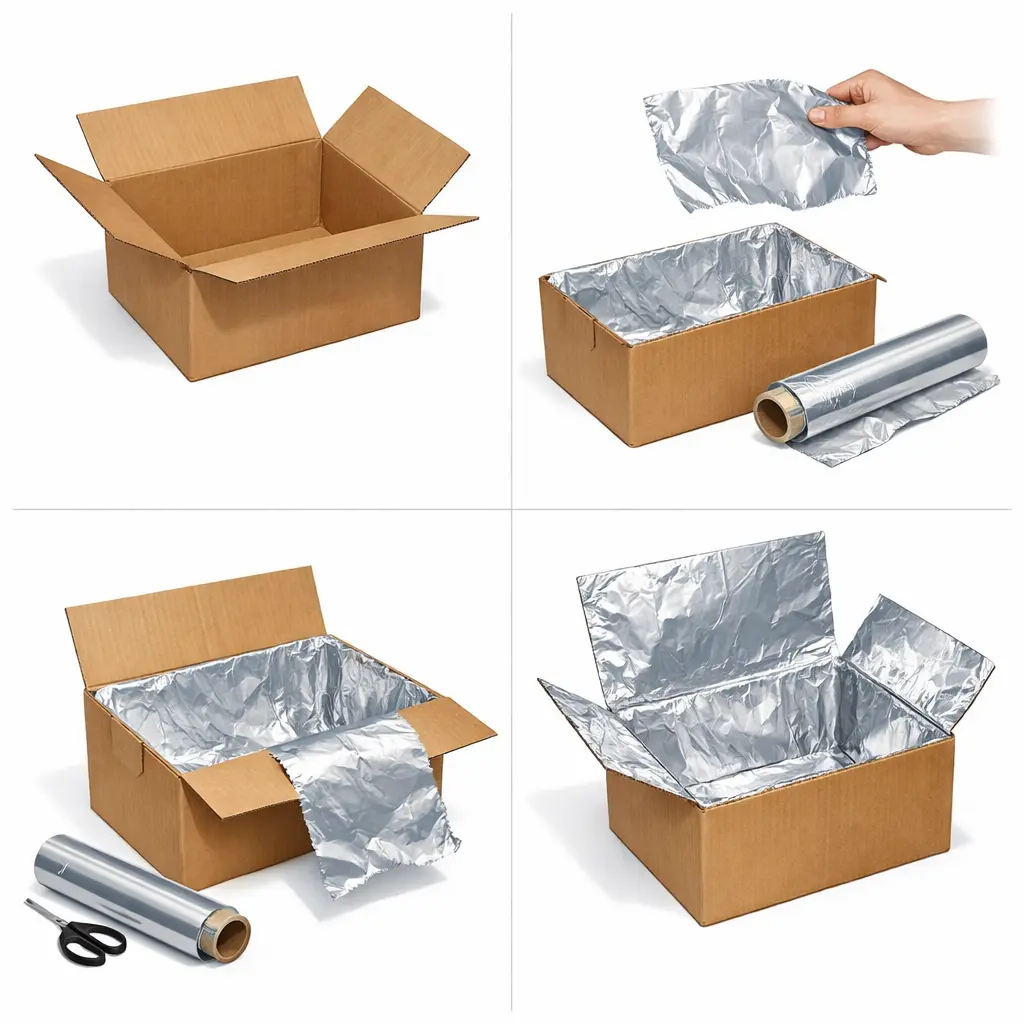
Cut aluminum foil pieces to match the inner surfaces of the box and the inside of the lid flap.
Carefully glue the foil onto the surfaces with the shiny side facing outward.
Smooth out wrinkles as much as possible to improve sunlight reflection.
These reflective surfaces help direct sunlight into the cooker.
Step 3: Add the Transparent Cover
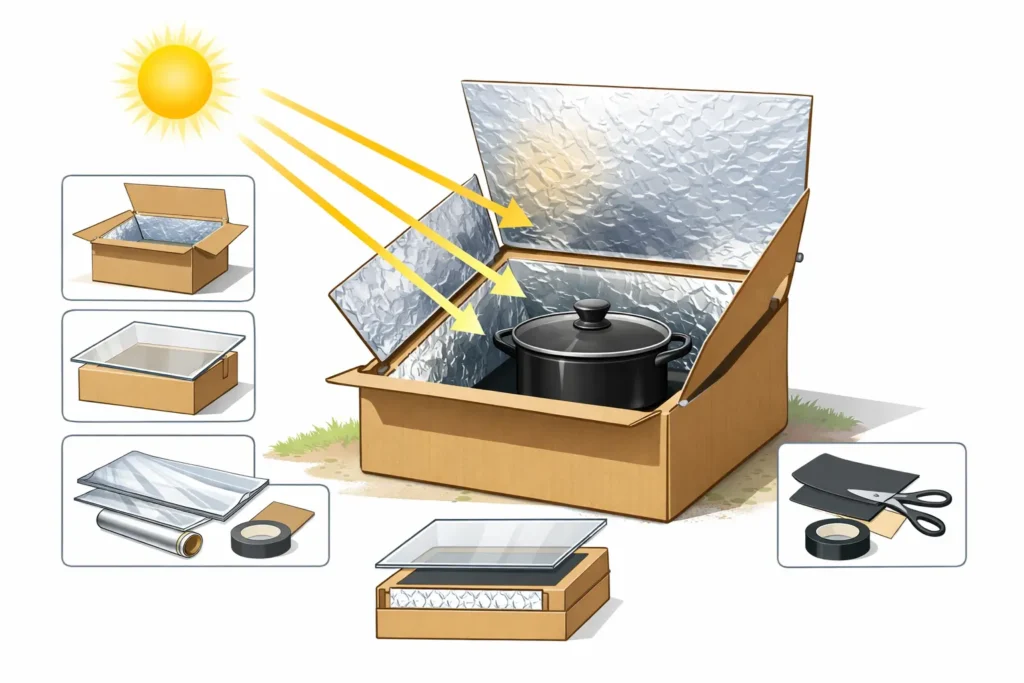
Cover the top opening of the box using a clear plastic sheet or plastic wrap.
Make sure the plastic is tight and sealed around the edges.
This transparent layer allows sunlight in while trapping heat inside, creating a greenhouse effect.
Step 4: Improve Heat Absorption
Place a black pot inside the box.
Dark surfaces absorb heat more effectively than light-colored ones.
If your pot is not black, you can paint it with heat-safe black paint or wrap it in black material.
Step 5: Position the Solar Cooker
Place the solar cooker outdoors under direct sunlight.
Tilt the reflective flap so that it reflects sunlight directly into the box.
Adjust the angle occasionally as the sun moves to maintain maximum heat inside the cooker.
Step 6: Start Cooking
Place food inside the covered black pot and close the solar cooker.
Solar cookers work best with:
- Rice
- Vegetables
- Stews
- Water heating
Cooking times will vary depending on:
- Sun intensity
- Outside temperature
- Cooker size
Be patient — solar cooking is usually slower than gas or electric cooking.
🔬 Simple Classroom Experiments to Try
If you are building this solar cooker for a science project or family activity, try these quick variables to see science in action:
- The Color Test: Cook two identical small portions of water side-by-side—one in a matte black cup and one in a shiny silver cup. Measure the temperature after 30 minutes to prove how dark colors absorb solar radiation while reflective surfaces bounce it away.
- Single vs. Double Glazing: Compare a box sealed with a single sheet of plastic wrap against a box sealed with a double-layer plastic pocket. You’ll quickly see how trapped air gaps reduce heat loss and raise internal temperatures.
- Angle Optimization: Measure the internal box temperature every 15 minutes when keeping the box flat versus tilting it to face the sun directly.
Safety Tips
- Do not look directly into reflected sunlight
- Avoid touching hot surfaces directly
- Supervise children at all times
- Use oven gloves when handling pots
Although this design is simple, it can still become hot in strong sunlight.
Limitations of DIY Solar Cookers
A homemade solar cooker:
- Depends heavily on sunny weather
- Is not suitable for frying
- Works best during midday hours
- Requires occasional alignment with the sun
Understanding these limitations helps set realistic expectations.
How to Make a DIY Solar Cooker (Step-by-Step Guide)
Building a DIY solar cooker is one of the easiest ways to understand how solar energy works in real life. This simple project is perfect for school science activities, environmental education, or beginners exploring solar cooking.
Step 6: Start Cooking
Solar cookers work best with rice, vegetables, stews, and boiling water.
Note: Solar cooking is usually slower than gas or electric cooking.
🔥 Want Faster Cooking? Try a Real Solar Oven
GoSun Sport Solar Oven can cook meals in as little as 20–45 minutes — much faster than DIY cookers.
- ✔ Fast cooking (up to 290°C)
- ✔ Portable & beginner-friendly
- ✔ Works even in partial sunlight
Limitations of DIY Solar Cookers
- Depends heavily on sunny weather
- Not suitable for frying
- Slow cooking time
- Requires frequent adjustment
⚡ Need High Heat Cooking?
Parabolic Solar Cooker reaches much higher temperatures and cooks faster than DIY models.
- ✔ Extremely high heat
- ✔ Faster cooking
- ✔ Great for serious users
Can a DIY Solar Cooker Really Cook Food?
Yes — a DIY solar cooker can cook simple foods like rice, vegetables, and water under strong sunlight.
💰 Budget Option for Beginners
If you prefer something easier than DIY, try a portable solar oven kit.
- ✔ Affordable
- ✔ Easy to use
- ✔ Great for students
🔥 Recommended Solar Cookers (Best Upgrades)
| Product | Best For | Action |
|---|---|---|
| GoSun Sport | Best Overall | View on Amazon |
| Portable Solar Oven | Budget | Check Price |
| Parabolic Cooker | High Heat | See Details |
Educational Value of DIY Solar Cookers
DIY solar cookers are widely used in:
- School science projects
- Environmental education
- Energy awareness demonstrations
They provide hands-on experience in understanding solar energy, heat transfer, and sustainability concepts.
Connecting the DIY Build to STEM Curriculum Concepts
Building a homemade solar oven provides a complete Science, Technology, Engineering, and Math (STEM) learning experience in a single weekend project:
- Physics & Optics: Students observe how shiny foil reflectors act like planar mirrors, demonstrating the law of reflection (where the angle of incidence equals the angle of reflection) to concentrate scattered light rays into a single cooking chamber.
- Thermodynamics & Heat Transfer: The build illustrates three core heat transfer mechanisms: radiation (sunlight entering through the clear plastic cover), conduction (heat moving from the dark metal pot into the food), and convection (hot air circulating within the insulated box cavity).
- Materials Science: Learners test different insulation materials—such as shredded newspaper, dried leaves, or foam board—to see which material maintains internal temperatures best when cloud cover passes over.
Final Thoughts
Building a solar cooker is a simple and rewarding project that demonstrates how sunlight can be used for practical purposes. While it may not replace conventional cooking methods, it is an excellent educational tool and an introduction to renewable energy concepts.
In future guides, we will explore variations of solar cooker designs and practical improvements to increase efficiency.
Can a DIY Solar Cooker Really Cook Food?
A DIY solar cooker can cook simple foods such as rice, vegetables, and water when placed in strong, direct sunlight. Cooking times are longer than gas stoves, but the process demonstrates how solar energy can be used effectively.
Related guides:
- What Is a Solar Cooker and How Does It Work?
- Types of Solar Cookers Explained: Box, Panel, and Parabolic
Frequently Asked Questions
Can students build a solar cooker for a school project?
Yes. Simple solar cooker designs using cardboard and aluminum foil are commonly used in science projects to demonstrate solar energy and heat transfer.
How hot can a DIY solar cooker get?
A basic box-style solar cooker can reach temperatures between 100°C and 150°C under strong sunlight, which is enough to cook simple foods such as rice, vegetables, or eggs.
What foods can be cooked in a simple solar cooker?
Foods that cook well in solar cookers include rice, beans, vegetables, stews, and slow-cooked dishes.