
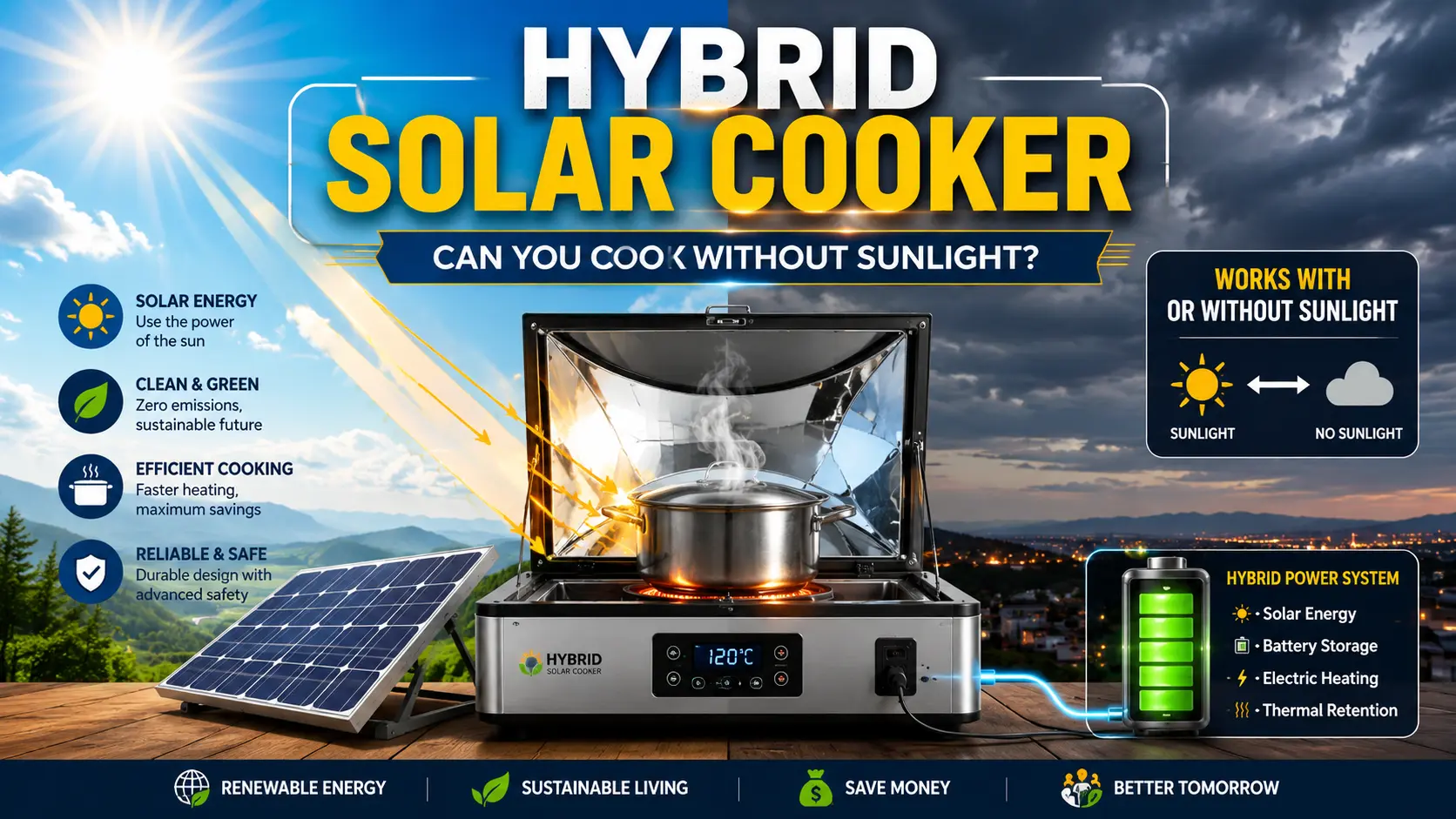
A solar cooker is a powerful, eco-friendly way to prepare meals using sunlight. But what happens when the sun disappears? Cloudy weather, rain, or nighttime can interrupt cooking.
This is where a hybrid solar cooker comes in.
A hybrid system combines solar energy with a backup heat source, allowing you to cook even when sunlight is weak or unavailable. In this guide, you’ll learn how hybrid solar cookers work, their types, advantages, and whether they’re worth it.
If you’re new, check out our solar cooker beginner guide before exploring hybrid systems. You can also learn what temperature a solar cooker can reach to better plan your meals.
If you are anything like me, there is a distinct thrill in watching a solar cooker work. You set it up, let the sun do its magic, and marvel at how a completely free, natural resource can slow-cook a perfect meal. But let’s be honest: there is also a unique kind of frustration that hits when you check on your lunch, only to find a sudden bank of clouds has rolled in, stalling your cooking temperature entirely. It leaves you constantly playing amateur meteorologist, checking the sky every twenty minutes just to ensure your dinner stays on track.
Table of Contents
Tired of relying only on sunlight to cook your meals?
Traditional solar cookers stop working when clouds appear — but this hybrid solar cooker changes everything.
It uses solar energy when available, and automatically switches to electric backup when there’s no sunlight — giving you reliable cooking anytime.
🌞 Why This Hybrid Solar Cooker is Different:
- Works even on cloudy days or at night
- Saves electricity and reduces energy bills
- Eco-friendly and sustainable cooking
- Perfect for outdoor, emergency, or daily use
- Easy to use — no complicated setup
Whether you’re preparing simple meals or experimenting with solar cooking, this is one of the most practical and flexible options available today.
👉 Check latest price on Amazon
What Is a Hybrid Solar Cooker?
A hybrid solar cooker is a cooking system that uses:
- ☀️ Solar energy as the main heat source
- ⚡ An alternative energy source (electricity, gas, or stored heat)
When sunlight is strong, the cooker works like a normal solar cooker. When sunlight drops, the backup system helps maintain cooking temperature.
The Engineering Principles Behind Dual-Source Thermal Systems
A hybrid solar cooker is designed to solve one of the main challenges of solar cooking: maintaining a consistent cooking temperature when sunlight changes. Unlike conventional solar cookers that depend entirely on sunlight, a hybrid system combines solar energy with a secondary heat source to provide more reliable performance.
In a standard solar cooker, heat is continuously lost through radiation, conduction, and convection. When solar irradiance decreases because of cloudy weather, low sun angles, or changing weather conditions, the cooker may no longer receive enough solar energy to compensate for these heat losses. As a result, the temperature inside the cooking chamber can fall, slowing down or interrupting the cooking process.
A hybrid solar cooking system addresses this problem by adding a secondary thermal energy source. Depending on the design, this may include an electrical heating element, gas burner, or thermal energy storage system using phase-change materials. The backup system provides additional heat whenever solar energy alone is insufficient.
The important principle is that the secondary heat source supplements rather than replaces solar energy. During periods of strong sunshine, the solar component can provide most or all of the required heat. When sunlight becomes weaker, the backup system can provide additional thermal energy to help maintain the desired cooking temperature.
Some advanced hybrid solar cookers can regulate the backup heat automatically using temperature sensors and a control system. As the chamber temperature begins to fall, the secondary heating source increases its contribution. When sufficient solar energy becomes available again, the backup heating can be reduced or switched off.
This dual-source approach helps maintain a more stable cooking temperature, reduces the effect of changing weather conditions, and makes solar cooking more practical for meals that require longer cooking times.
The result is a system that combines the renewable-energy advantages of solar cooking with the reliability of backup heating. Rather than depending entirely on uninterrupted sunshine, a hybrid solar cooker can continue operating effectively when solar conditions are less than ideal.
Types of Hybrid Solar Cookers
When I first started looking into solving this weather dilemma, I realized that creating a backup plan didn’t mean abandoning the spirit of solar cooking. It’s all about finding the right balance for your setup. For those of us who love tinkering with DIY designs or optimizing how we manage energy, hybrid systems offer a fascinating sandbox. Whether you prefer a clean electrical override or a clever, passive thermal storage material, there is a brilliant sense of satisfaction in building a setup that adapts to the environment rather than being at the mercy of it.
1. Solar + Electric Hybrid Cooker
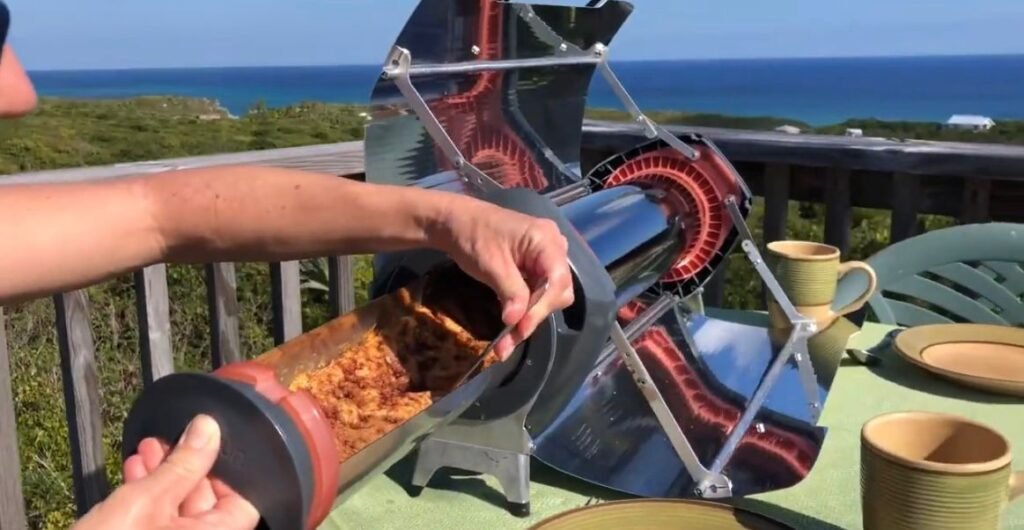
This type includes a built-in electric heating element.
How it works:
- Solar energy heats the cooker during the day
- Electricity supplements heat when sunlight is insufficient
Pros:
- Reliable in all weather
- Easy to control temperature
Cons:
- Requires electricity
- Higher cost
2. Solar Cooker with Thermal Storage
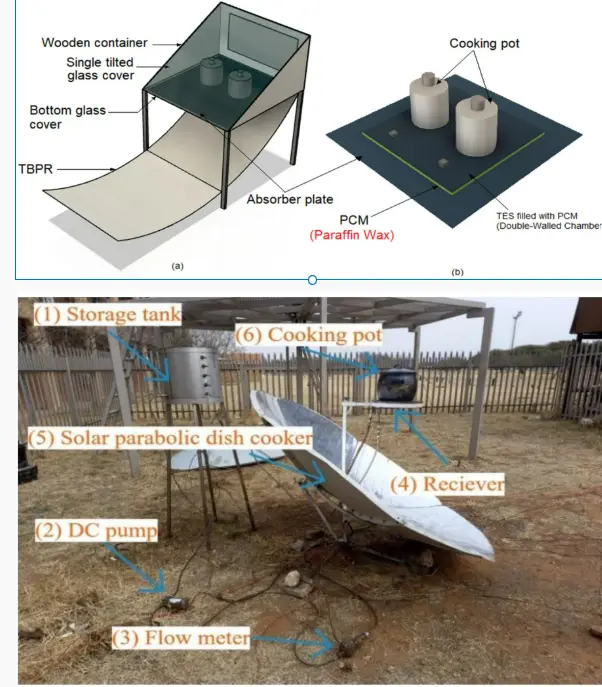
Instead of electricity, this design stores heat for later use.
How it works:
- Absorbs and stores heat during sunny hours
- Releases heat slowly for cooking later
Materials used:
- Stones
- Oil
- Phase-change materials (PCM)
Pros:
- No electricity needed
- Works after sunset
Cons:
- More complex design
- Longer heating time
3. Solar + Gas Hybrid Cooker
This system combines solar cooking with a gas burner.
How it works:
- Use solar energy during the day
- Switch to gas instantly when needed
Pros:
- Very reliable
- Suitable for rural or off-grid areas
Cons:
- Uses fossil fuel
- Less environmentally friendly
Advantages of Hybrid Solar Cookers
✅ 1. Cook Anytime
No need to depend entirely on sunlight. You can cook:
- In cloudy weather
- During rainy days
- At night
✅ 2. More Consistent Cooking
Temperature fluctuations are reduced, leading to:
- Better cooking results
- Less undercooked food
✅ 3. Greater Flexibility
You can choose the best energy source depending on the situation.
Disadvantages of Hybrid Solar Cookers
❌ 1. Higher Cost
Hybrid systems are more expensive than standard solar cookers.
❌ 2. More Complex Design
Additional components mean:
- More maintenance
- Higher chance of failure
❌ 3. Less Eco-Friendly (Sometimes)
If using electricity or gas, it reduces the environmental benefits.
🛠️ Retrofitting a Standard Box Cooker with Dual Heating
For DIY enthusiasts interested in converting an existing box or panel cooker into a functional hybrid model, safety and electrical insulation must take top priority.
The most efficient retrofitting method involves installing a flat, low-voltage DC silicone heating pad or a $12\text{V}/24\text{V}$ submersible heating element beneath the dark aluminum absorber plate. When paired with a small off-grid lithium battery bank or portable solar generator, a thermostat controller can be programmed to engage the heating element only when internal chamber temperatures dip below $180^\circ\text{F}$ ($82^\circ\text{C}$). This keeps power consumption to a minimum ($50\text{W} – 100\text{W}$) while guaranteeing that your meal continues to simmer smoothly regardless of passing storm clouds.
Are Hybrid Solar Cookers Available Commercially?
Hybrid solar cookers are not widely available in the mass market. Most options are:
- Experimental designs
- DIY projects
- Specialized systems
However, interest is growing as more people look for reliable off-grid cooking solutions.
Is a Hybrid Solar Cooker Worth It?
From my own practical standpoint, a true hybrid system really shines if you view it as a resilience tool. It bridges the gap between traditional off-grid sustainability and modern, day-to-day reliability. You don’t have to abandon the eco-friendly lifestyle just because the weather decides not to cooperate. Instead, you get the peace of mind that comes with knowing your cooking routine is fully weatherproofed, giving you the best of both worlds without the stress of an undercooked meal.
✔ It’s worth it if you:
- Live in areas with inconsistent sunlight
- Want reliable cooking anytime
- Are interested in off-grid living
❌ It may not be necessary if you:
- Have strong sunlight year-round
- Already use a backup stove
Practical Alternative (Smart Setup)
Instead of buying a hybrid system, many users prefer:
👉 Use a solar cooker during the day
👉 Switch to an electric or gas stove when needed
This approach is:
- More affordable
- Easier to manage
- Just as effective
If you’re looking for a reliable option, check out our guide to the best solar cooker to find top-rated models that suit your needs and budget.
Conclusion
A hybrid solar cooker solves one of the biggest limitations of solar cooking—dependence on sunlight. By combining solar energy with a backup heat source, it offers flexibility and reliability.
While not yet common in the market, hybrid systems are a promising solution for the future of sustainable cooking
FAQ: Hybrid Solar Cooker
Can a hybrid solar cooker work without sunlight?
Yes, a hybrid solar cooker can still work without sunlight because it includes a backup heat source such as electricity, gas, or stored thermal energy. This allows you to continue cooking even during cloudy weather or at night.
Is a hybrid solar cooker better than a regular solar cooker?
It depends on your need for reliability versus simplicity. A hybrid solar cooker is far more flexible and dependable because it completely eliminates “weather anxiety.” However, the tradeoff is that they are generally more expensive, heavier, and more complex to build or maintain than a standard, sun-only cooker.
Do hybrid solar cookers use a lot of electricity?
No, they are highly energy-efficient. The electric backup is designed to be secondary, kicking in only when the ambient sunlight drops below the required cooking temperature. Because the sun still does a massive portion of the heavy lifting, your overall electricity consumption remains a fraction of what a traditional kitchen oven or stove would use.
Are hybrid solar cookers available for sale?
Not widely in the mass market. Right now, commercial options are rare. Most hybrid setups you see are custom DIY projects, experimental prototypes, or specialized off-grid equipment. However, as interest in resilient, sustainable living grows, we are seeing more innovation in this space.tems, although interest in them is growing.
Can you convert a normal solar cooker into a hybrid one?
Yes, it is a fantastic DIY project. Many standard solar cookers can be retrofitted by installing a small, low-wattage heating element inside the cooking chamber, or by pairing the unit with an external backup stove. If you attempt this, just ensure your materials are properly rated for heat and electrical safety.
Have more questions about solar cooking?
Visit our Solar Cooker FAQ: 50 Frequently Asked Questions for expert answers on choosing a solar cooker, cooking times, food safety, recipes, maintenance, and troubleshooting. It’s a great resource for both beginners and experienced solar cooking enthusiasts.