This article is part of our Solar Cooker Guide, where we explain solar cooking basics and DIY methods step by step.
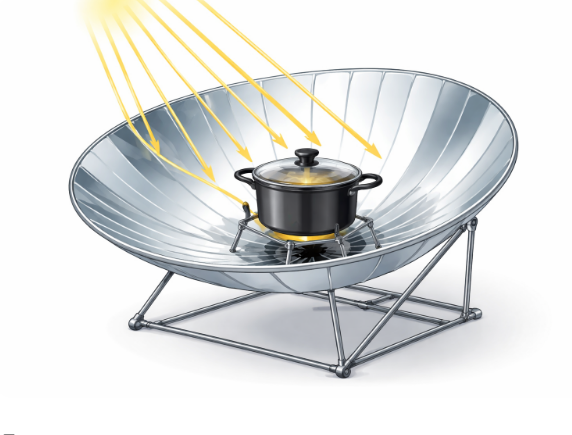
A solar cooker is a cooking device that uses sunlight as its energy source instead of gas, electricity, or charcoal. By capturing and concentrating sunlight, a solar cooker can generate enough heat to cook food, boil water, or pasteurize liquids.
Solar cookers are commonly used for educational projects, outdoor cooking, off-grid living, and in regions where conventional fuel is expensive or limited.
How Does a Solar Cooker Work?
Solar cookers operate using three basic principles:
1️⃣ Reflection
Reflective surfaces (such as aluminum foil or mirrors) direct sunlight toward a central cooking area.
2️⃣ Absorption
Dark-colored cooking pots absorb sunlight efficiently and convert it into heat.
3️⃣ Heat Retention
Enclosed or insulated designs trap heat inside, creating a greenhouse effect that raises the internal temperature.
When these three elements work together, temperatures can rise high enough to cook many types of food.
Common Types of Solar Cookers
There are several solar cooker designs, each with different characteristics.
Box Solar Cooker
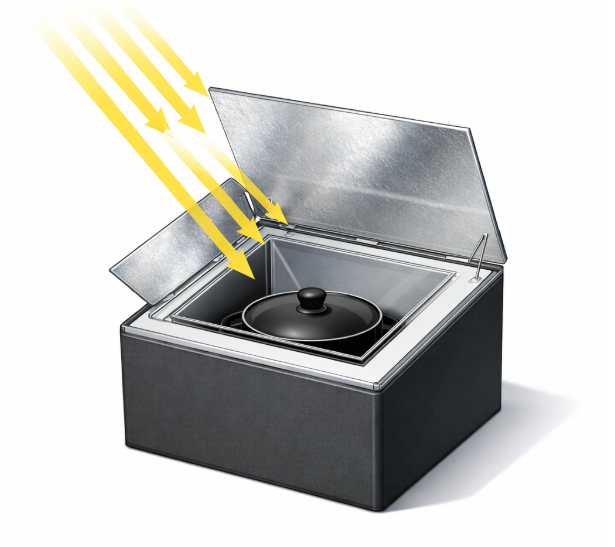
A box solar cooker is an insulated container with a transparent lid (usually glass or plastic). Sunlight enters the box and is trapped inside, slowly heating the food.
To explore this topic further, see Types of Solar Cookers Explained: Box, Panel, and Parabolic.
Advantages
- Simple to build
- Safe and stable
- Good for slow cooking
Limitations
- Slower cooking time
- Lower maximum temperature
Panel Solar Cooker
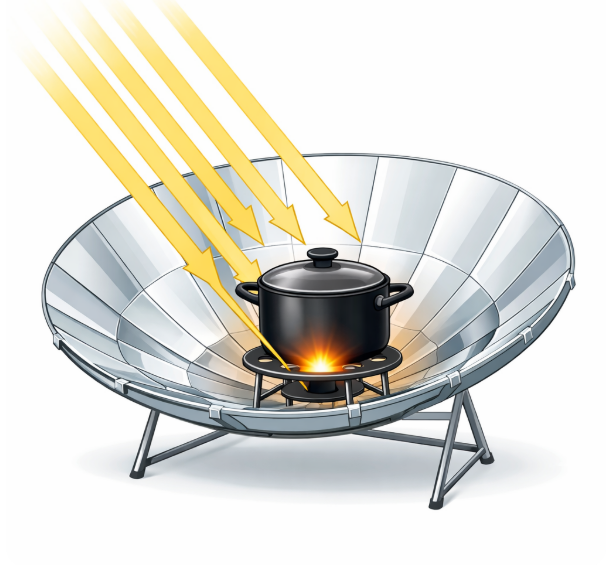
Panel cookers use flat reflective panels arranged to focus sunlight onto a pot placed at the center.
Advantages
- Lightweight
- Easy to transport
- Low-cost DIY option
Limitations
- Requires frequent alignment with the sun
- Less effective in windy conditions
Parabolic Solar Cooker
Parabolic cookers use a curved reflective surface to concentrate sunlight onto a single focal point.

Advantages
- Very high temperatures
- Fast cooking times
Limitations
- More expensive
- Requires careful handling
- Higher risk of burns
Solar cooking is discussed in educational and research contexts by environmental and renewable energy organisations worldwide.
What Can You Cook With a Solar Cooker?
Depending on the design and weather conditions, a solar cooker can be used to prepare:
- Rice and grains
- Vegetables
- Soups and stews
- Bread and baked items
- Boiled water
Solar cooking works best with slow-cooked meals that do not require constant stirring.
Limitations of Solar Cooking
While solar cookers offer many benefits, they also have practical limitations:
- Dependence on sunlight availability
- Reduced effectiveness on cloudy or rainy days
- Longer cooking times compared to gas stoves
- Limited use during early morning or evening hours
Understanding these limitations helps set realistic expectations.
Why People Use Solar Cookers
People choose solar cookers for different reasons, including:
- Reducing fuel costs
- Educational demonstrations
- Environmental awareness
- Outdoor or off-grid activities
- Emergency or backup cooking options
Solar cookers are not a universal replacement for conventional stoves, but they can be useful in specific situations.
Solar cooking is discussed in educational and research contexts by environmental and renewable energy organisations worldwide.If you want a hands-on project, you can also learn how to build a simple DIY solar cooker step by step.
Final Thoughts
Solar cookers demonstrate how renewable energy can be applied in simple and practical ways. By understanding how they work and where they are most effective, users can decide whether solar cooking suits their needs.
In the next articles, we will explore different designs in more detail and discuss how to build a simple solar cooker at home.
Frequently Asked Questions
1. Can a solar cooker really cook food using only sunlight?
Yes. A solar cooker concentrates and traps sunlight to produce heat, much like an oven. Under strong sunlight, many solar cookers can reach temperatures high enough to cook rice, vegetables, and even meat safely.
2. How hot does a solar cooker get?
Most box solar cookers can reach between 120°C and 160°C under direct sunlight. Parabolic models may reach even higher temperatures when properly aligned.
3. Do solar cookers work in cold weather?
Yes, solar cookers can work in cold climates as long as there is strong direct sunlight. Air temperature matters less than solar intensity. However, windy conditions may reduce efficiency.
4. Is solar cooking safe for meat?
Solar cooking can be safe for meat if the internal temperature reaches food safety standards. For poultry, this typically means at least 75°C internally.
5. Do solar cookers replace conventional stoves?
Solar cookers are often best used as a complementary cooking method. They reduce fuel use and support sustainability, but performance depends on sunlight availability.